
As businesses increasingly rely on cloud services, Gartner projects global spending in this area will exceed $800 billion in 2025. This growing dependence makes monitoring third-party SaaS providers and cloud services critical to ensuring seamless operations and minimizing downtime.
Tools like EagleStatus have emerged to address this challenge by aggregating services’ status data displaying outages and delivering real-time notifications. Yet some EagleStatus alternatives offer more features, such as StatusGator with its Early Warning Signals.
If you’re seeking alternatives to EagleStatus, you’re in the right place. Below, we’ve compiled a list of the 10 best EagleStatus alternatives and competitors for monitoring cloud outages, tracking SaaS providers’ statuses, and maintaining visibility over third-party dependencies.
At the top of the list is StatusGator, the leading cloud outage monitoring and incident notification platform, followed by other noteworthy tools. Let’s dive in.
1. StatusGator
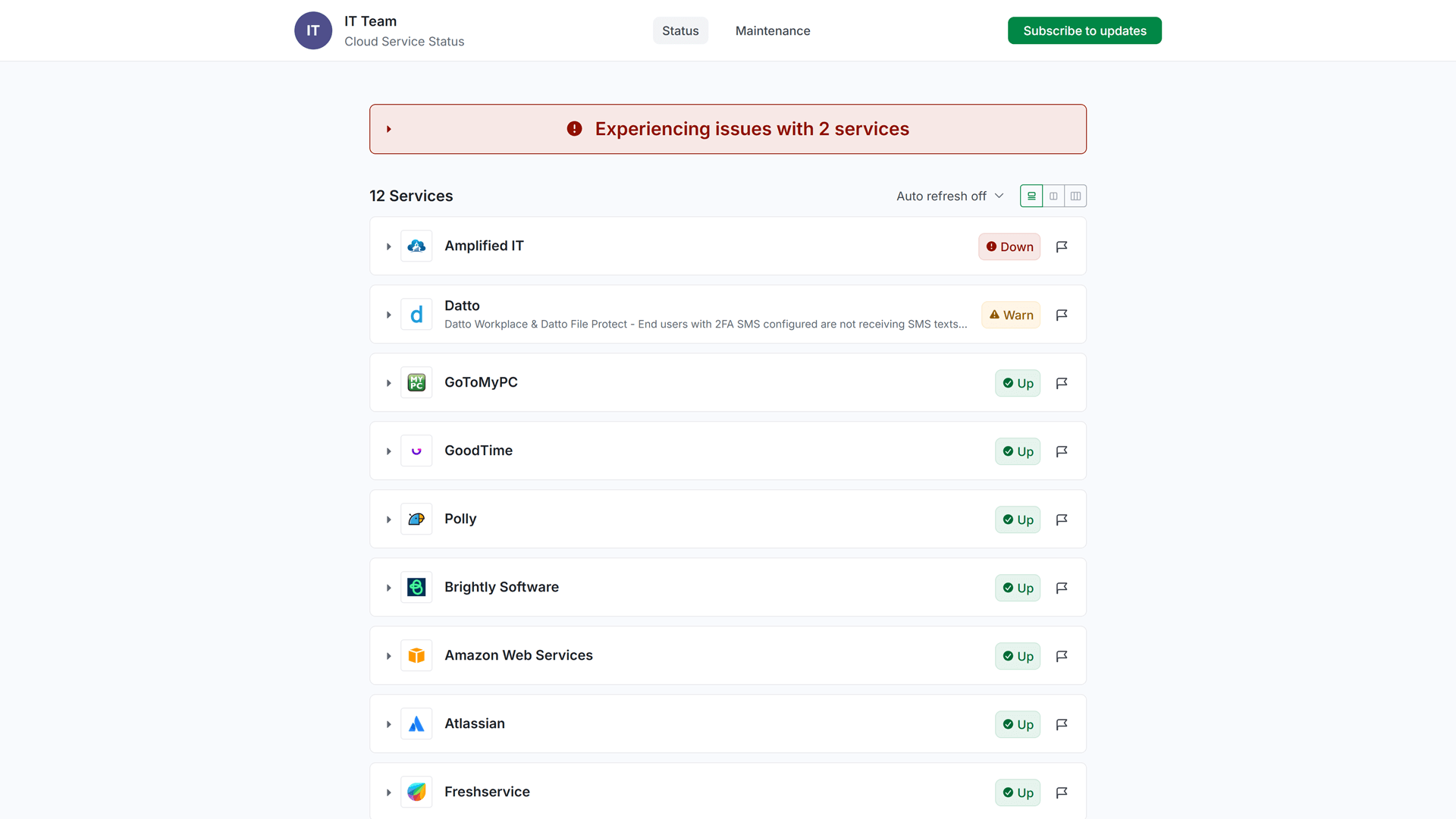
StatusGator is a market-leading status page service and cloud outage tracker, that’s been helping IT teams monitor and communicate outages for more than 10 years.
StatusGator offers the following solutions: status page aggregation, public status pages, private status pages, cloud service monitoring, website monitoring, unified status pages, incident communication, and early warning signals.
With over 4,800 services monitored, it far surpasses EagleStatus’ 1,800 services.
Whether you’re looking to track SaaS providers, set up public and private status pages, or customize incident notifications, StatusGator has you covered.
Key Features
- Early Warning Signals allow you to stay ahead of outages with proactive alerts before they impact your business.
- Comprehensive monitoring that includes aggregating and normalizing status page data from thousands of SaaS and cloud providers like AWS, Google Cloud, GitHub, and Zoom.
- Custom incidents publication where users post manual incidents for internal systems or third-party services that are not automatically monitored.
- StatusGator provides early outage warnings—even for services without public status pages. Stay informed with our dedicated monitoring for ADP status and Paychex status, so you can react faster.
- Public and private status pages to keep your customers and internal teams informed with fully customizable status pages.
- Granular notification filtering, meaning you get to receive notifications tailored to specific components, regions, or types of incidents.
- Wide integration support including Slack, Microsoft Teams, email, SMS, webhooks, and more ensures your teams stay in the loop.
Why Choose StatusGator Over EagleStatus?
- More Services Monitored: 4,800+ compared to ~1,800 for EagleStatus.
- Dual Status Page Capability: Supports both public and private status pages.
- Custom Branding: Make your status page truly yours with logo, domain, and design customization.
- Global Infrastructure: Designed for international businesses with fast, reliable performance.
Pricing

StatusGator offers a free plan. The plans start at $72 per month and a 14-day trial is available. Also, StatusGator offers discounts for non-profit and educational segments.
Try StatusGator for free today!2. DownDetector

DownDetector is a popular tool for tracking outages across a wide range of services. While it’s primarily consumer-focused, businesses can use it to monitor general outages affecting SaaS providers and cloud services.
Key Features
- Tracks outages reported by users and confirm them via official status pages.
- Offers real-time outage maps for a visual overview of incidents.
- Limited notifications for specific services.
Limitations
- DownDetector relies heavily on user reports, which can be unreliable.
- It doesn’t offer custom notifications, status pages, or proactive monitoring like StatusGator.
Pricing
Looking up status on Downdetector is free. However, it’s not very convenient for business. To gain access to features for businesses, you will have to contact them directly Downdetector pricing is available on request.
3. StatusTicker

StatusTicker is a lightweight tool for sending alerts and notifications about service statuses. Users can create a monitor and choose among 900+ services and apps. It’s simple and quick to set up but lacks the depth and flexibility of tools like StatusGator.
Key Features
- Tracks the status of 900+ SaaS and cloud providers.
- Displays status updates on a clean, easy-to-read dashboard.
Limitations
- StatusTicker doesn’t support custom incidents or advanced filtering.
- It lacks public and private status page options.
Pricing

StatusHub pricing starts at $9 per month with an annual subscription.
4. StatusHub
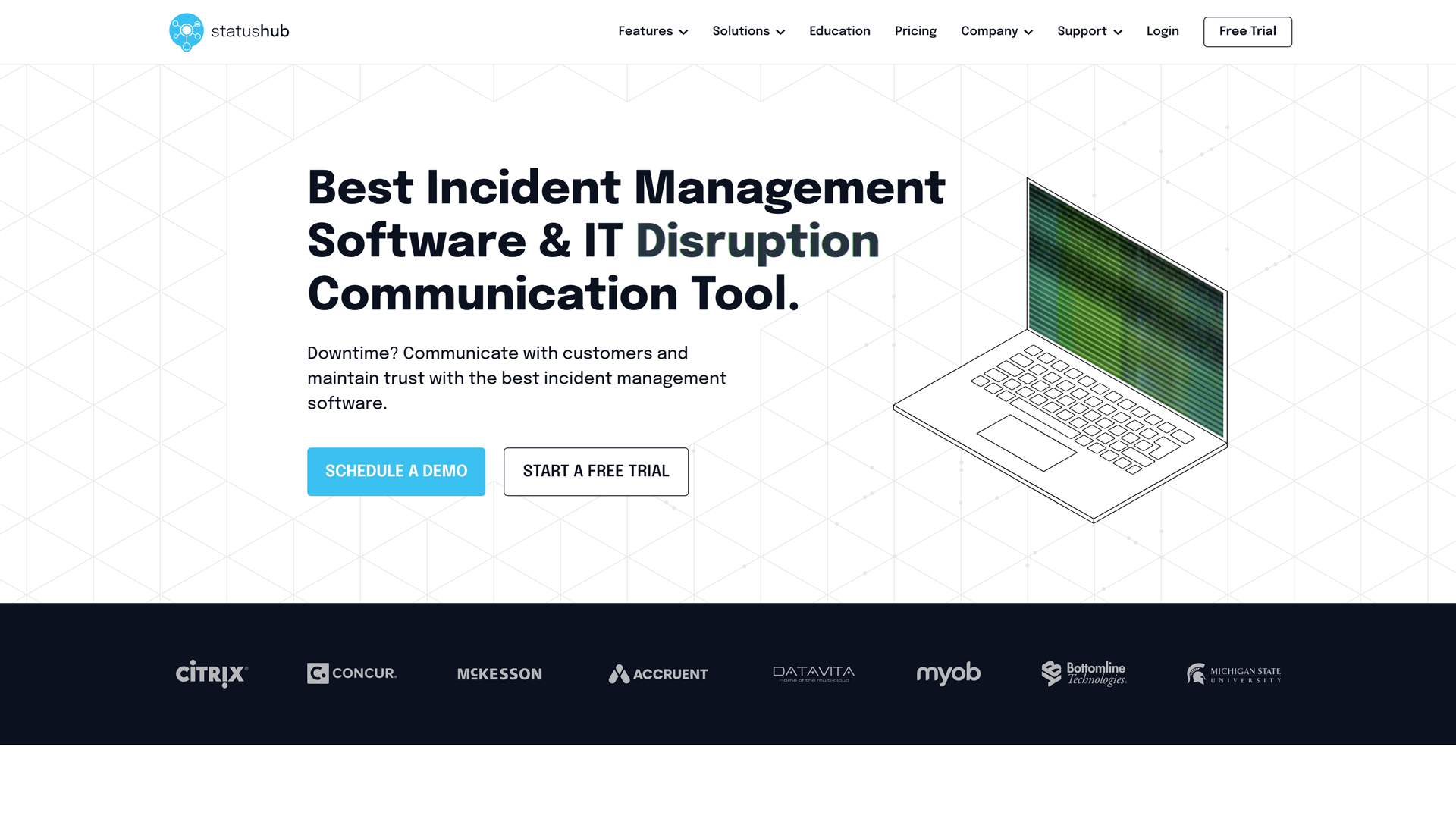
StatusHub is a dedicated status page provider that focuses on incident communication for IT teams. It’s a good alternative for businesses looking to keep users informed during outages.
Key Features
- Public and private status pages for internal and external audiences.
- Detailed incident management and communication features.
- Integrates with tools like Slack, PagerDuty, and more.
Limitations
- StatusHub doesn’t aggregate third-party statuses like StatusGator.
- StatusGator covers far more services and integrates better into multi-region operations.
Pricing
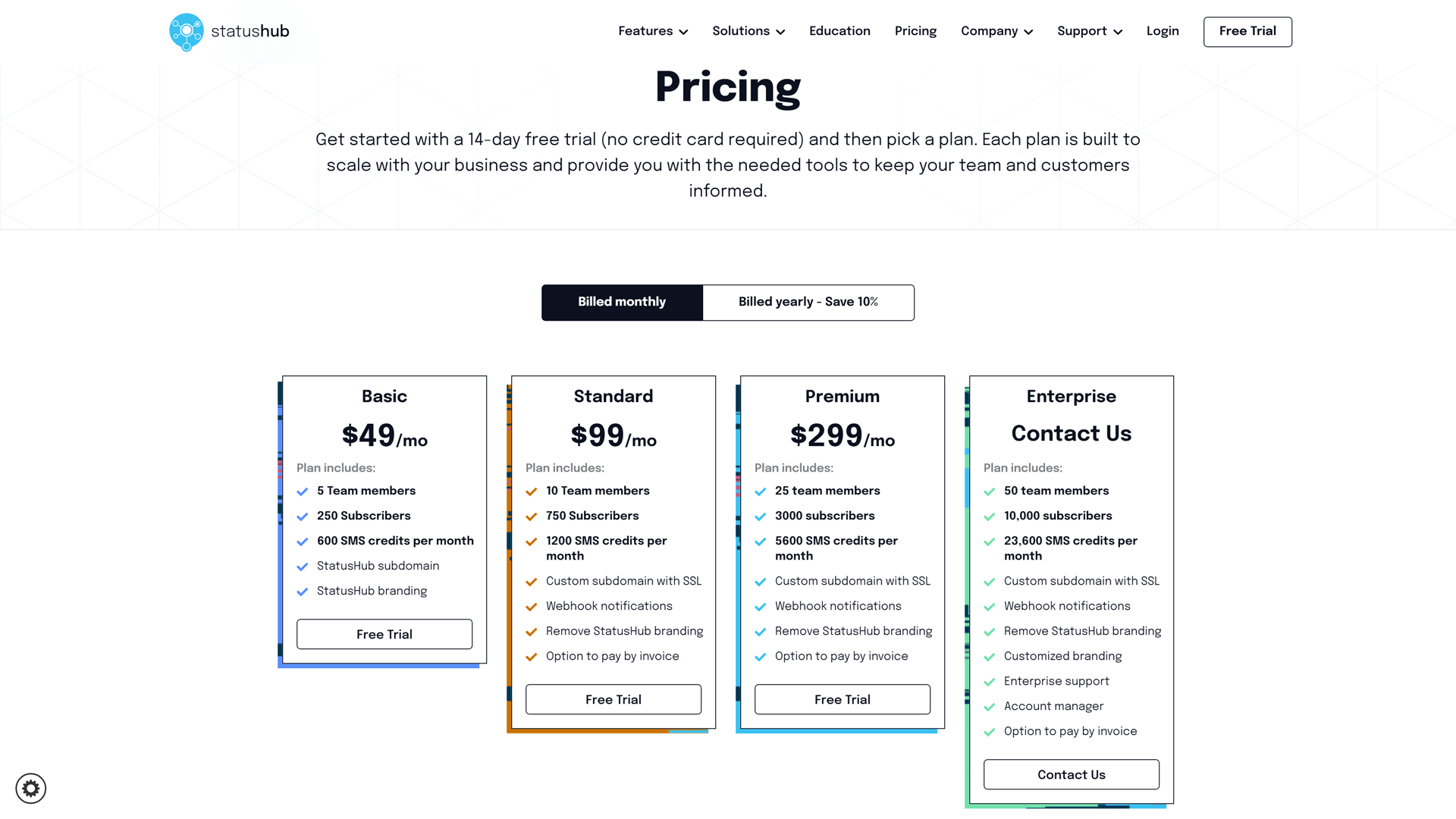
StatusHub pricing plans start at $14 per month with an annual subscription. StatusHub offers to try their services for free for 14 days. No free plan.
5. IncidentHub

IncidentHub is a free alternative for smaller businesses or teams that need basic monitoring. It’s easy to use but lacks the robust features of EagleStatus or StatusGator.
Key Features
- Monitors a limited number of third-party services.
- Free tier available for basic users.
Limitations
- IncidentHub monitors far fewer services than StatusGator (or even EagleStatus).
- It doesn’t offer custom incidents or status pages.
Pricing

IncidentHub pricing starts at $35 per month with the annual plan. IncidentHub has a free plan too.
6. IsDown
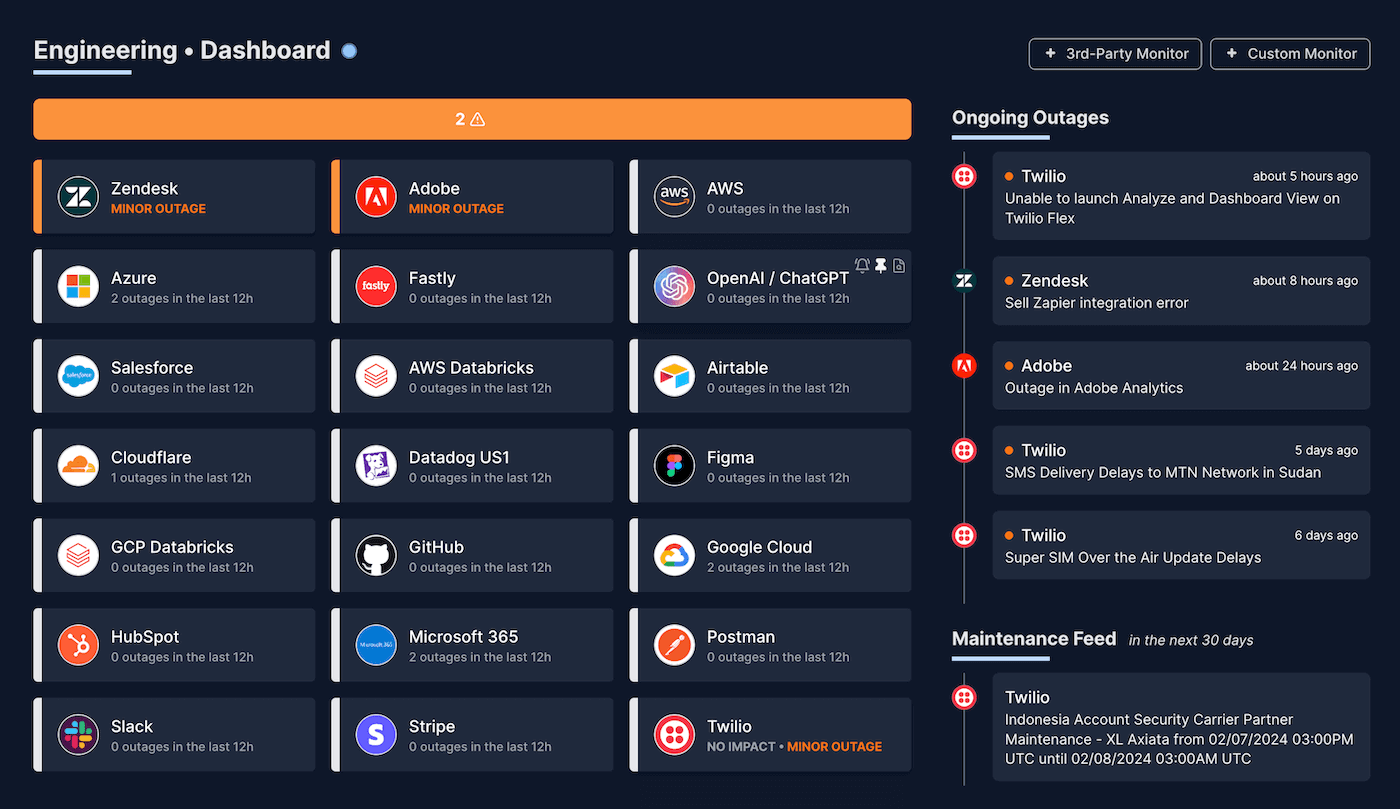
IsDown is a solid choice for monitoring SaaS providers and cloud services. It offers a clean interface and reliable notifications.
Key Features
- Tracks outages for around 3,300 cloud services.
- Offers email and Slack notifications for incidents.
Limitations
- IsDown tracks around 3,300 services compared to StatusGator’s 4,800+.
- Limits status page subscribers to 200 on the lowest plan, while StatusGator allows up to 500 subscribers on a free plan.
- No free plan.
Pricing
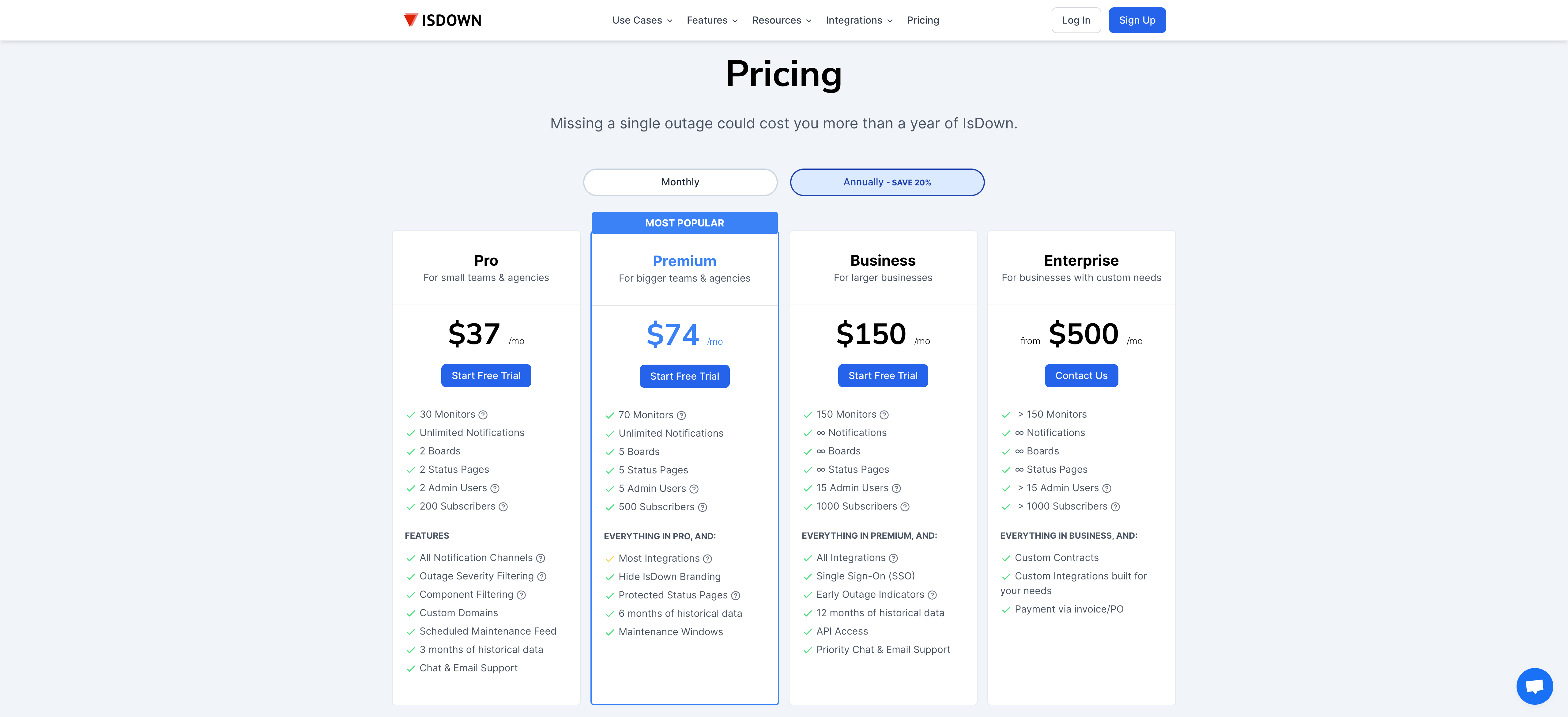
IsDown prices start at $37 per month on an annual subscription. No free plan is available.
7. OutLogger
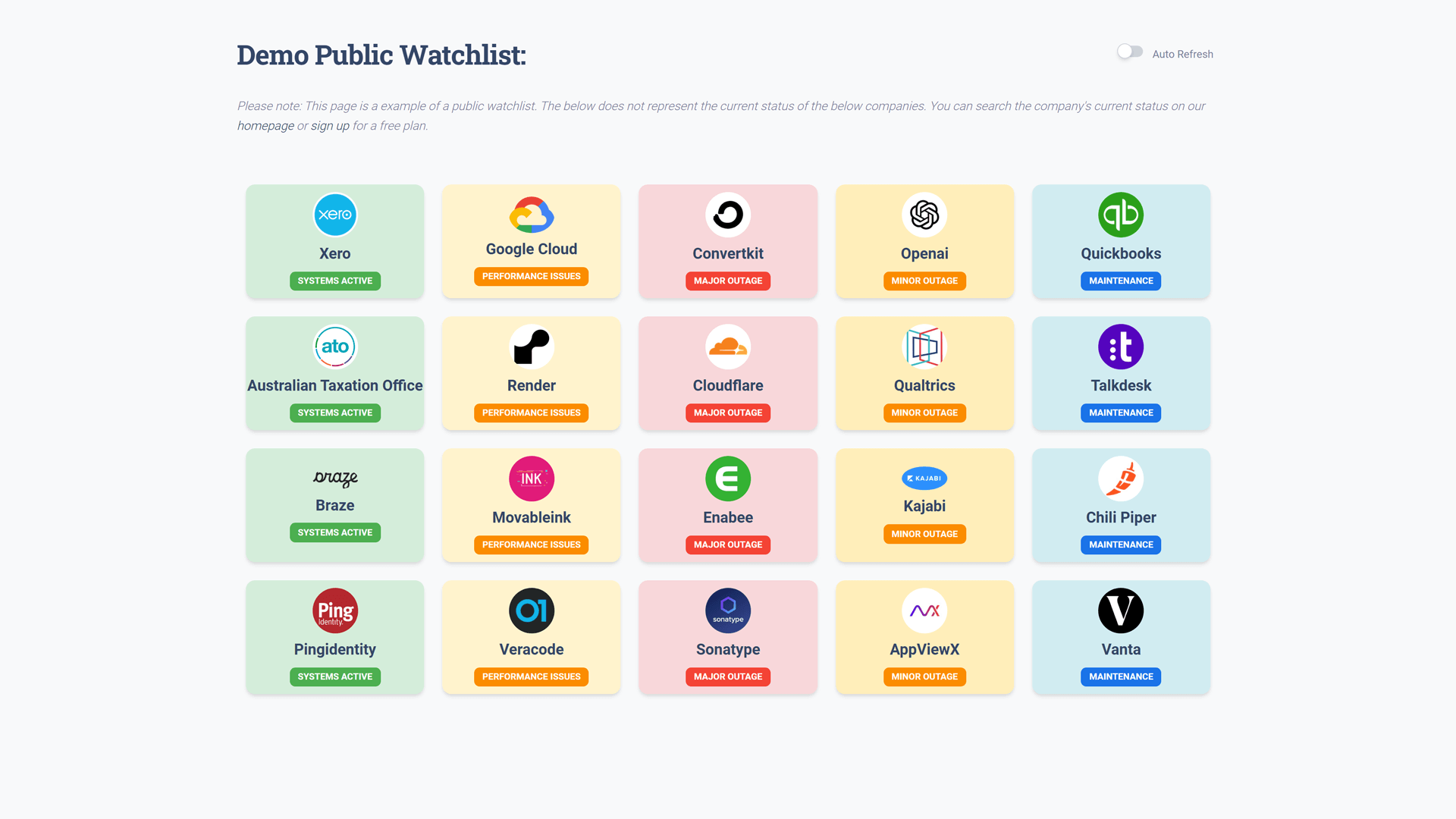
Outlogger is a basic tool for tracking outages and incidents. It’s best suited for small teams with minimal requirements.
Key Features
- Logs outages for popular cloud services.
- Basic notification options.
Limitations
- Outlogger doesn’t support custom notifications, status pages, or incident communication.
- Its service library is significantly smaller.
Pricing
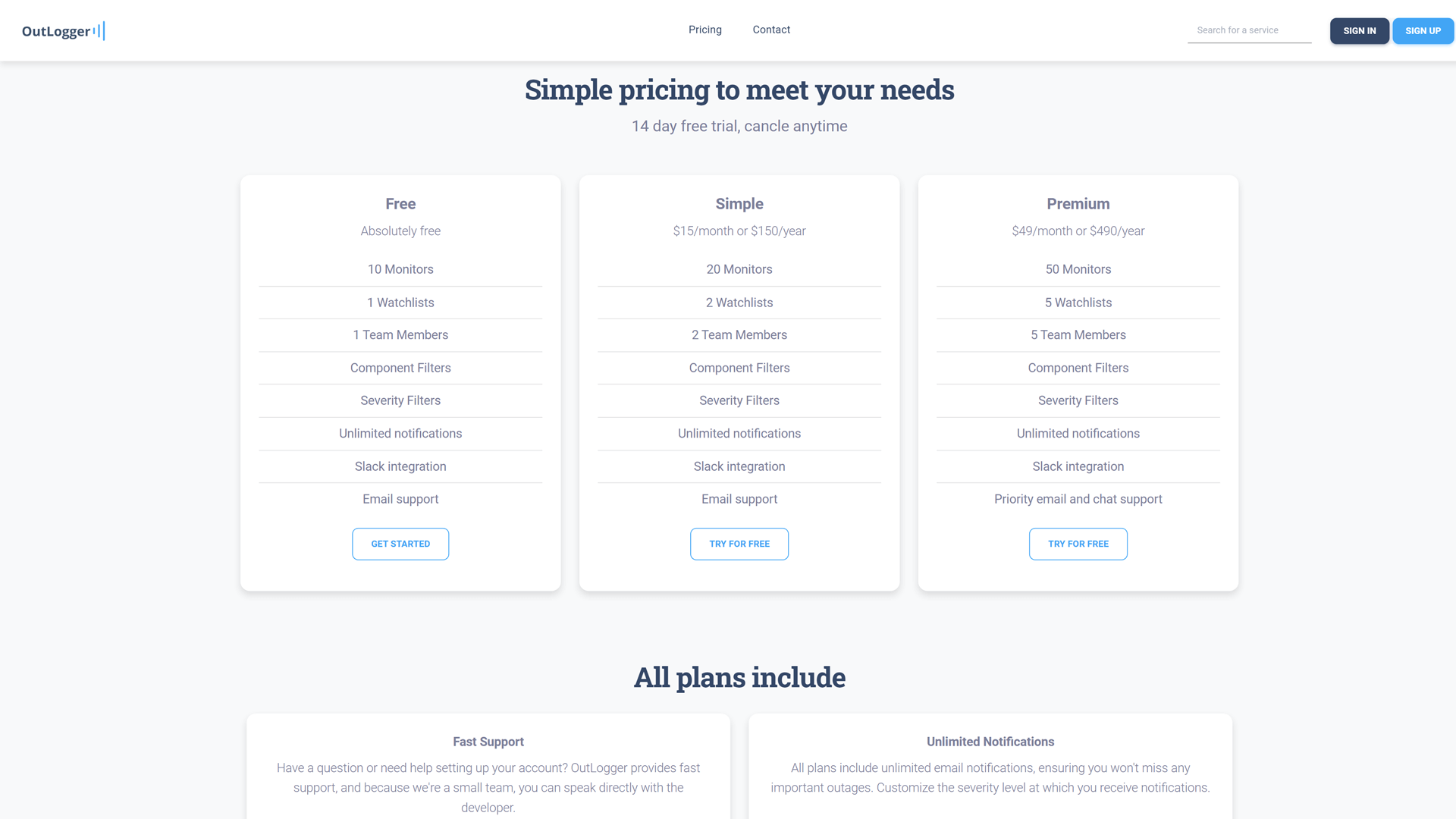
OutLogger pricing starts at $15 per month on the annual plan.
8. DownForEveryoneOrJustMe

This webpage is great for quickly checking if a website or service is down but lacks comprehensive monitoring capabilities.
Key Features
- Simple tool for checking website availability.
- Instant status checks without requiring an account.
Limitations
- It doesn’t support automated monitoring or notifications.
- It’s not suitable for SaaS or cloud outage tracking.
Pricing
DownForEveryoneOrJustMe is a website with an online checker that is available to anyone.
9. StatusSight
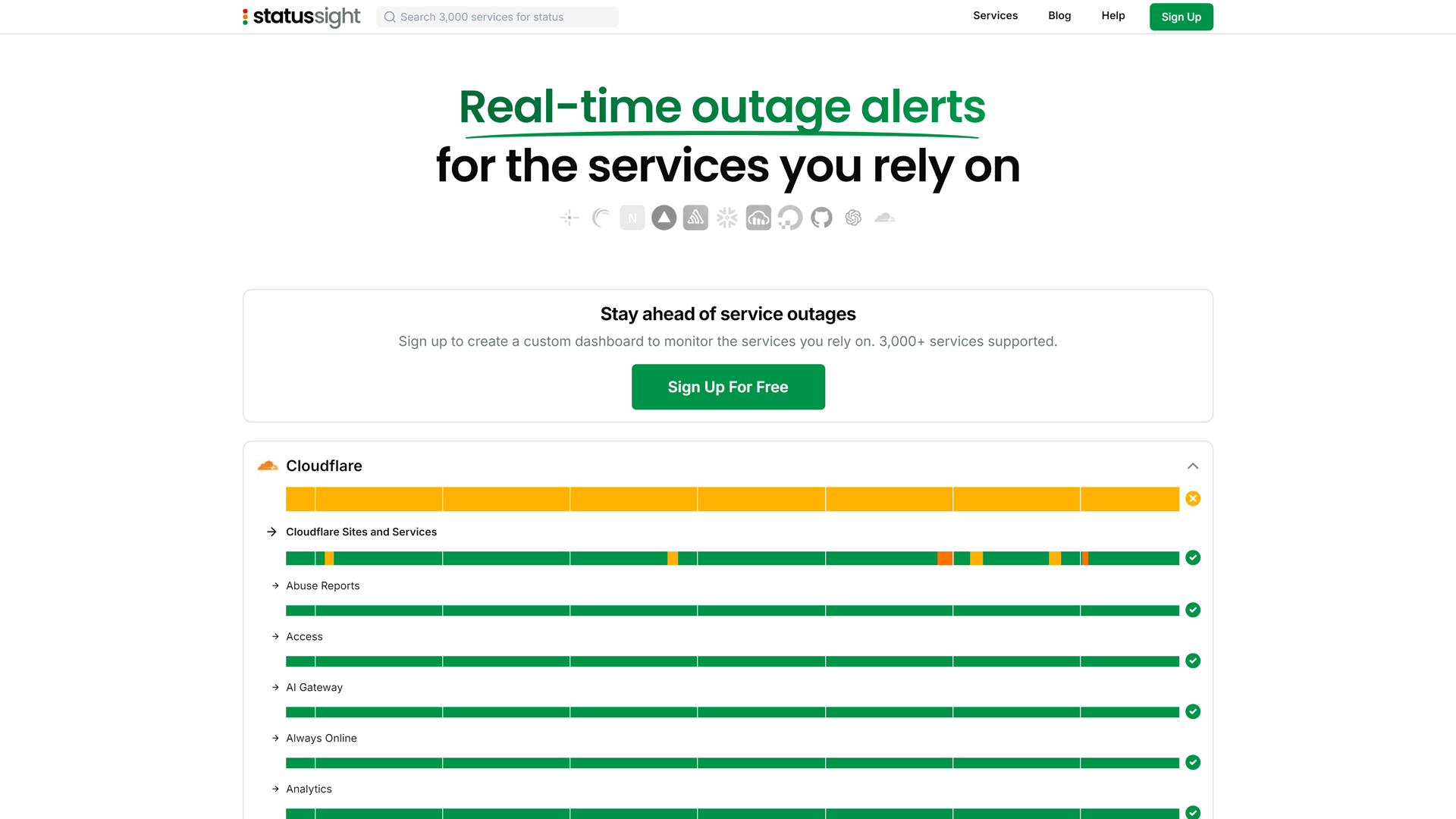
StatusSight is a newer entrant to the cloud monitoring space, offering simple status aggregation for businesses.
Key Features
- Aggregates statuses for popular SaaS providers.
- Displays service updates on a dashboard.
Limitations
- StatusSight’s service library is smaller, and it lacks notification flexibility.
- No support for custom incidents or status pages.
Pricing
StatusSight is free but you will have to contact them for additional dashboards. They do not keep the prices in the open.
10. OneUptime

OneUptime is an incident management and monitoring platform that combines uptime monitoring, incident tracking, and status page management in a single tool.
Key Features
- Real-time monitoring of websites, APIs, and infrastructure for uptime and performance issues.
- Automatic logging and managing incidents, ensuring rapid response to outages.
- Custom public status pages
- Integrates with Slack, PagerDuty, and other communication tools.
- Notifications tailored to specific teams or services.
Limitations
- OneUptime’s primary focus is on website and API monitoring.
- OneUptime does not support custom incidents for tracking third-party services by default.
Pricing

OneUptime pricing starts at $20 per month per year. They also have a free plan.
Conclusion
When it comes to monitoring SaaS providers’ statuses, tracking cloud service outages, or managing incident notifications, StatusGator offers the most comprehensive solution. With 4,800+ services monitored, public and private status pages, and custom incident management, it far surpasses EagleStatus and its competitors.
Don’t settle for basic tools—choose StatusGator for a scalable, reliable, and feature-rich cloud monitoring solution.
Start your free trial today!FAQ
What tools can I use to monitor the uptime of SaaS applications like Google Workspace, MS365, Slack, and Dropbox?
If you need a tool to monitor SaaS applications like Google Workspace, MS365, Slack, and others, check out StatusGator. This platform automatically notifies you and your clients about outages. StatusGator tracks over 4,100 SaaS and cloud services, sends real-time alerts via email, Slack, or other integrations, and even allows you to customize notifications based on service components or regions. Additionally, StatusGator offers public and private status pages to streamline incident communication.
Is there a web service for tracking outages of cloud providers?
Yes, StatusGator tracks cloud provider outages. StatusGator is one of the most comprehensive services, monitoring the official status pages of providers like AWS, Google Cloud, Microsoft Azure, and more. It aggregates this data, normalizes it, and delivers proactive alerts so you’re always in the know about your dependencies.
Other tools like IncidentHub, StatusTicker, and DownDetector also provide monitoring but with fewer services covered or less customization compared to StatusGator.
How can I monitor the public status pages of cloud providers?
Monitoring public status pages manually can be time-consuming. Tools like StatusGator automate this process by aggregating and normalizing updates from over 4,100 status pages. It ensures you get real-time notifications whenever a provider reports an issue, saving you the hassle of checking multiple pages yourself.
Why is it important to monitor third-party SaaS providers?
It’s important to monitor third-party SaaS providers as they are critical to business operations If one of them goes down, it can disrupt workflows, customer service, or even revenue streams. Monitoring their uptime helps you:
- Stay informed about outages before they affect your business.
- Communicate incidents proactively to your team or customers.
- Reduce downtime impact by quickly pivoting to alternatives or workarounds.
StatusGator allows you to monitor third-party SaaS providers and stay abreast of outages, even before the providers officially publish them to their status pages.
What’s the difference between StatusGator and EagleStatus?
The difference between StatusGator and EagleStatus is that StatusGator is a more comprehensive tool than EagleStatus, offering:
- Monitoring for 4,100+ services (compared to 1,700 by EagleStatus).
- Public and private status pages for better communication.
- Advanced notification filtering by service components and regions.
- Custom incident management for services is not automatically tracked.
Can I monitor specific components of a service, like AWS regions or GitHub Actions?
Yes, StatusGator lets you monitor specific components of services, such as AWS regions, Google Workspace apps, or GitHub Actions. This level of granularity ensures you receive notifications tailored to the parts of the service that matter most to your business.
How much does it cost to monitor cloud outages?
It costs from $35 to $1,500 per month on annual plans to monitor cloud outages. Pricing varies depending on the tool and the number of services you want to monitor, the number of subscribers to your status page, and other aspects.
For example, StatusGator offers flexible pricing tiers starting with a free trial for up to 10 monitors.
Other tools like IncidentHub or IsDown have free or budget-friendly plans but may lack advanced features like custom incidents or private status pages.
How do I choose the best EagleStatus alternative?
To choose the best EagleStatus alternatives, consider the following:
- Service Coverage: Does it monitor all the services your business relies on?
- Notifications: Can it filter alerts by service components or regions to reduce noise?
- Integration: Does it integrate with your existing communication tools like Slack or MS Teams?
- Customization: Can you create public or private status pages, and publish manual incidents? For a robust, scalable solution, StatusGator checks all these boxes and more.