
StatusSight Overview
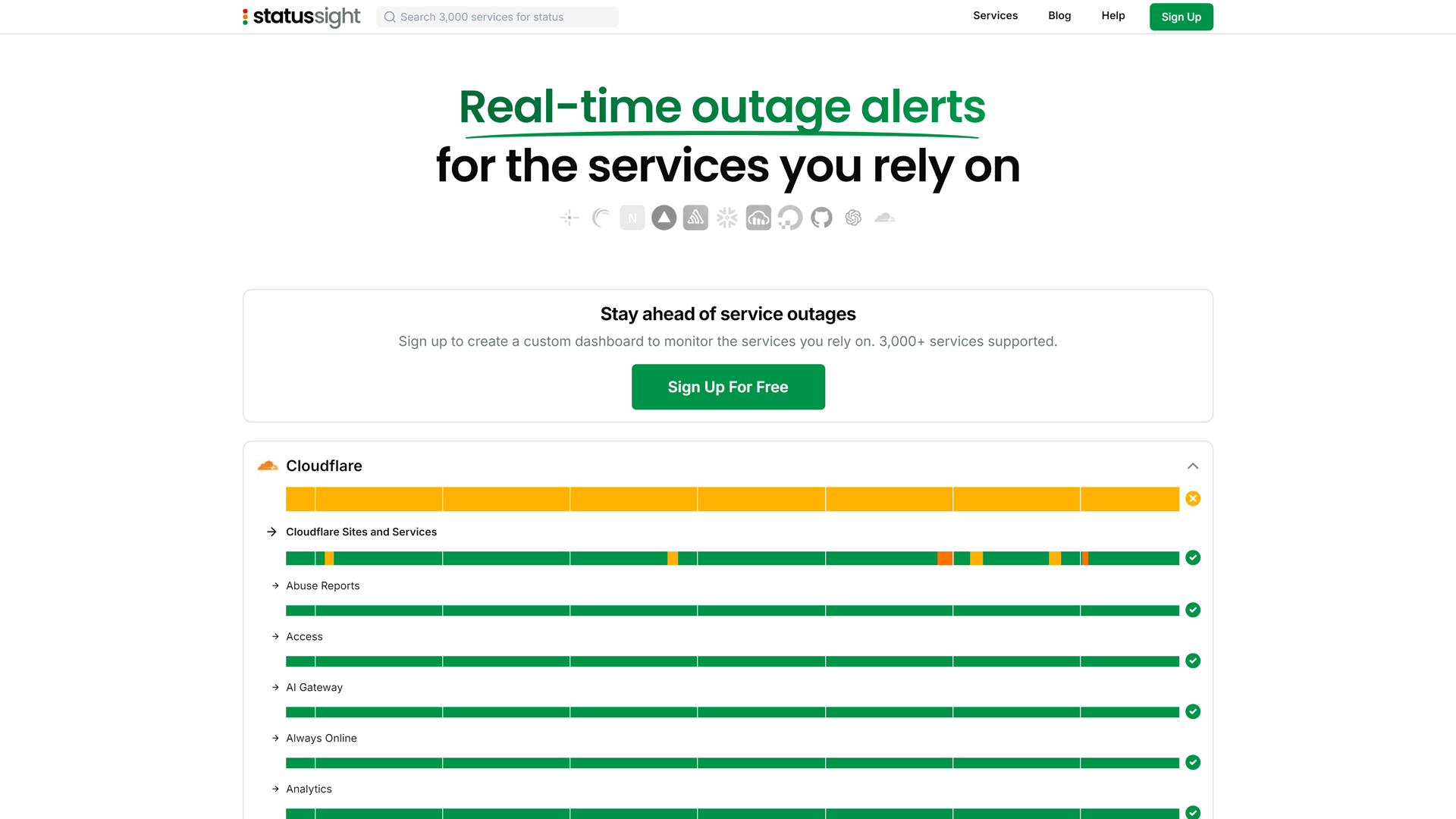
StatusSight is designed to provide a simple way to monitor the statuses of popular SaaS providers.
By aggregating status pages into a single dashboard, it helps users save time by reducing the need to check multiple status pages.
Key Features of StatusSight
- Status Aggregation: Consolidates status updates for 3,000 SaaS providers, apps and websites in one dashboard.
- Centralized Dashboard: Displays statuses for services you rely on for quick, at-a-glance updates.
Why Look for an Alternative?
While StatusSight offers the basics, its limited feature set may not suit businesses or teams requiring:
- Extensive Service Coverage: StatusSight’s library is smaller compared to other tools.
- Custom Notifications: It lacks the flexibility to tailor alerts based on specific services or incidents.
- Status Page Capabilities: There is no option to create public or private status pages.
- Advanced Integrations: StatusSight doesn’t integrate with tools like Slack, MS Teams, or PagerDuty for streamlined communication.
For organizations seeking advanced functionality, StatusSight’s simplicity might feel restrictive. That’s where more robust solutions, like StatusGator, come into play.
7 Alternatives to StatusSight in 2025
1. StatusGator

StatusGator is a feature-rich status monitoring platform trusted by businesses of all sizes. Unlike StatusSight, it goes beyond simple status page aggregation to offer a full suite of tools for managing incidents, communicating updates, and proactively monitoring critical services.
Key Features
- Extensive Third-Party Monitoring
StatusGator aggregates status updates from over 4,800 cloud and SaaS providers, making it the most comprehensive monitoring solution in the market. Whether you depend on AWS, Slack, or Zoom, StatusGator ensures you’re always informed. - Public and Private Status Pages
Create branded, shareable status pages for external customers or private pages for internal teams. These pages keep stakeholders informed and reduce the volume of support inquiries during incidents. - Early Warning Signals
StatusGator provides early warning signals, notifying users of potential issues before they appear on official status pages. This proactive feature ensures you’re prepared to address disruptions before they escalate. - Custom and Website Monitoring
Go beyond third-party status monitoring with StatusGator’s ability to track your own website’s uptime and create custom monitors for unique systems. This ensures all critical components are covered. - Real-Time Notifications Across Multiple Channels
Keep your team and customers informed with real-time updates via Slack, MS Teams, email, SMS, webhooks, and APIs. Notifications are fully customizable, ensuring you only receive the alerts that matter. - Customizable and Brandable Status Pages
Align your status pages with your brand by customizing logos, favicons, and domains. This builds trust with your audience and reinforces professionalism during incidents. - Advanced Integration Options
StatusGator integrates seamlessly with tools like PagerDuty, StatusHub, and more, allowing it to fit effortlessly into your existing workflows. - Embeddable Widgets and TV Integration
Display live status updates on your website or intranet using embeddable widgets, or keep your team informed with TV integration for real-time updates.

Benefits of StatusGator
- Comprehensive Coverage: StatusGator monitors more services, compared to the smaller library offered by StatusSight.
- Proactive Incident Management: Stay ahead of service disruptions and reduce response times.
- Enhanced Transparency: Build trust with customers by keeping them informed through branded status pages.
- Reduced Support Load: Proactively communicating incidents reduces the volume of support tickets during outages.
- Streamlined Workflows: Integrations with popular tools like Slack and PagerDuty make it easy to incorporate StatusGator into your existing systems.
- Monitor Services without the Official Status Pages: Check out ADP status, Workday status, Proofpoint status, and more.
Pricing
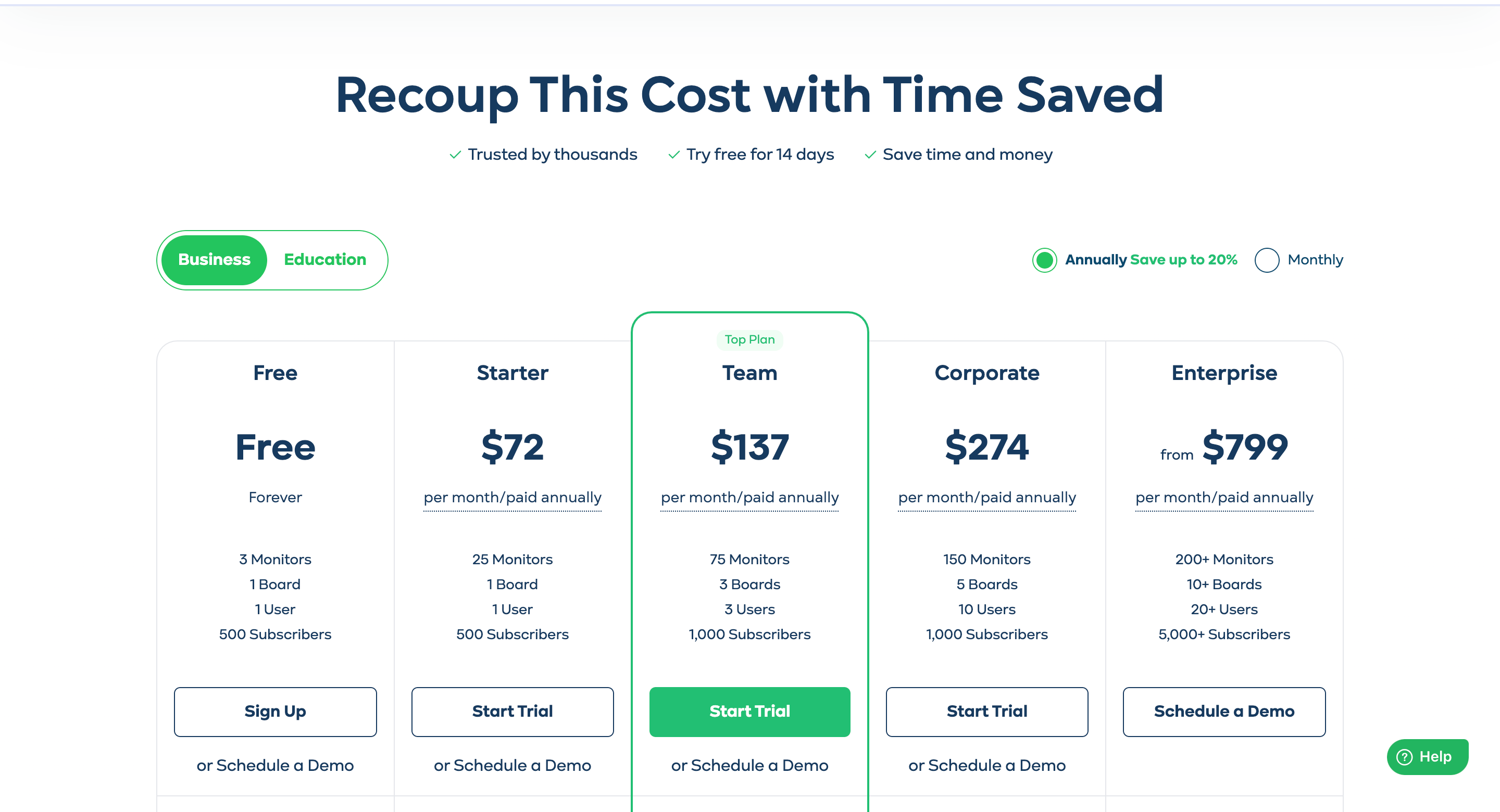
- Free Plan: 3 monitors, 1 board, 500 subscribers, early warning signals.
- Paid Plans: Paid plans start from $72 per month. Try StatusGator for free for 14 days.
2. IncidentHub.cloud
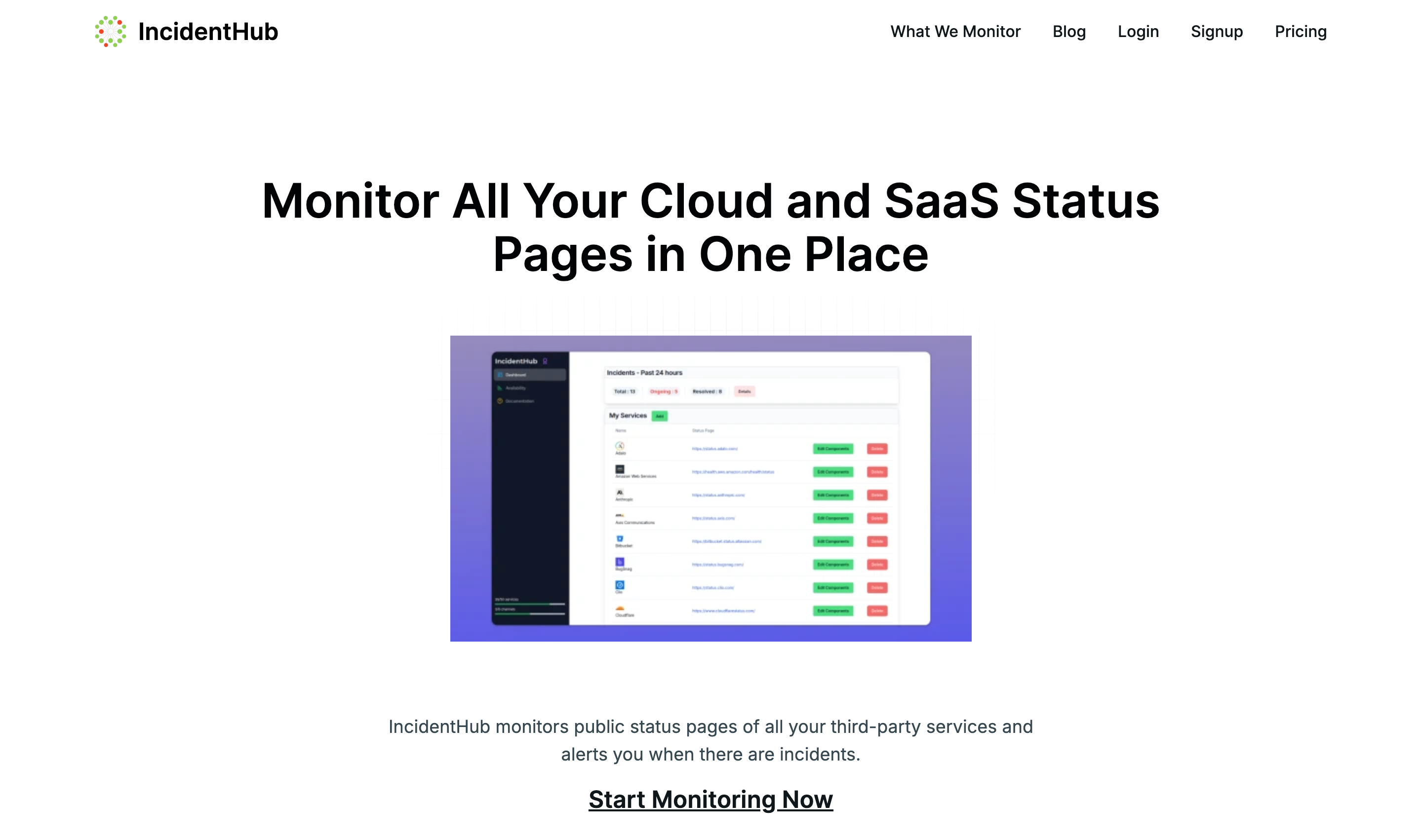
IncidentHub.cloud is a versatile status monitoring tool designed for businesses that rely on multiple third-party cloud and SaaS providers. It focuses on real-time updates and offers features to help teams manage outages more effectively.
Key Features
- Real-Time Notifications: Receive alerts instantly via Slack, Discord, PagerDuty, email, and webhooks.
- Multi-Vendor Monitoring: Monitor hundreds of providers, including AWS, Google Cloud, Zoom, and GitHub.
- Component Filtering: Tailor alerts to specific services or components.
- Historical Insights: Access past data to identify patterns and improve planning.
Pricing
- Free Plan: Monitor up to 20 services with 2 notification channels.
- Paid Plans: $35/month for up to 50 services and advanced features like unlimited notifications and webhook integration.
3. StatusHub
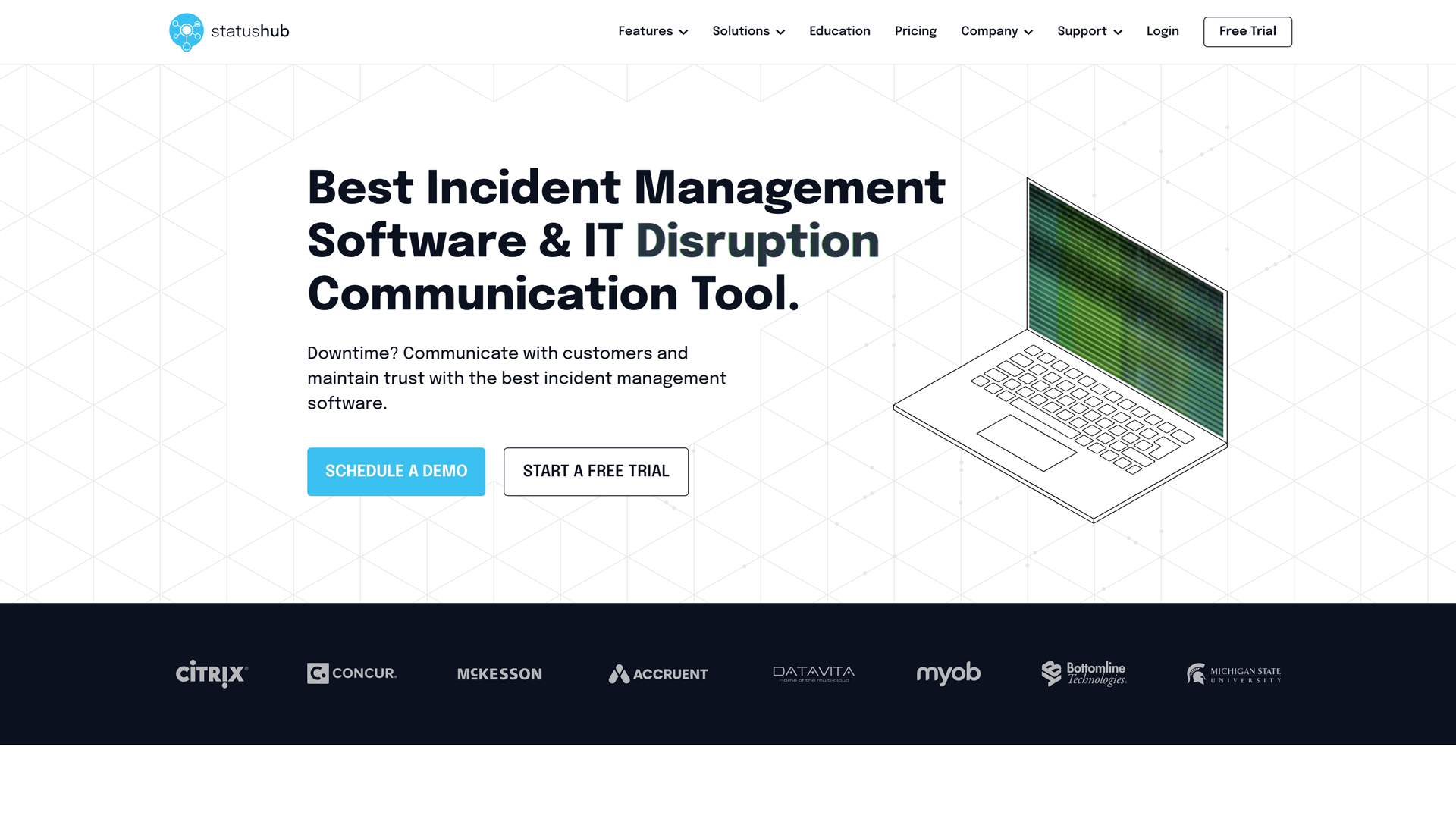
StatusHub is a dedicated status page provider designed to streamline incident communication for IT teams and businesses. It offers tools to keep both internal stakeholders and external customers informed during outages or disruptions, making it a solid choice for organizations focused on clear and professional status updates.
Key Features
- Public and Private Status Pages: Create branded status pages tailored for external users or internal teams, ensuring transparent communication across all audiences.
- Incident Management Tools: Provides detailed tools for managing and communicating ongoing incidents, enabling teams to track and resolve issues efficiently.
- Integrations with Popular Tools: Connects with platforms like Slack, PagerDuty, and other communication tools to ensure seamless workflows.
- Advanced Communication Features: While StatusSight focuses solely on status aggregation, StatusHub excels at creating branded status pages and managing incidents.
- Customization: Offers private and public status pages, which StatusSight does not support.
- Integrations: StatusHub integrates with Slack and PagerDuty, features unavailable in StatusSight.
Unlike StatusGator, StatusHub does not aggregate third-party statuses, limiting its functionality for businesses relying on multiple external services.
StatusHub covers fewer services compared to StatusGator, which monitors over 4,700 providers.
Pricing
- Free Plan: Not available.
- Paid Plans: start at $14/month with an annual subscription. The platform offers a 14-day free trial.
4. OutLogger
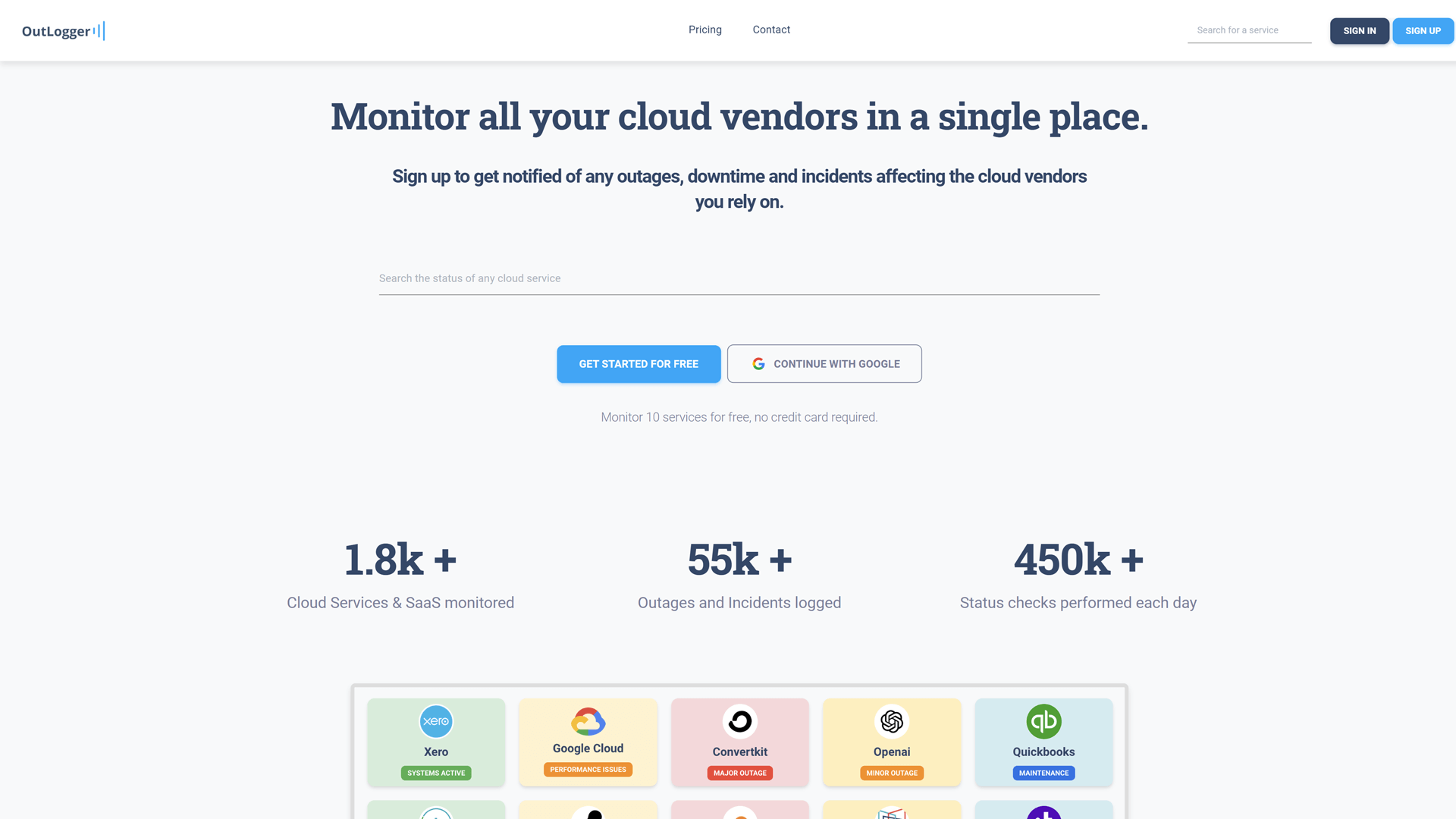
OutLogger is a straightforward status monitoring tool built for small teams with minimal requirements. It tracks outages and incidents for popular cloud services, providing basic functionality to help teams stay informed.
While affordable, its limited features and smaller service library may not meet the needs of larger organizations or teams with more complex monitoring demands.
Key Features
- Outage Tracking: Logs outages for widely used cloud services, offering a centralized view of service disruptions.
- Basic Notifications: Sends simple alerts to notify users about tracked outages.
OutLogger supports fewer services compared to StatusGator. There’s no support for public or private status pages, which limits communication capabilities.
Pricing
- Free Plan: Yes, with limited functionality.
- Paid Plans: start at $15 per month with an annual plan. While cost-effective for basic use, the lack of advanced features may not justify the price for businesses requiring comprehensive monitoring.
5. StatusTicker
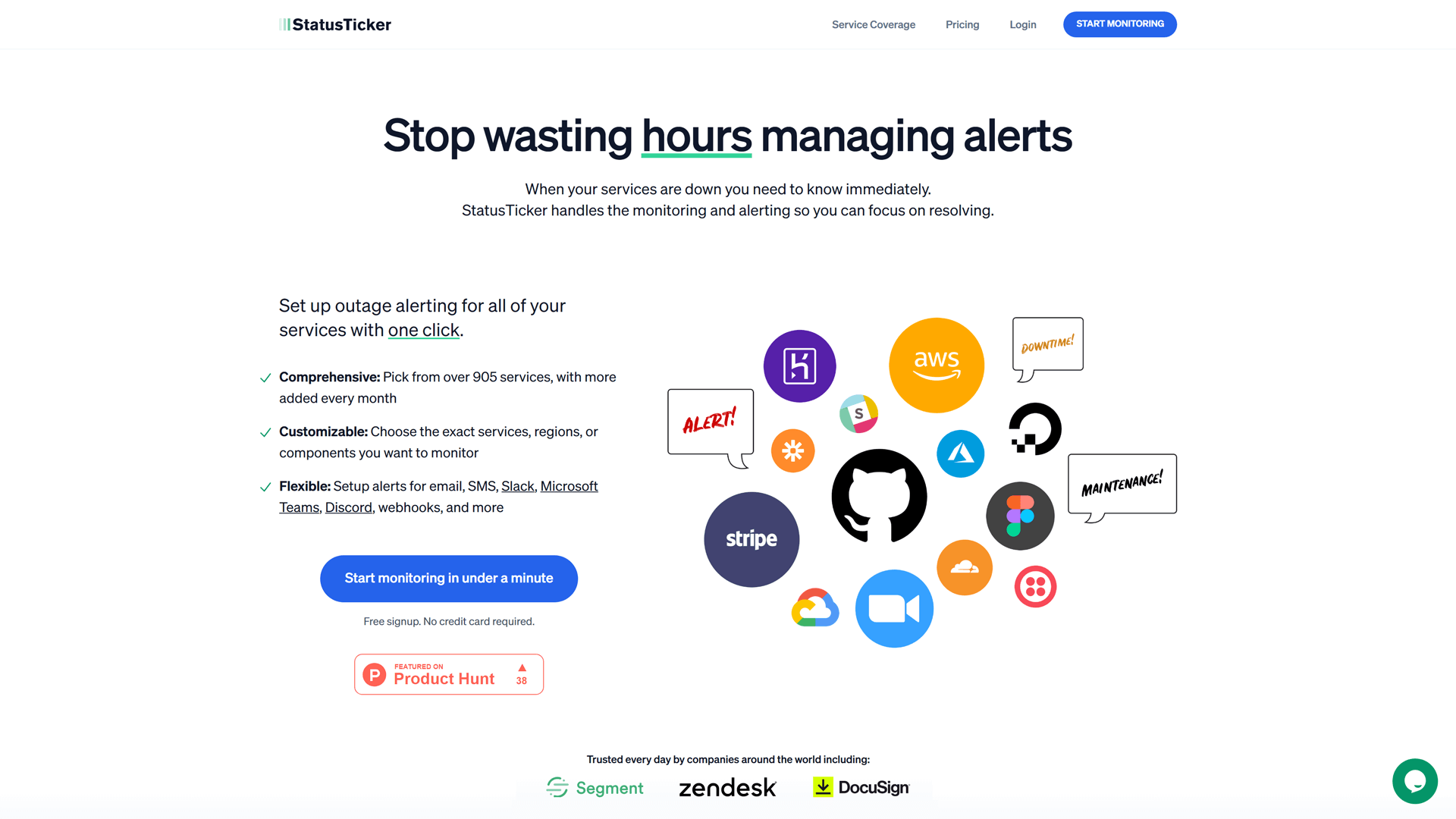
StatusTicker is a versatile monitoring tool tailored for businesses seeking efficient incident communication and status updates.
By combining status page creation with customizable monitoring, StatusTicker ensures that both internal teams and external customers stay informed during service interruptions. It is an excellent choice for teams looking to improve transparency and streamline operations.
Key Features
- Comprehensive Service Coverage: Tracks the statuses of over 905 services and thousands of components across major cloud providers, SaaS platforms, and more. Regular updates keep the service library relevant and robust.
- Customizable Monitoring: Focus your alerts on specific services, regions, or components to receive only the most relevant updates.
- Proactive Alerts Across Channels: Receive notifications via email, SMS, Slack, MS Teams, Discord, Telegram, PagerDuty, and webhooks, allowing seamless integration into your workflow.
- Public and Private Status Pages: Create branded and shareable pages (“tickers”) for customer or internal use. White-labeling options enable alignment with your brand.
- Real-Time Updates and TV Displays: Share live status updates on office TVs or wallboards, giving teams instant visibility into service disruptions or maintenance.
- Easy Integration: Works effortlessly with popular tools like Slack, PagerDuty, and MS Teams, and allows advanced automation through webhooks.
Pricing
- Free Plan: free sign-up is available.
- Paid Plans: starts at $9/month and includes unlimited monitors, one ticker, and one user. The Team plan price is $20/month and includes unlimited monitors, unlimited tickers, team members, white-labeling, and public tickers.
6. Downdetector

Downdetector is a widely recognized online tool for tracking outages across websites, games, communication platforms, and other digital services. Originally designed for consumers, it can also be useful for businesses to monitor general outages affecting cloud and SaaS providers. However, its dependence on user-reported incidents and lack of customization makes it less ideal for businesses needing comprehensive monitoring solutions.
Key Features
- User-Reported Outages: Tracks outages reported by users and cross-references them with official status pages for verification.
- Real-Time Outage Maps: Visualizes disruptions, providing a geographic overview of affected areas.
- Basic Notifications: Sends limited alerts for specific services to help users stay informed.
- Reliance on User Reports: User-generated data can sometimes be inaccurate or delayed.
- Limited Customization: No options for tailored notifications or monitoring specific components or regions.
- Lacks Status Pages: This does not provide the ability to create public or private status pages for incident communication.
- No Proactive Monitoring: Offers no early warning signals or comprehensive third-party monitoring like StatusGator.
Pricing
Downdetector allows free access to basic status updates. However, pricing for business-specific features is only available upon request, making it less transparent for organizations evaluating monitoring tools.
7. OneUptime

OneUptime is an all-in-one incident management and monitoring platform designed to streamline uptime tracking, incident response, and status page management. It’s a centralized solution for monitoring infrastructure while communicating updates during outages.
Key Features
- Real-Time Monitoring: Tracks websites, APIs, and infrastructure for uptime and performance issues, providing instant alerts.
- Incident Management: Automatically logs and manages incidents to ensure quick resolution and effective response.
- Custom Public Status Pages: Create branded status pages to keep customers informed during outages.
- Integration Options: Connects with tools like Slack, PagerDuty, and others to streamline communication workflows.
- Team-Specific Notifications: Customizable alerts for specific teams or services, enabling focused responses.
Pricing
- Free Plan: OneUptime offers a free plan for basic monitoring needs.
- Paid Plans: start at $20/month with annual billing.
Conclusion
While StatusSight is a practical option for basic monitoring, businesses with more complex needs should explore alternatives that offer broader service coverage, advanced integrations, and proactive incident management.
StatusGator leads the pack with its extensive library, real-time notifications, and customizable status pages. Other tools like IncidentHub, StatusHub, and StatusTicker provide specialized features that cater to different business needs.

FAQ
What is StatusSight?
StatusSight is a tool for aggregating status updates from SaaS providers into a centralized dashboard, offering basic functionality for monitoring outages.
Why should I look for an alternative to StatusSight?
Alternatives to StatusSight provide more advanced features, such as broader service coverage, custom notifications, status page creation, and integrations with tools like Slack and MS Teams. StatusGator, for example, monitors more status pages and offers advanced features compared to StatusSight.
What is the best alternative to StatusSight?
The best alternative to StatusSight is StatusGator, which monitors 4,000+ services, public and private status pages, and proactive alerts.
Are there free alternatives to StatusSight?
Yes, there are free alternatives to StatusSight. There are also tools like StatusGator, IncidentHub, and OneUptime that offer free plans with limited functionality, making them suitable for small teams.