
In recent years, only 45% of companies have an incident response plan in place. If your organization is among the 55% without one, it’s crucial to change that.
Service outages are inevitable. Cyberattacks and information security threats are more prevalent than ever. So having the right incident management software can be a game-changer for your organization, helping you respond swiftly and effectively when issues arise.
The challenge, however, lies in selecting the right incident management solution. To simplify your search, we’ve compiled a list of the top 25 incident management software for 2025.
We’ll also cover key aspects such as cost, benefits, and how to choose the right solution for your needs.
Moreover, we’ll delve into incident communication platforms like Atlassian’s Statuspage and status page aggregation solutions such as StatusGator.
StatusGator not only monitors your own services but also tracks the status of the external service providers you depend on. So StatusGator ensures you’re always aware of potential disruptions.

What is incident management software?
Incident management software is designed to help organizations detect, manage, communicate, and resolve incidents efficiently to alleviate their consequences. These incidents could range from cyber attacks to degraded performance, but incident management software is there to help.
Typically, most incident management software includes incident detection, automated notifications, root cause analysis, and real-time updating. Alongside this, features typically include documentation management, collaboration tools, automating routine tasks, and integration with other tools.
Ultimately, incident management software is designed to efficiently and timely resolve incidents in your organization.
Top Incident Management Software to Enhance Incident Response
1. StatusGator

StatusGator is an all-in-one incident communication tool. The platform enhances any incident management tools to streamline their incident response processes.
It combines system monitoring, website monitoring, and custom monitoring.
With many third-party tools in use, tracking their uptime is crucial. StatusGator aggregates thousands of status pages and even monitors services without them. If you rely on SentinelOne status or Proofpoint status, StatusGator helps you stay on top of outages effortlessly.
Main features:
- Public and private status pages
- Status page aggregation with a unified view into the statuses of 4,800+ cloud service providers and SaaS services
- Built-in website monitoring to get notifications on the outages affecting your website
- Option to publish incidents manually
2. Better Stack

Better Stack focuses on monitoring, debugging, and resolving downtime efficiently for its users. It integrates with various tools and offers features such as an on-call schedule calendar, incident merging, integrations, and Cron job monitoring.
Better Stack also offers helpful analysis features like audit timelines, screenshots, error logs, and custom alerting.
Main features:
- Incident merging
- On-call calendar
- Cron job monitoring
3. Freshservice

Typically an ITSM tool, Freshservice has various features including AI-powered insights such as chatbots and recommendations, automated routine tasks, and multi-channel support for communication. The platform integrates with service management tools.
Freshservice also claims it has easy deployment and 24/7 support to support scalability.
Main features:
- AI-powered insights and tools
- Multi-channel support
- Integration with service management tools
4. Statuspage
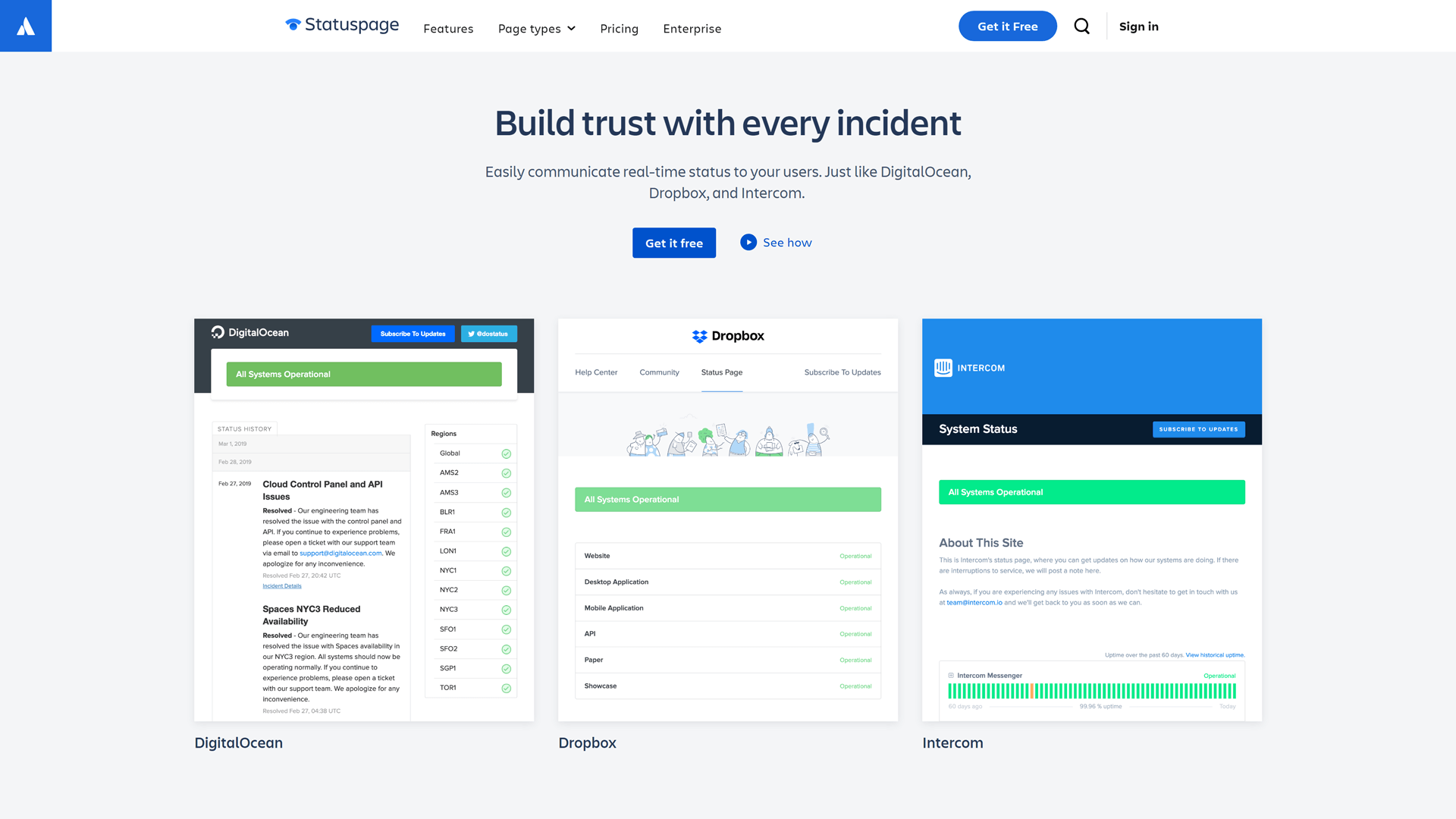
Powered by Atlassian, Statuspage is one of the more popular tools. It offers users an informative status page and public, private, and audience-specific status pages.
Key features include uptime history, integrations, and notification customization. Plans start at $29 for a public page.
Main features:
- The cheapest plan is $29 a month
- Notifications, integrations, uptime history, and detailed incidents
5. Instatus

By generating a status page for you in 10 seconds, Instatus is a popular choice of incident communication software and incident management tool.
Instatus status pages are basic, but display uptime history, status updates, offer notifications, and support integrations. It also supports unlimited team members and subscribers.
Main features:
- Rapid status page generation that offers uptime history and status updates
- Unlimited team members and subscribers
6. PagerDuty

Trusted by over 25,000 companies, PagerDuty describes itself as an essential platform for critical work. Some features include on-call scheduling for support, automated routine tasks, and integration with over 700 services.
Status pages and updates can be used to inform stakeholders, and incident workflows are included for teams. A mobile app is also included for on-the-go users.
Main features:
- AI-powered automation and Integrations with over 700 services
- Has a mobile app
7. Splunk On-Call (VictorOps)
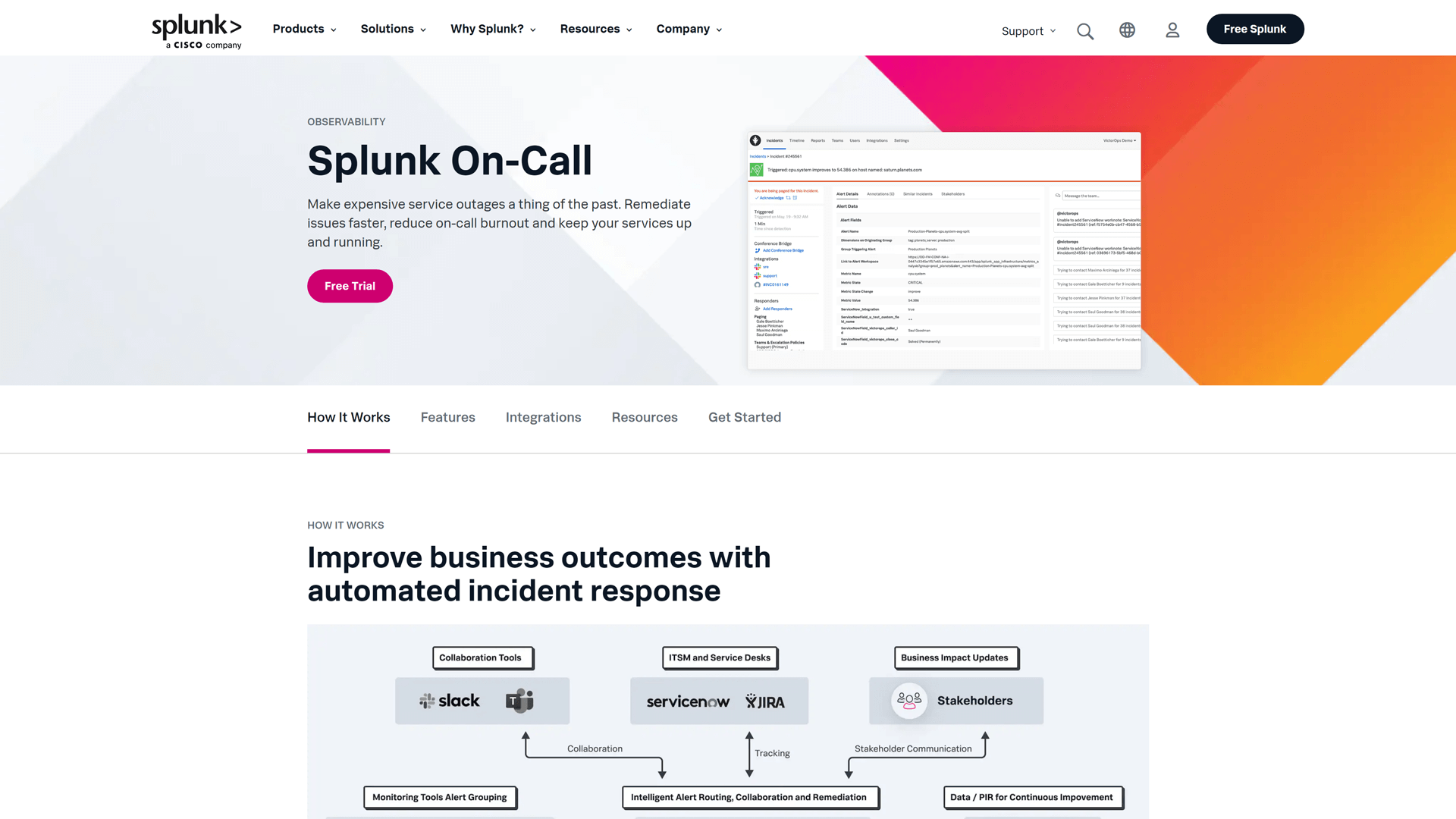
Splunk On-Call is an extension of Splunk services focusing on communication and problem management. By integrating alerting and messaging across Splunk products, users can customize existing Splunk features for incident management.
It centralizes incident information flow, supporting real-time alerting, collaboration, and faster incident resolution.
Main features:
- Centralizing incident resolution for Splunk users
- Splunk alerts using previous data and information
8. OpsGenie

Similar to Statuspage, OpsGenie is an Atlassian-powered tool designed for on-call management of alerts. It integrates with over 200 monitoring tools, automates alert routing based on schedules and teams, and facilitates collaboration. It also offers analytics for improving incident response efficiency and can be integrated with other IT tools.
Main features:
- Designed for on-call alert management
- Integrates with over 200 monitoring tools
9. ServiceNow IT Service
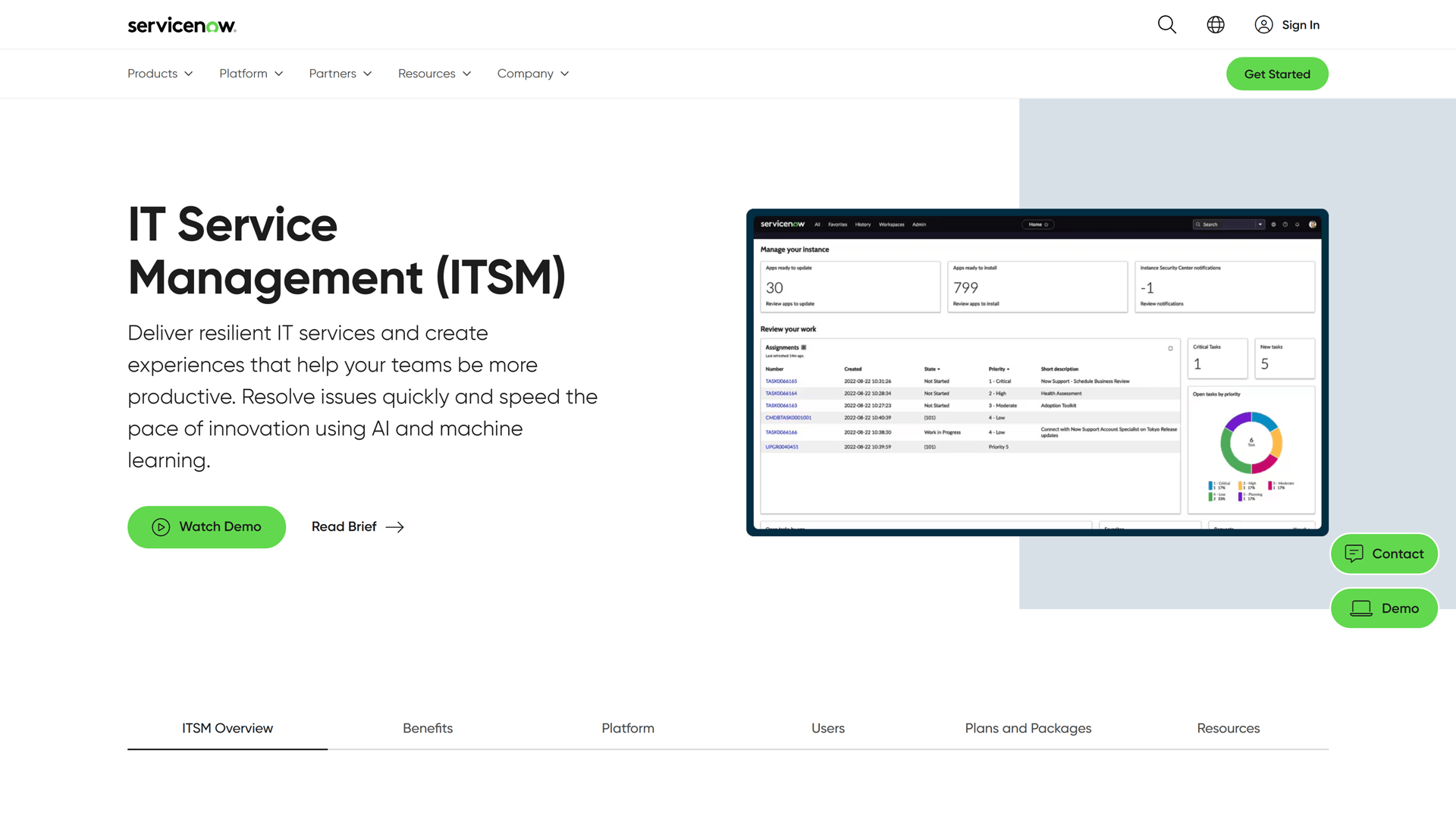
With a recent focus on the use of AI to help users, this ServiceNow incident management system offers a range of features.
This includes automated workflows, prioritizing incidents based on impact and urgency, and facilitating collaboration among teams. It offers real-time tracking, integrated knowledge bases, and reporting features.
Main features:
- AI-powered insights
- Automated workflows
- Detecting the severity of an incident
10. Zendesk

Zendesk is another incident management tool that is heavily based on AI. The Zendesk system includes real-time monitoring by the Zendesk Network Operations Center. The Center has an incident response team.
High-severity incidents trigger immediate action, issuing public updates within 15 minutes and detailed root cause analysis for teams in the heat of an incident.
Main features:
- Rapid status updates are published for high-severity incidents
- AI-powered
11. Spiceworks

Spiceworks offers a range of helpful guides and articles surrounding incident management, as well as their IT tools. Whilst their IT tools mostly focus on IT management, their connectivity dashboard tool offers real-time monitoring, troubleshooting features, and monitoring alerts.
Main features:
- Helpful information for incident management
- Connectivity dashboard for real-time monitoring
12. Jira Service Management
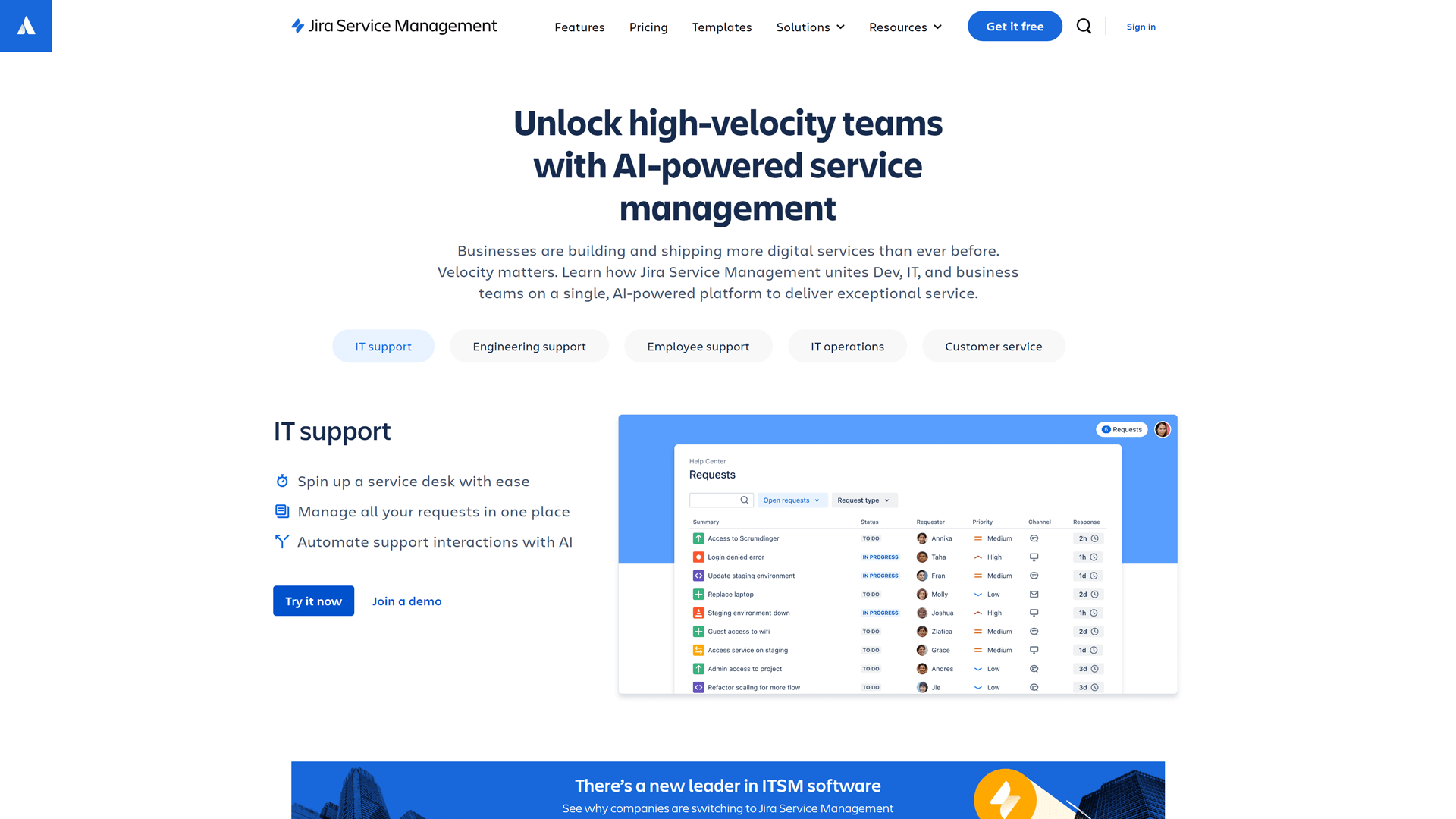
Another Atlassian-powered tool, Jira is an ITSM solution that can be used for managing all stages of the incident lifecycle. Features include automated workflows, real-time collaboration, customizable templates, and dynamic forms. It also supports an array of team sizes and requirements with efficient request handling, centralized knowledge management, and integration with over 1,000 apps.
Main features:
- Customizable templates and automated workflows
- Integrates with over 1,000 apps
13. New Relic

New Relic immediately shows off its key feature, ‘Free end-to-end monitoring for your entire stack in 5 minutes or less’ on its home page. Whilst specifically for monitoring your stack, it utilizes an applied intelligence (AIOps) platform, which is used for rapid detection, correlation, and resolution of incidents. Other features include over 750 integrations, insights, troubleshooting, and custom alerting.
Main features:
- Stack monitoring in 5 minutes or less
- AIOps platform
14. Datadog
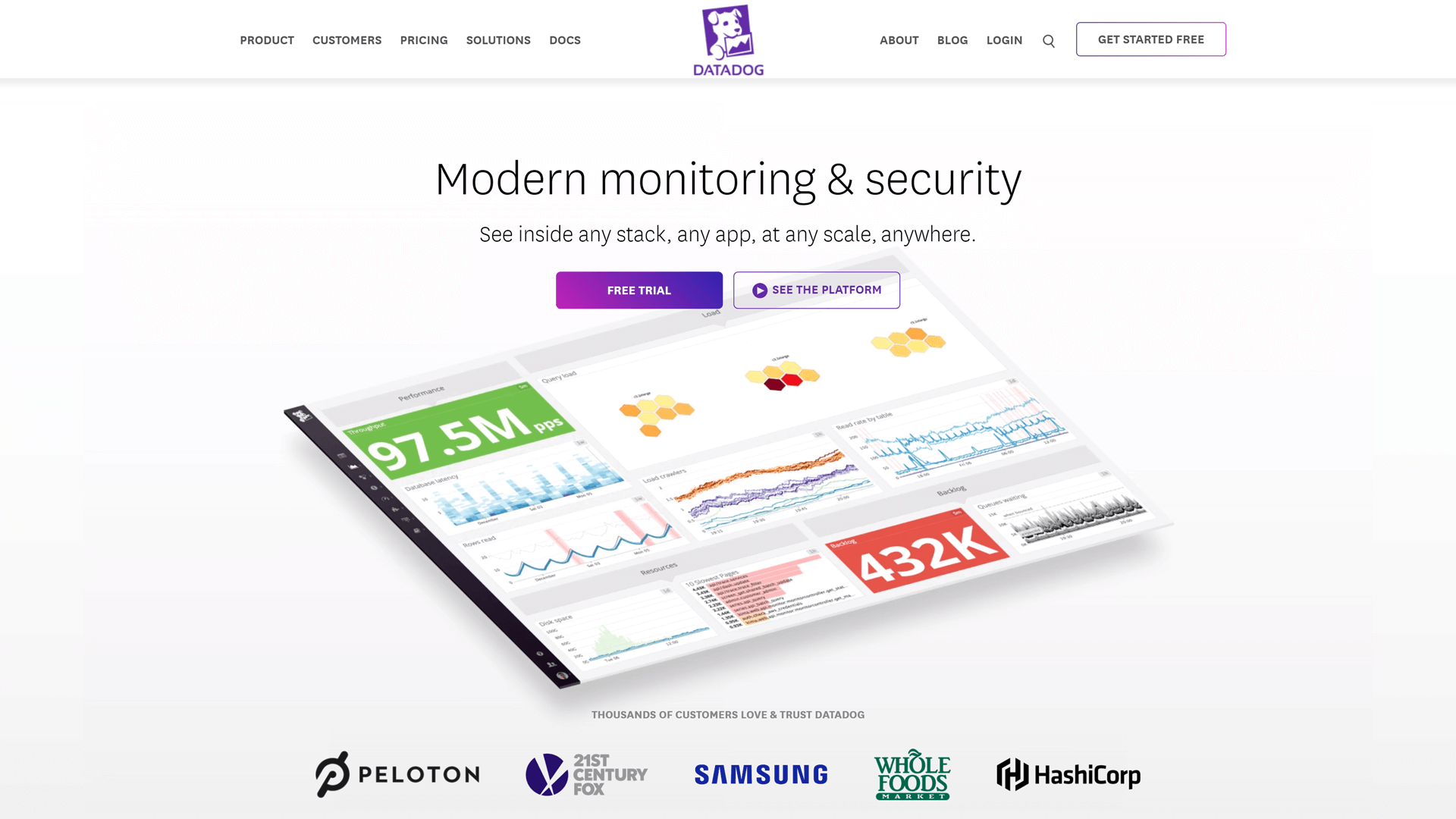
Specializing in cloud monitoring, Datadog offers real-time monitoring and a range of incident management tools.
On a single platform, users can gain in-depth insights into their systems, and real-time alerts, and integrate with over 700 services.
By offering a range of monitoring types, Datadog has various applications in incident management.
Main features:
- Multiple types of monitoring including cloud
- Integration with over 700 services
15. Corporater
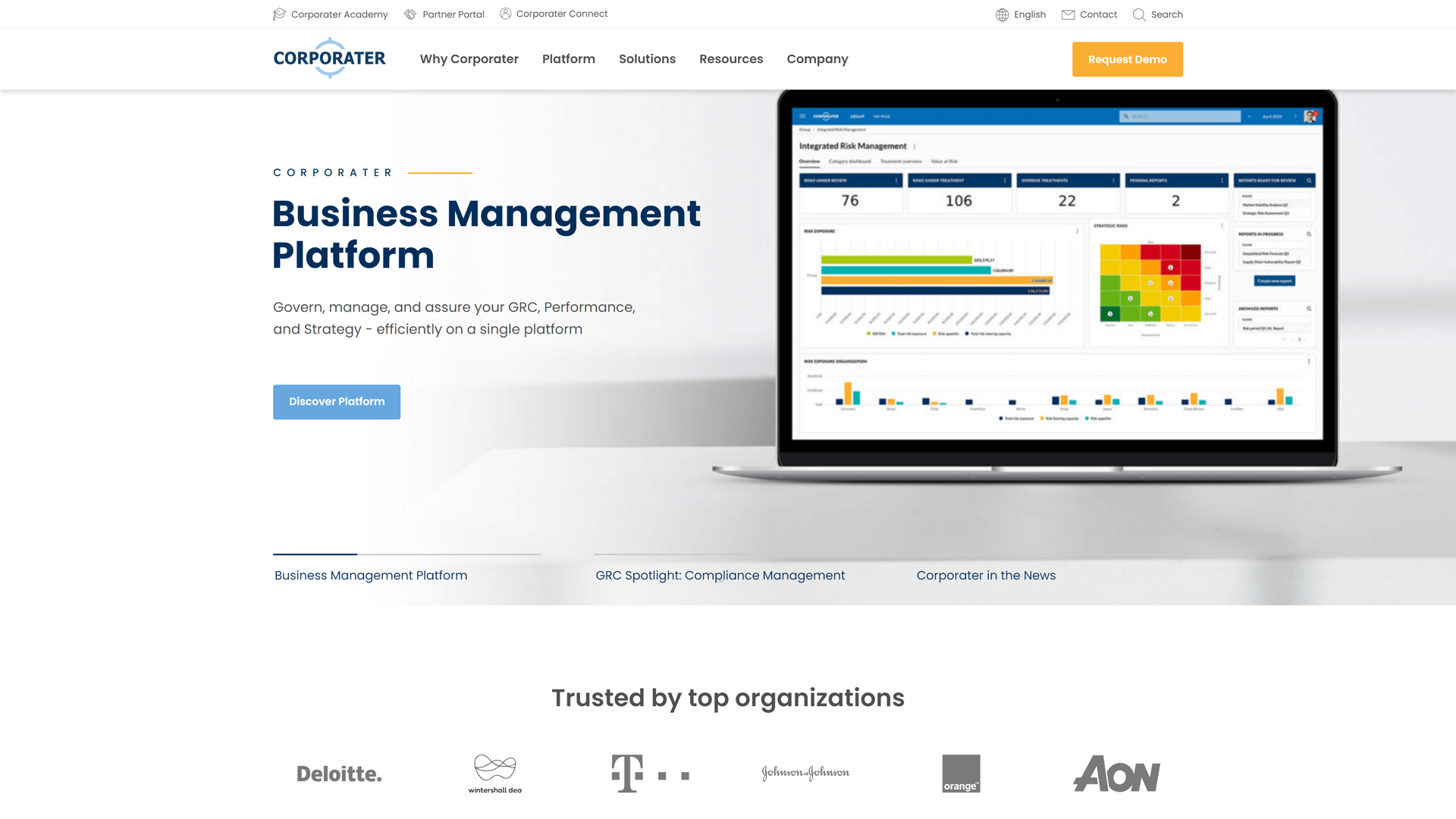
Corporater’s incident management and incident communication software offers a suite of tools for proactive, risk-based incident management. Features include incident dashboards, automated workflows, root cause analysis, and customizable reports. It also supports a range of integration with other GRC solutions, ensuring compliance with various standards like ISO and COSO.
Main features:
- Integrations with GRC solutions for compliance
- Detailed analysis and audit features
- Automated workflows
16. BigPanda
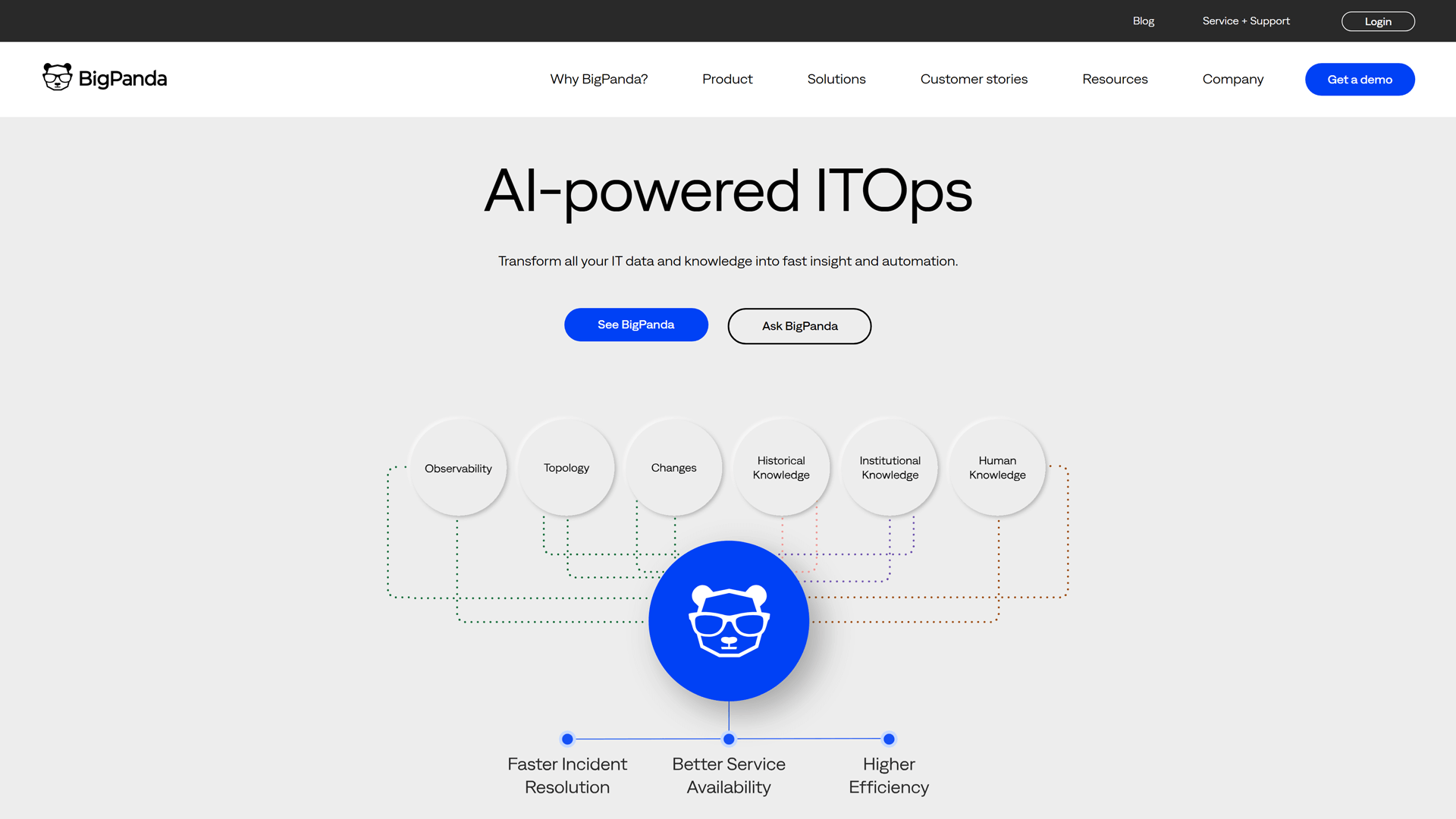
BigPanda is another AIOps/AI-powered solution for proactive incident management, similar to Jira and Zendesk.
This solution uses AIOps to enhance IT operations with automated detection, investigation, and remediation of incidents.
Other features include detailed incident data, alert noise reduction, real-time collaboration, and integrations with popular tools like Slack, Jira, and ServiceNow.
Main features:
- AI-powered solution
- Automated incident lifecycle management
17. SolarWinds Service Desk
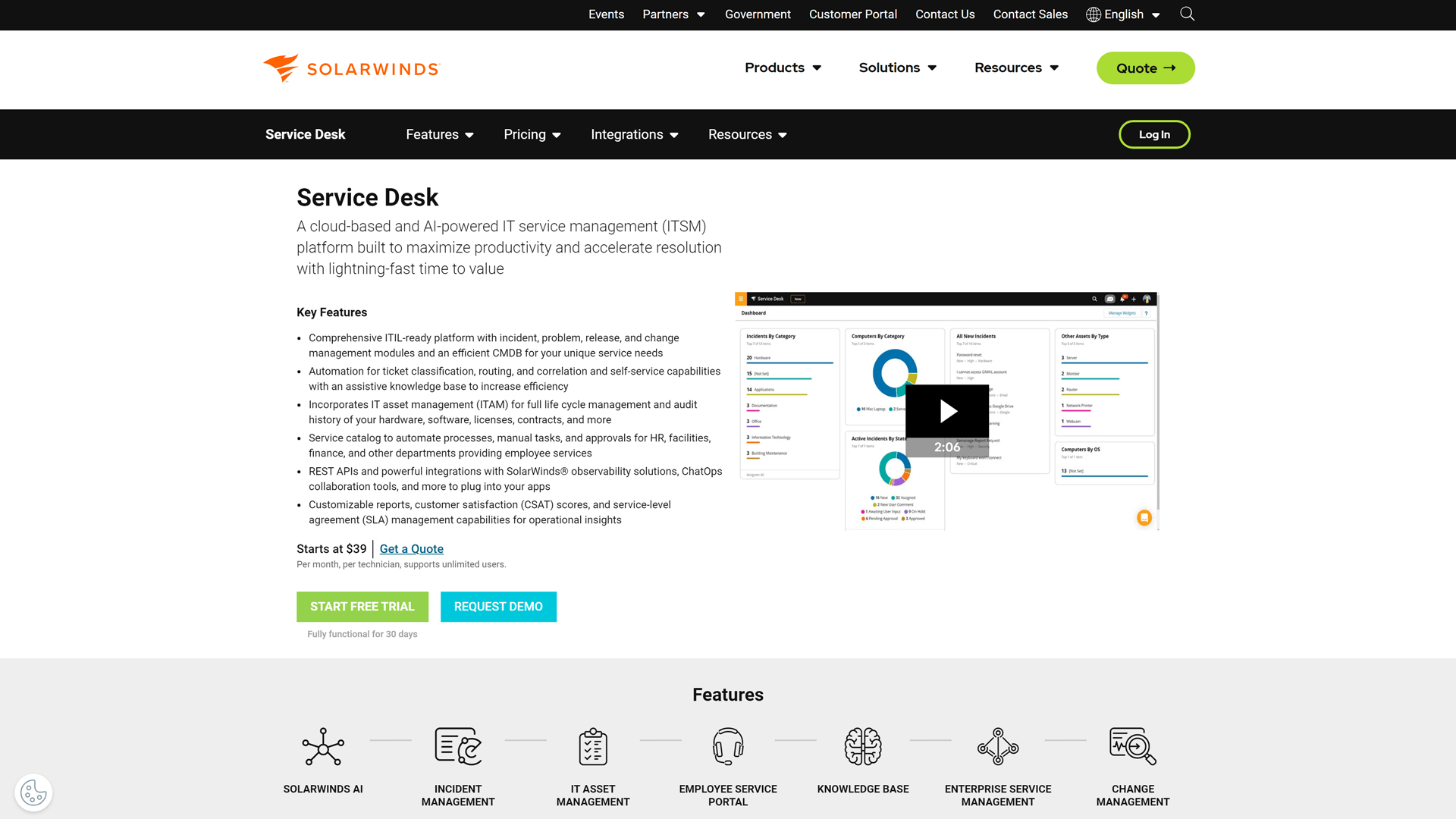
SolarWinds Service Desk is focused on the help desk and ticketing system for incident management and communication. SolarWinds Service Desk is a cloud-based, AI-powered ITSM software to handle incidents.
Some of these features include ITIL-ready modules, automated tasks, robust integrations, and customizable reports.
Main features:
- Cloud-based and AI-powered
- Help desk software to track incidents
18. NinjaOne

NinjaOne is a cybersecurity platform designed to protect businesses from digital threats. It offers endpoint protection, threat detection, vulnerability management, and incident response.
These features aim to manage the incident logging and tracking with security in mind, providing real-time alerts, automated response actions, and centralized incident tracking.
Main features:
- Incident management with security in mind
- Automated responses and tracking
- Centralized incident tracking
19. ClickUp

Designed to bring users and teams together, ClickUp offers a range of incident management features. They offer various workflow types (including automated), resource management, and collaboration tools. They also have a CRM template that can be used specifically for incident management, letting users manage every stage of the incident lifecycle.
Main features:
- Designed with collaboration in mind
- CRM template is available for incident management
20. xMatters

xMatters is a communications and incident management platform that relies on automation. It integrates with monitoring systems to automate alerting and escalation, enabling teams to resolve issues faster.
xMatters supports effective communication and collaboration during incidents, as well as auditing and analysis reporting to improve incident response.
Main features:
- Automation for a range of incident management features
- Post-incident management and auditing to improve incident response
21. Site24x7

Site24x7 provides insights into the performance and availability of websites, servers, networks, and applications.
Primarily a cloud-based monitoring solution, it offers real-time monitoring, alerting, and reporting capabilities.
Other features include a range of integrations and customizable dashboards, a range of monitoring types (including Kubernetes), and AIOps.
Main features:
- AIOps
- Kubernetes monitoring
- Cloud-based
22. HaloITSM
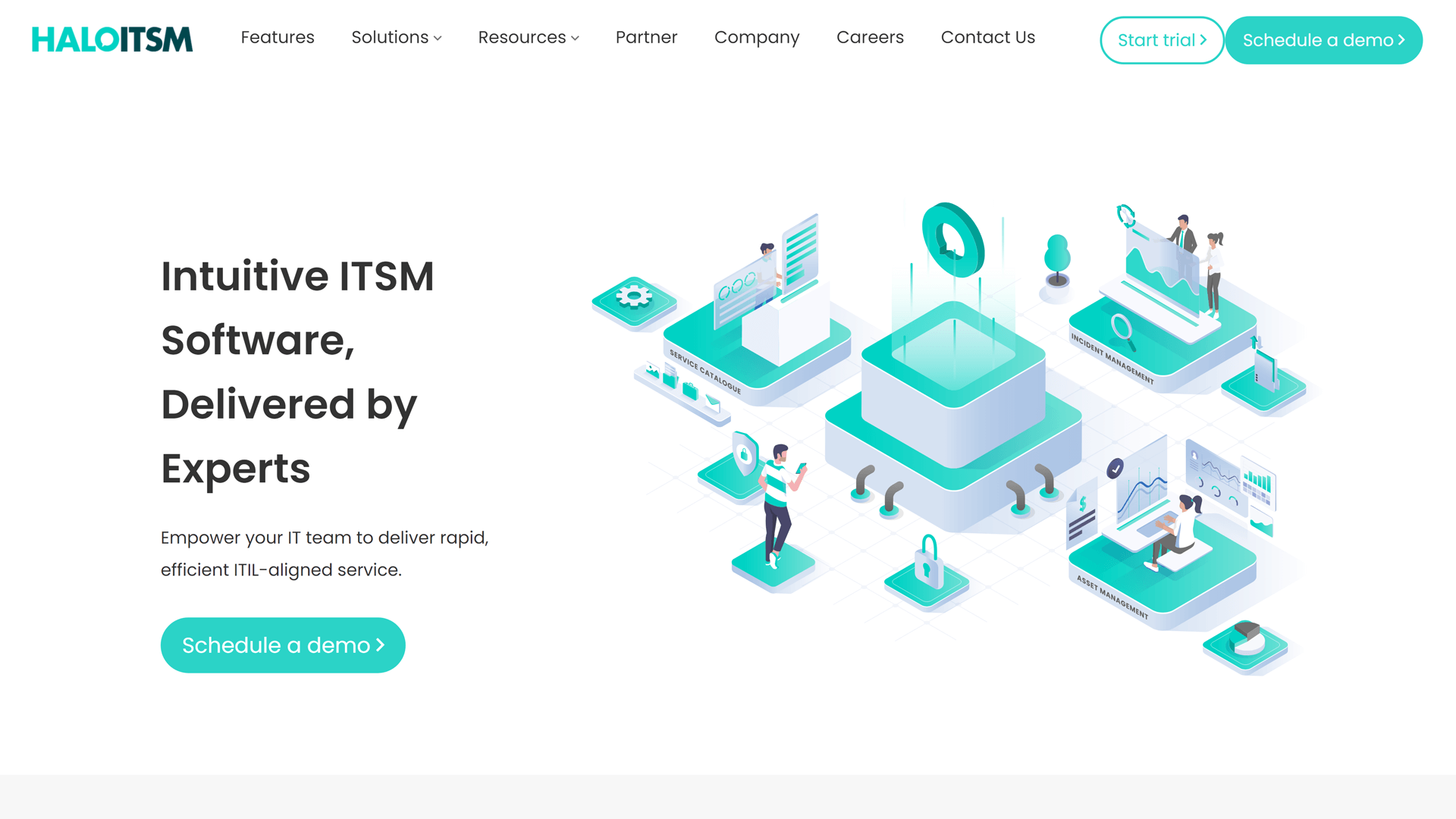
HaloITSM is an ITSM platform designed for automation and simplified monitoring for its users. It offers features such as incident management, change management, asset management, and service catalog capabilities. HaloITSM aims to help organizations improve service delivery, optimize resource utilization, and enhance overall IT efficiency.
Main features:
- Single UI for management and navigation
- ITSM
23. Rundeck
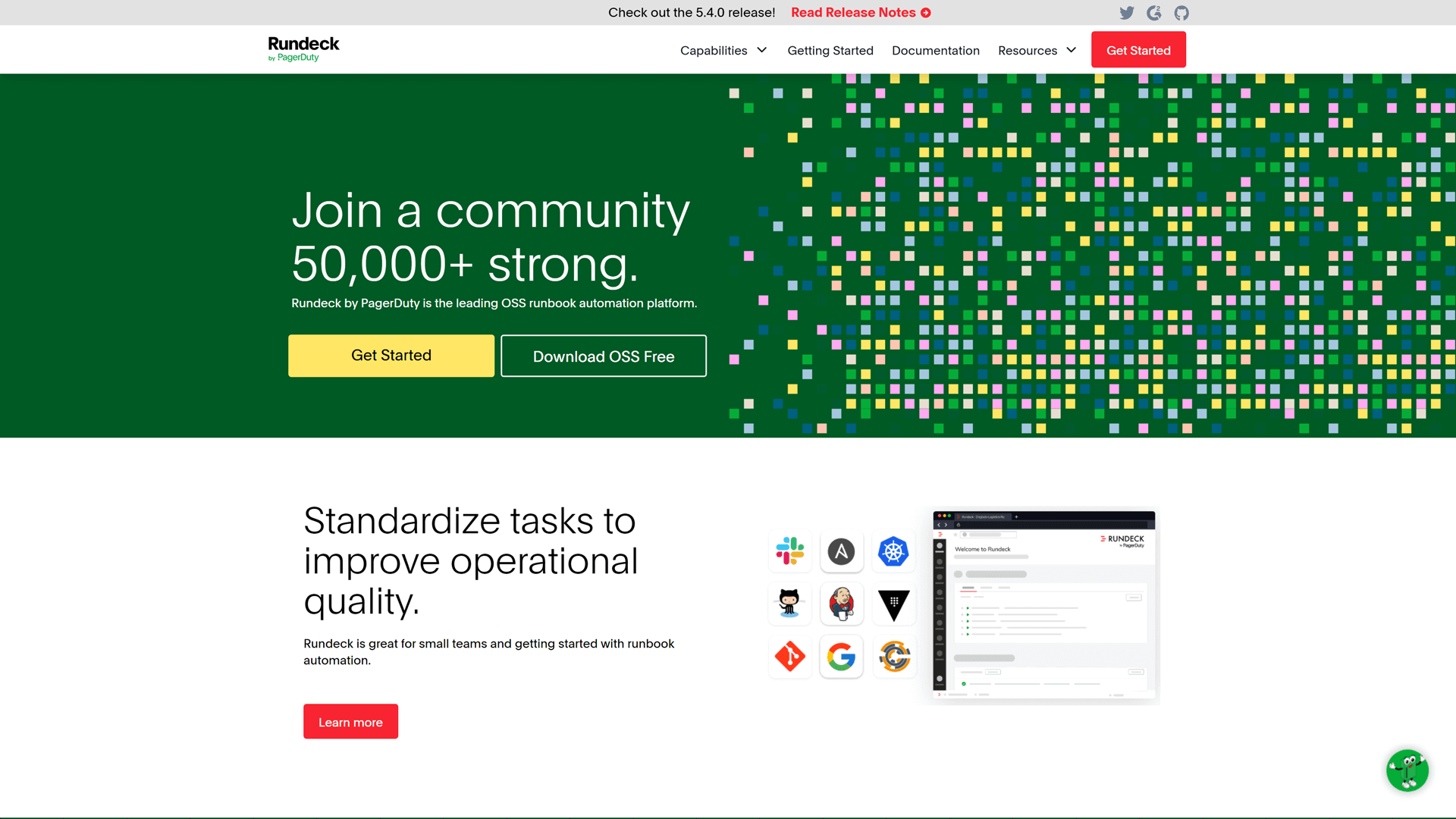
One of the few open-source solutions in this list Rundeck is an automation platform for IT operations and can be used for incident management.
It simplifies workflows by allowing users to define tasks, automate them, and run them on any node or cloud environment.
Rundeck provides job scheduling, workflow orchestration, and access control features, making it ideal for automating routine tasks and managing complex workflows.
Main feature:
- Variety of automation features
- Open-source
24. Atera

Atera is a cloud-based IT management platform that helps with incident management. It is designed for managed service providers (MSPs) and IT professionals, so might not be suitable for smaller businesses or teams without IT expertise.
However, it does offer remote monitoring and management (RMM) capabilities – including network monitoring, endpoint management, patch management, and remote support. They also offer ticketing, billing, and reporting functionalities.
Main features:
- Cloud-based IT management platform
- Remote monitoring management (RMM)
25. AlertOps
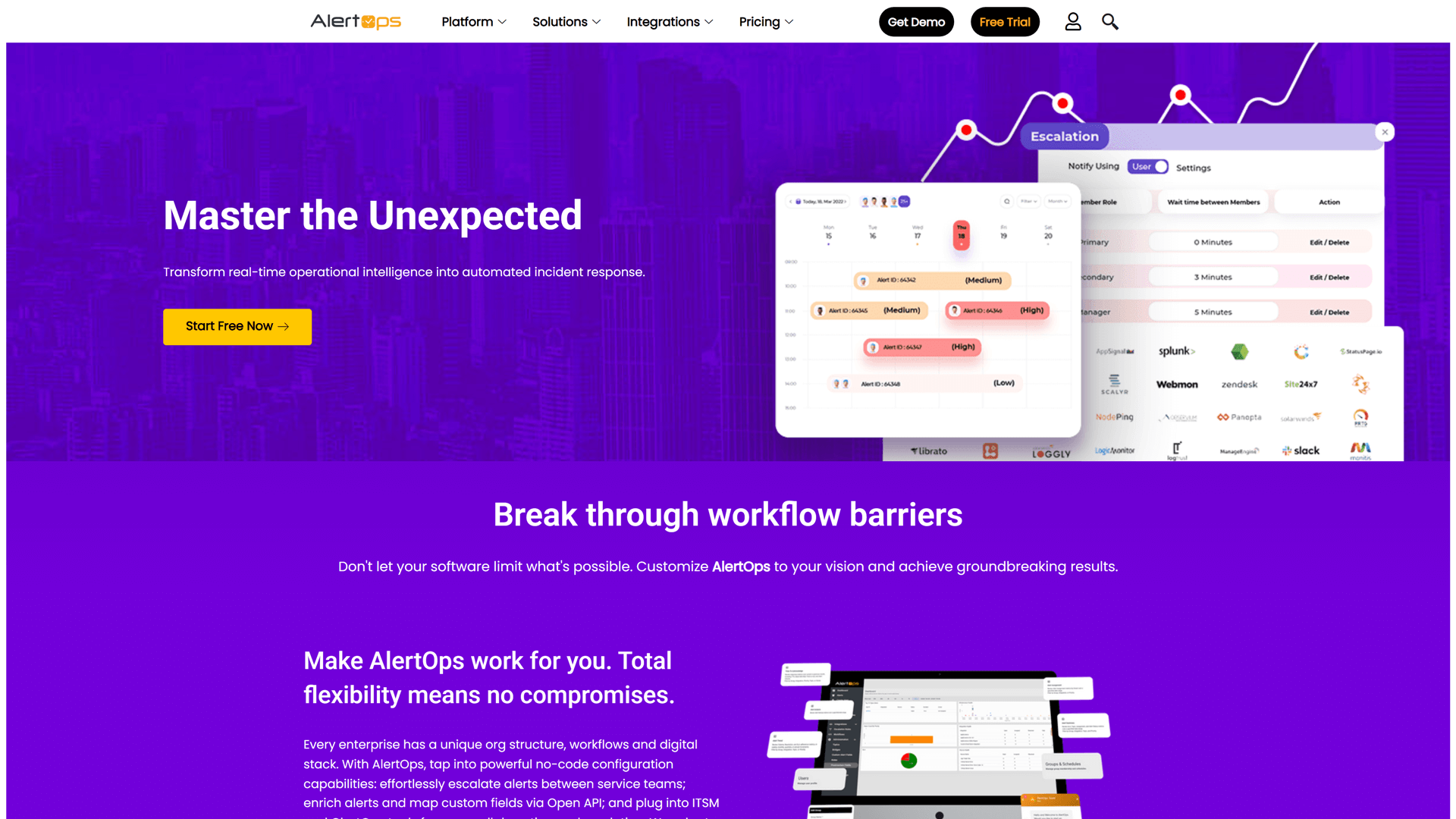
AlertOps is an incident management platform that helps with keeping alerts from various monitoring tools into one place.
Some of their features include automation (of routine tasks and incident workflows), real-time collaboration, and on-call scheduling.
AlertOps also features extensive escalation policies, detailed analytics, and major incident management tools.
Main features:
- Centralized incident management
- Automation and real-time monitoring
- Escalation policies
How To Choose The Best Incident Management Software
Create a list of service requests from different departments and what your organization lacks to define how the incident management software of 2025 can benefit your company.
Consider what integrations you need, how much you’re willing to spend, the scalability you require (this largely depends on your organization’s future scope), and what incidents you might expect. Incident management tools such as StatusGator contain all of the features listed above, whereas other platforms might focus more on specific areas instead.
By considering which areas you need to focus on the most, you can begin figuring out which incident management software of 2025 is best for you.

Features To Look For in The Best Incident Communication Platforms and Incident Response Tools
Incident Notifications
Most platforms typically provide automated notifications to reduce workload and ensure prompt communication with your stakeholders. Look out for customizable notifications (or templates) via email, SMS, or social media platforms such as Slack or Twitter to ensure information is published quickly and efficiently.
Incident Reporting and Analytics
Detailed dashboards, real-time reporting, and post-incident reviews are some examples of analytical tools that can ensure that organizations can understand trends, identify root causes, and improve future responses to incidents.
Workflow Automation and AI
Mostly seen with more recent incident management software (such as StatusGator or SolarWinds), workflow automation or AI performs routine tasks, prioritizes incidents based on severity, and suggests resolution actions — all of which reduce strain on your team.
Integration Options
The best incident management software should offer a variety of integrations with other IT software and tools. Some key integrations to look out for would be with other monitoring tools, help desk services, and communication tools.
Documentation and Collaboration
Effective incident management software should provide robust documentation and collaboration features. This ensures real-time collaboration through chat, video conferencing, and shared workspaces. The best incident management software typically offers mobile accessibility and collaboration too, ensuring your stakeholders can stay up-to-date and address issues on the go.
Scalability
No matter the size of your organization, the best incident management software should be scalable to accommodate your growth. This ensures your incident management software can keep on top of your growth and ultimately your increasing requirements.
Compliance and Security
Incident management software must prioritize compliance with industry standards and regulations, as well as offer strong security features. Some of these features might look like encryption, access controls, audit logs, and 2FA to ensure data integrity.
Best Practices For The Incident Response Process
An incident communication plan is always recommended to ensure a smooth incident response process. However, you can also consider the following areas:
Leveraging a configuration management database (CMDB) for a faster resolution
A configuration management database (CMDB) can be your go-to file during the incident response process if you need configuration data.
A CMDB is a file with your:
- configuration
- hardware
- software
- and network data that is used in your organization.
Within a CMDB, these tracked items are known as configuration items (CIs) and include items such as routers, applications, and servers.
However, a CMDB can also contain changes in history, personnel data, and interdependencies between items. During an incident, a CMDB can be used to check or find relevant data for fast resolution.
Team communication
During an incident, time is money. That’s why having your team all on the same page, and knowing what’s happening, is crucial. Consider incident communication tools that allow for team communication, perhaps through private status pages or automated notifications.
Customer communication
Communication is one of the most important parts of the incident response process and can be a game-changer for your customers.
Ensure you have the following assets available to communicate with customers:
- automated notifications
- public status page
- message templates
Benefits of incident management software
Enhances Operational Efficiency and Service Experience
Using incident management software in your organization can enhance operational efficiency by automating routine tasks, prioritizing incidents, and providing real-time alerts and updates to your stakeholders. These automation tools can streamline your incident response process by reducing manual workload and ensuring that an incident is resolved faster.
Minimizes Future Incidents from Occurring
Through detailed reporting and analytics, incident management software can identify root causes and trends so you can improve your incident response process in the future. The information obtained can help your organization implement preventative measures, improve systems, or enhance communication efficiency for your incident communication plan.
Improves Security
Incident management software can enhance your organization’s security by ensuring compliance with industry standards and regulations. This is often done through the use of encryption, access controls, audit logs, and 2FA.
Increases Collaboration Between Teams
Incident management software doesn’t just keep you on top of incidents but also facilitates improved collaboration with stakeholders (internal and external). This is often done via integrated communication tools like chat, video conferencing, and shared workspaces.
The cost of incident management software
Prices vary and depend on what software you subscribe to, which level of subscription you choose, what features are offered, and what your organization needs.
For example, Atlassian, a popular incident management tool, offers tiered pricing starting from free basic plans to more advanced software options costing upwards of $40 per user per month.
Another example is StatusGator, which offers a free plan as well as tiered plans based on organization type and structure to best suit your needs.
That said, depending on your industry and company type, downtime can cost anywhere between $5,600 – $9,000 per minute. So, by finding incident management software that is within your budget, you can prepare for the worst.
Summary
Incident management software is key in 2025, and our extensive list is here to help you out.
Not only that, but we have provided some handy info above using our expertise to make sure you make an informed decision when it comes to choosing the best incident management software for you.
Using your incident management software, you can also get started on creating an incident communication plan, of which more information can be found here. If you want a cost-effective incident management platform, combined with easy-to-use features, consider our top pick StatusGator today.
By checking out our list of the top 25 incident management software and communication platforms in 2025, we’re confident you’ll choose the right platform for you.
FAQ
What is incident management in software?
Incident management in software is using incident management tools and software to help organizations during the entire incident management process. This can range from detection to resolution, covering everything in between during incidents such as cyberattacks or system downtime.
Which tool is used for incident management?
Tools used for incident management include PagerDuty, Site24x7, StatusGator and more. These tools vary in their incident response capabilities, service desk software for ticket logging, asset management tools, and more. The complete list of the best incident management tools can be found in our blog.
Is Jira an incident management tool?
Jira Service Management (powered by Atlassian) is primarily an IT service management (ITSM) tool, but it includes incident management capabilities. This includes incident management tools such as customized communication channels, automated updates, and integration with over 200 apps and web services.
What is the greatest incident prevention tool?
The greatest incident prevention tool is Datadog, ServiceNow and BetterStack, especially integrated with StatusGator. However, no software claims that they are able to prevent an incident. Incident tracking software helps when an incident occurs. Additionally, not all issues can be prevented, and problem management focuses on identifying and managing outages effectively.
How does incident management software help in incident response?
Incident management software allows resolving the incident faster and more effectively. The key features of incident managing include detection and categorization, automated updates, status pages, auditing and analysis tools, and many more.
Can incident management software integrate with other incident management tools we use?
Yes! Many incident management software can integrate with other tools and software, including incident management. For example, Zenduty can integrate with 100+ monitoring tools, and StatusGator can integrate with over 3,900 different services.
Does incident management software integrate with communication channels?
Tools for incident management typically include, or integrate with, incident communication software or tools. This often includes integration with communication channels such as Slack, Reddit, Twitter, and other forms of social media.
Is incident management software suitable for small businesses or larger organizations?
Incident management software is suitable for both, small businesses and larger organizations. Tools for incident management can help businesses of any size. This is because these tools are designed to help you detect, track, resolve, and audit incidents at every stage of the incident lifecycle.
What is ITIL incident management?
ITIL (Information Technology Infrastructure Library) Incident Management (IM) focuses on restoring normal service operations as quickly as possible following an incident to minimize its impact on business operations. This process is strictly reactive, meaning it is designed to respond to incidents after they have occurred rather than preventing them. ITIL IM includes well-defined plans and procedures to ensure quick and efficient incident resolution. For organizations looking to proactively address potential issues, it’s essential to have robust preparation and preventive measures in place to catch and fix problems before they cause significant disruptions.