The StatusGator MCP server now supports a simpler way to connect, making it compatible with more of the AI tools you already use, including ChatGPT and Claude.
Connect without manually configuring an API token
Previously, connecting to our MCP server required you to generate an API token and add it through a custom authentication header.
That worked with tools that supported custom headers, including Claude Code and Notion. Other tools did not offer that option, which meant StatusGator could not connect to experiences such as Claude on the web or ChatGPT.
That changes today.
You can now authenticate through a familiar sign-in flow, without copying an API token or configuring a custom header. Setup is easier, and the StatusGator MCP server works with more of the tools where you already spend your time.
A simpler connection process
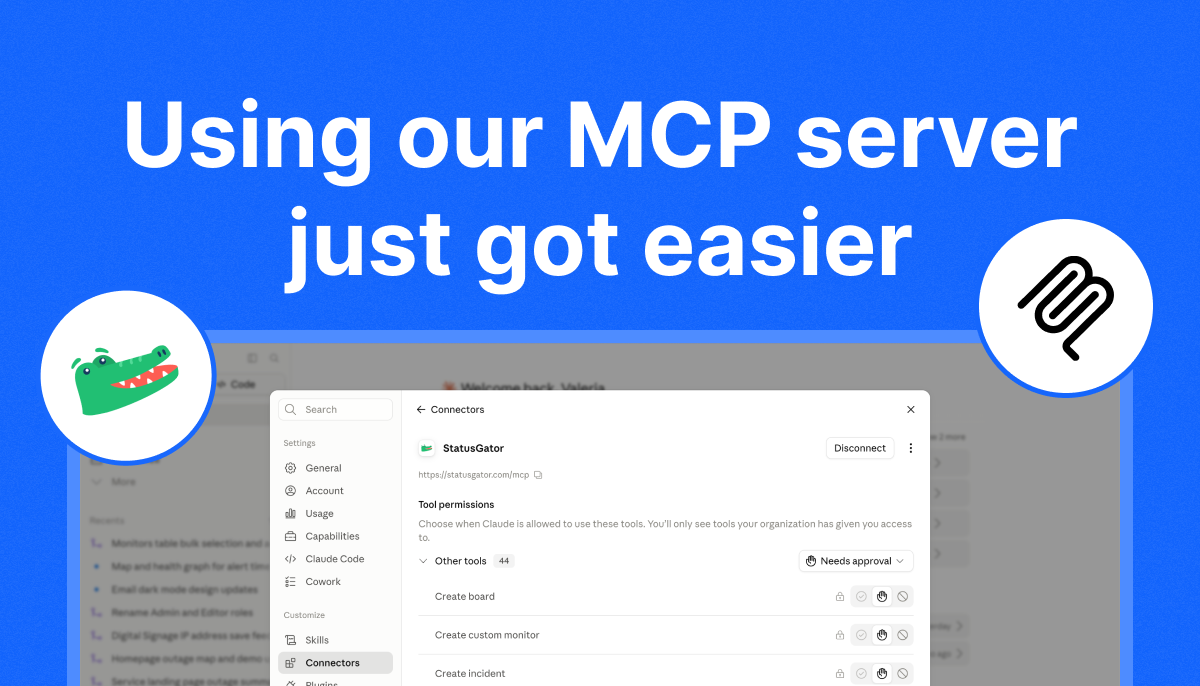
Claude is one example of how the new process works. When you add the StatusGator MCP server as a connector, Claude directs you to StatusGator to authorize the connection.
The authorization screen clearly shows which account Claude is connecting to and what it will be allowed to access. Review the details, approve the connection, and StatusGator becomes available in Claude.

Once connected, you can also control when Claude is allowed to use individual StatusGator tools. This gives you visibility into the available actions and control over which ones require your approval.

There is no API token to copy and no custom authentication header to configure. You simply sign in to StatusGator, review the requested access, and approve the connection.
Use StatusGator where you already work
With expanded compatibility, you can bring StatusGator directly into more of your everyday AI workflows. You can create and update incidents, work with monitors and status pages, and access your StatusGator boards from supported AI tools.
Whether you are working in Claude, ChatGPT, or another compatible tool, connecting now takes less configuration.
No custom headers. No manual token setup. Just sign in and get started.
Get started
Connect the StatusGator MCP server to your preferred AI tool and start using StatusGator directly within your existing workflow.