GitHub outage on April 23, 2026

Read more >

Introducing StatusGator’s Accessibility Conformance Report (VPAT)

Read more >

StatusGator logo
Schedule a Demo
StatusGator logo
Use cases

IT Teams

Stay informed of outages and reduce tickets

DevOps

One status page for all your providers

Features designed specifically for K12

Advanced features designed for enterprise

Impress clients with proactive monitoring

Analyze and compare peer performance

Monitor dependencies to prevent revenue loss

Create and manage custom status pages for your product

Features

Status page

A status page with service, website, and custom monitors built-in

Status aggregation

Aggregate the status of all vendors to a single page

Monitor all your cloud services from a single dashboard

Monitor your website with uptime monitoring built-in

Monitor network connectivity

Control the status of custom monitors manually with incidents

Get notified of disruptions before they become public

Pricing

Business

From startup to enterprise and everything in between

Education

Special plans and discounts for K12 and higher ed

Integrations

Incident Management

Better Uptime
FireHydrant
Opsgenie
PagerDuty

Notifications

Private Status

AT&T status
AWS status
Azure status
Microsoft 365 status
Zendesk status

Status Pages

Atlassian Statuspage
StatusHub

Advanced

Sign In Sign Up

Status data API: Now available to all!

We’ve just opened up the StatusGator API to all users on all plans — even the Free plan. Previously, our REST API was a feature only of our higher level plans. But we’ve opened up the API to all plans to allow more people to take advantage of our status data. The API limits vary by plan by are generous enough to employer real-time dashboards and other uses.

What can you do with the StatusGator API?

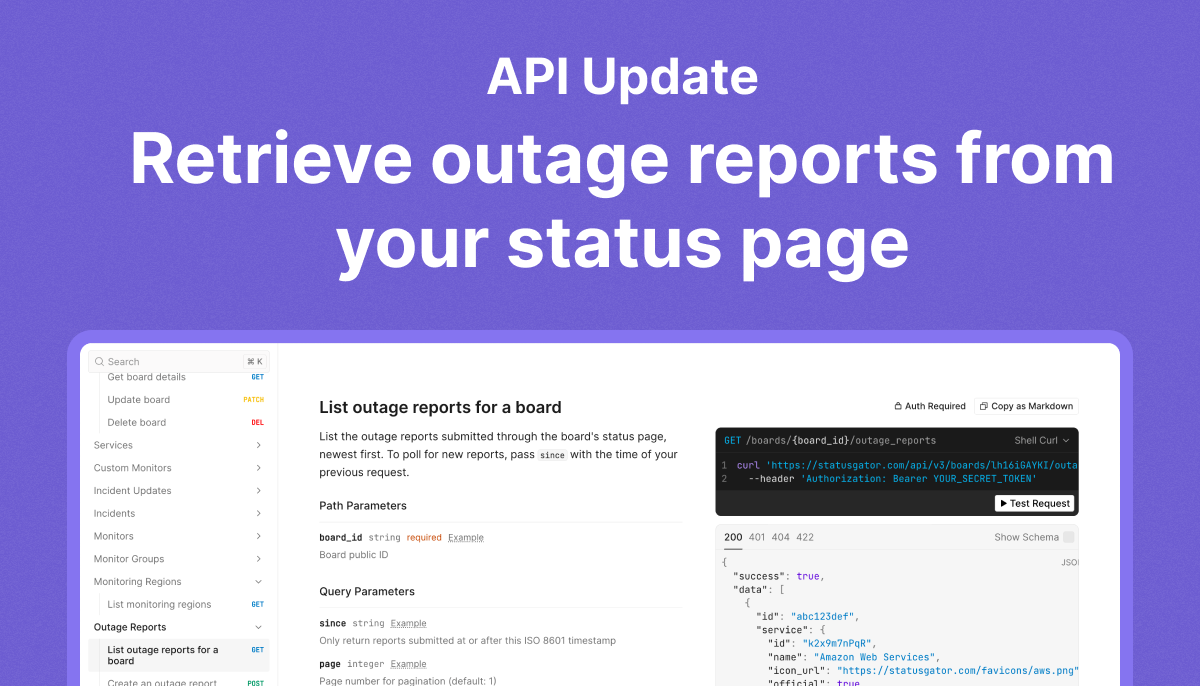
Check out our API docs for the full details, but API operations require two keys: a public key used to identify the board you wish to query. And a private key used as part of an HTTP authentication header. With your API keys in hand, you can query the API in various ways:

  • List all the monitors on your board
    Useful for creating custom dashboards showing the current status of all your monitors.
  • Get the details of a specific monitor
    Allows you to see individual component statuses (such as regions or products of a give service).
  • Show the history of all the monitors on a given board
    Use this to power integrations that analyze retroactive performance of your vendors or websites.
  • Pull future maintenance events
    We also have maintenance iCal feeds but you sometimes you want a JSON API to do more advanced integrations.

Check limits for your plan in the comparison table, and if you’ve got questions or need a hand getting started, just give us a shout at hi@statusgator.com. We’re here to help!


Share this

Photo of author

Colin Bartlett

Colin Bartlett is co-founder of StatusGator and Nimble Industries, a seasoned Ruby engineer and entrepreneur who launched StatusGator in 2015 and later grew it into a full-fledged company.