
StatusGator is a cloud monitoring service and a status page aggregator. We monitor the world’s status pages and provide an all-in-one status page. We track uptime, outages, and potential disruptions with our Early Warning Signals feature across 5,000+ service providers.
But how do we collect and normalize all this status data?
How Does the No.1 Status Page Aggregator Work?
To get started with StatusGator, you choose the services you already use from our list. For each service, you select the specific components you depend on from their status pages.
StatusGator aggregates the status from all these components and multiple status pages individually, helping you reduce wasted time tracking down problems and keeping you informed when outages inevitably occur. We do this with an army of electronic Checkers.
Checkers: The Engine of StatusGator
The process starts with what we call a Checker. A Checker is a bit of software that understands the format of a specific service status page. We write Checkers for each status page we add. Sometimes they are for specific services, such as Amazon Web Services.
Other times, we write generic checkers for status page formats that span multiple third-party services. This includes hosted status page tools like Status.io and open-source status pages like Cachet.
Exactly how a Checker works varies greatly from page to page. Some services, such as the Heroku status page, have published and documented status APIs. Others have undocumented APIs from which the data can be reliably fetched. Most simply present a web page, and so we resort to scraping the HTML.
Some status pages have a single overall indicator of the services’ status, usually color-coded in green, red, yellow, or orange. But most pages list individual services, which we call components.
These components are often organized into logical groups by service type or region. Each component typically has a message, icon, or color code that relays its status. We design each checker to respond by returning the same data: a list of services and three pieces of data about each:
- Name
The name of the component or service. - Group Name
Most often a region like “US West” or a type like “APIs”. - Status
One of four classifications: up, warn, down, or maintenance.
Status Normalization Challenges
Normalizing the status page data into one of four buckets is the one part of this process that often requires us to make a judgment call. We try to use the same standard of classification across all status pages.
For example, if a page has a “degraded” or “partial outage” level, we always classify that into our warn status. If a page uses terminology like “severe” we would call that down. Occasionally, a service will say “unknown” or “investigating” and we would classify both into our warn.
Our hope is that StatusGator subscribers who want notifications of only the most severe or definite outages can receive them by subscribing to down notices, ignoring the intermittent or lower-level outages of the warn level.
Every 5 minutes, we pass each page through its respective Checker. When components of the status page change, these changes are recorded by StatusGator. We then send notifications to each subscriber based on their individual preferences.
For example, a user might have elected to receive a notification in Slack each time AWS posts an outage affecting EC2 in the US-West region. When that component of Amazon’s status page changes, a notification is sent, and when service is restored, another is posted.
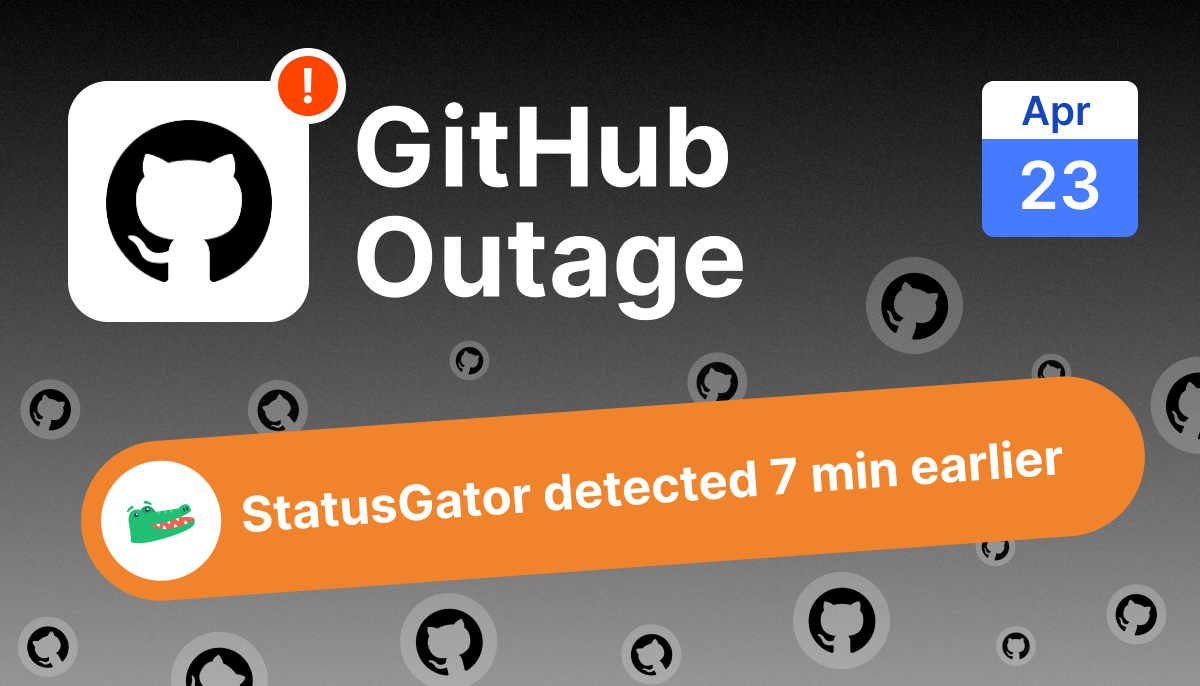
And we did not stop there. In 2024, we released the Early Warning Signals so our users can get alerts of outages before they are published on the official status pages.
Early Warning Signals: Get Notified Before Official Outages Are Posted
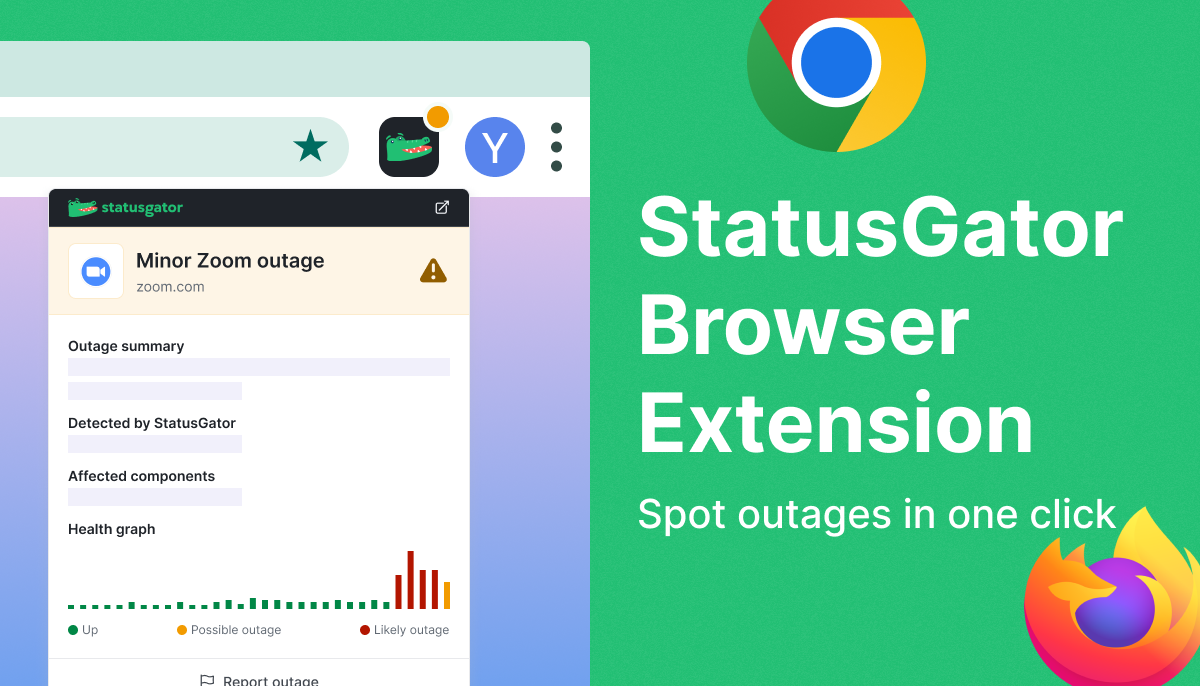
These advanced alerts warn you of potential service disruptions, such as degraded performance or partial outages, even before the affected provider posts an update. By combining traditional status page aggregation with real-time anomaly detection, StatusGator now offers a powerful early-alert system to help you act faster and minimize downtime impact.
How Early Warning Signals Work
Early Warning Signals leverages a real-time monitoring engine that analyzes thousands of signals every minute. These include:
- Reports from other StatusGator users experiencing disruptions
- Unusual traffic patterns and monitoring data
- Behavioral anomalies in status page activity or availability
StatusGator’s proprietary algorithms evaluate this data continuously, flagging abnormalities that may indicate service trouble. When an anomaly is detected, StatusGator proactively notifies subscribers.
Here are some of the disruptions StatusGator detected early:
- EdTech outages in April 2025, including Schoology and NWEA
- SaaS outages in April 2025, including PagerDuty and Shopify
- Service outages in March 2025, including Bitbucket and Mailgun
… and more.
Community-Reported Outages
To enhance Early Warning Signals, StatusGator now allows users to report service disruptions they’re experiencing. These user-submitted signals feed into our anomaly detection engine, giving our system even more context and increasing the accuracy and speed of alerts.
Why Use a Status Page Aggregator?
Modern businesses rely heavily on dozens, sometimes hundreds, of cloud services to operate. From infrastructure and authentication to payments and messaging, each service typically has its own status page. But manually tracking the status of your services across all these platforms is inefficient and prone to error.
The challenge is compounded when status page providers change, URLs get updated, or subscription options differ from one service to another. Without a unified monitoring system, your team risks missing critical downtime events that affect your users and operations.
That’s why you need a status page aggregator. It brings the statuses of all your critical services in one place, providing a centralized, automated way to stay informed. Whether you’re in IT, DevOps, or customer support, a status page aggregator ensures you’re always one step ahead of outages.
StatusGator currently checks the status of more than 5,000 status pages containing numerous individual service components. In order to make StatusGator as useful as possible, we try to add additional pages every week. Therefore, we rely on your suggestions. If you see a status page that’s not represented on StatusGator, email us!
We love to add them and take great pride in being able to add them very quickly.

A status page aggregator is a tool that collects and normalizes data from multiple public status pages into a single, unified dashboard. StatusGator performs status aggregation, helping IT teams and organizations monitor 5,000+ third-party cloud providers they depend on from one place.
Status page aggregator like StatusGator uses custom-built software tools called Checkers to monitor over 5,000 public status pages. Each Checker extracts and standardizes the status of individual components and services, ensuring you get reliable, real-time status updates in a consistent format across all providers.
To aggregate status pages, you need a system that can monitor and extract data from multiple public status pages and display them in one place. StatusGator is one of the status aggregators that does this automatically with custom-built Checkers that fetch and normalize status information from thousands of providers. Instead of manually checking each service’s page, StatusGator delivers a status aggregation platform with unified, real-time status monitoring of all your dependencies.
While traditional monitoring tools watch your own infrastructure, StatusGator monitors the services you rely on, from AWS to Zoom, by aggregating their public status pages and alerting you to issues. With features like Early Warning Signals and customizable notifications, StatusGator gives you visibility into third-party downtime that internal tools can’t provide.
With StatusGator, you can display the list of statuses of all your cloud vendors and SaaS tools in one centralized view. Simply choose the services you rely on, select the components that matter to your organization, and StatusGator builds a personalized dashboard or even a public-facing status page or private status pages to keep your teams informed.
Yes! Users can now submit reports of service disruptions they experience. These reports help improve the accuracy of Early Warning Signals and contribute to a faster, community-driven detection of widespread issues.
StatusGator runs checks every 5 minutes. When any monitored component changes status, affected users are notified immediately according to their configured preferences (e.g., Slack, email, Microsoft Teams, etc.)
Yes, StatusGator offers a free plan that allows individuals and small teams to monitor a limited number of services and receive basic alerts. It’s a great way to get started with status page aggregation and see the benefits before upgrading to a more advanced plan with more integrations, notifications, and customization options.