Cloud Outage Tracker – Stay Ahead of Service Disruptions
When it comes to SaaS application monitoring, keeping track of all your services separately can be challenging. StatusGator is your solution, offering a centralized, unified status dashboard that consolidates the statuses of all your SaaS applications in one intuitive environment.
With our extensive coverage of over 4,000+ SaaS applications, we gather real-time data directly from their official, published status pages.
StatusGator is committed to providing instant updates and critical insights. We ensure that you stay proactive and ahead of outages with StatusGator, your trusted partner in seamless cloud outage tracking.

Cloud Outage Tracking Made Simple With StatusGator
Our sophisticated cloud outage tracker automatically detects status changes, transforming this information into a streamlined, accessible format. Here’s how we stand out:
- Comprehensive monitoring of all the cloud services you rely on via status page monitoring.
- One unified platform by collecting and normalizing data from diverse sources so it’s simple and clear.
- Real-time notifications informing you of cloud outages immediately via API integration and scraping status data.
Stay ahead of cloud outages and minimize downtime with StatusGator’s dedicated tracking.
Start free trialDirect Monitoring and Cloud Outages Tracking in Real-Time
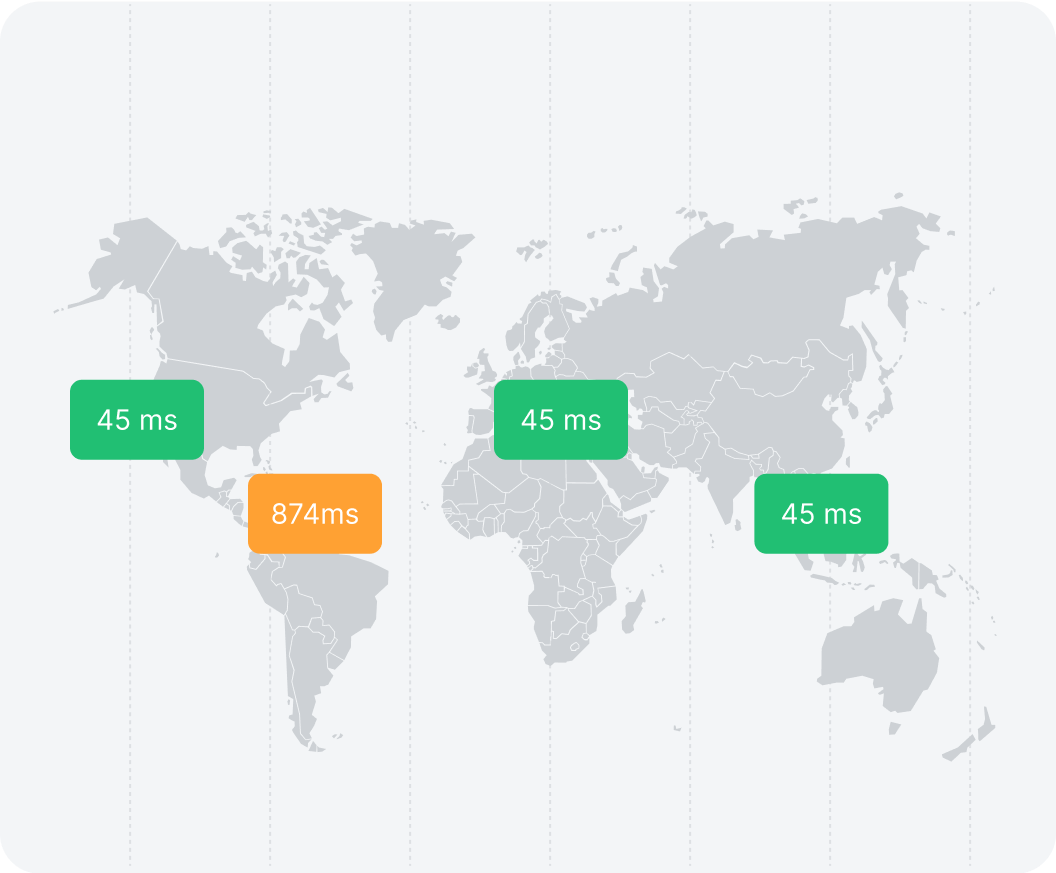
Using our global network, StatusGator directly monitors the websites and infrastructure of cloud service vendors.
This data gives us important information about the health of the cloud services you depend on. We collect this data and use our platform to translate it into simple and clear notifications, integrations, or updates directly to your team’s cloud outage tracker to keep you informed of downtime.
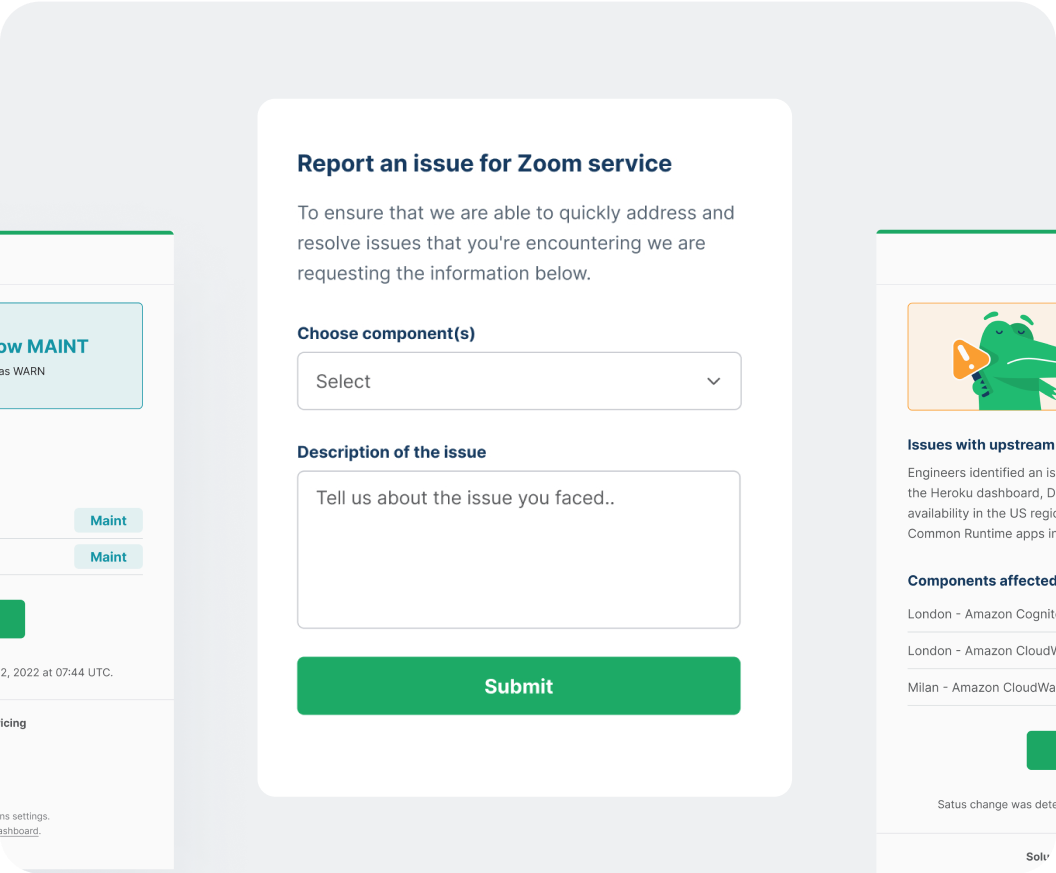
Early Warning Signals
StatusGator is unique compared to other cloud outage tracker tools. Our platform discovers signs of future cloud outages before they are published on official status pages.
Using our established network, we spot irregularities in performance and send your team early warning notifications. In those critical moments, your team gets a head start to prepare before the cloud vendor announces the outage.
SMS and Chat Notifications
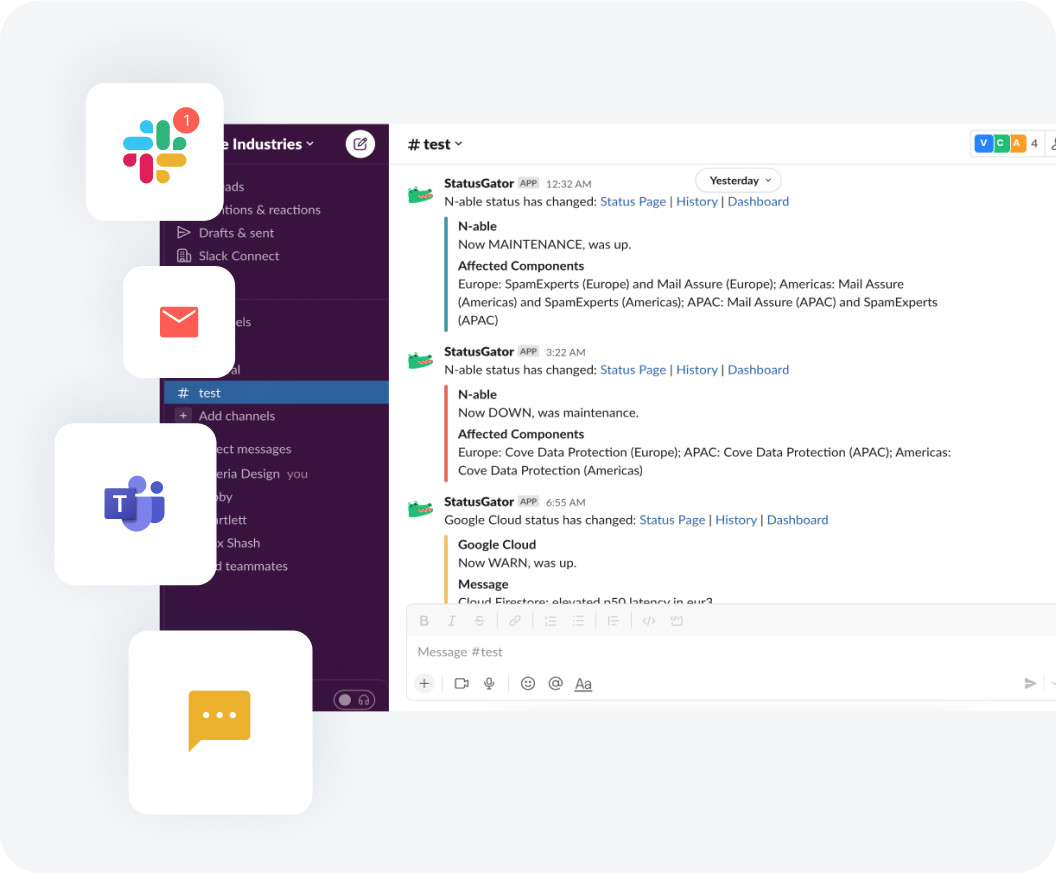
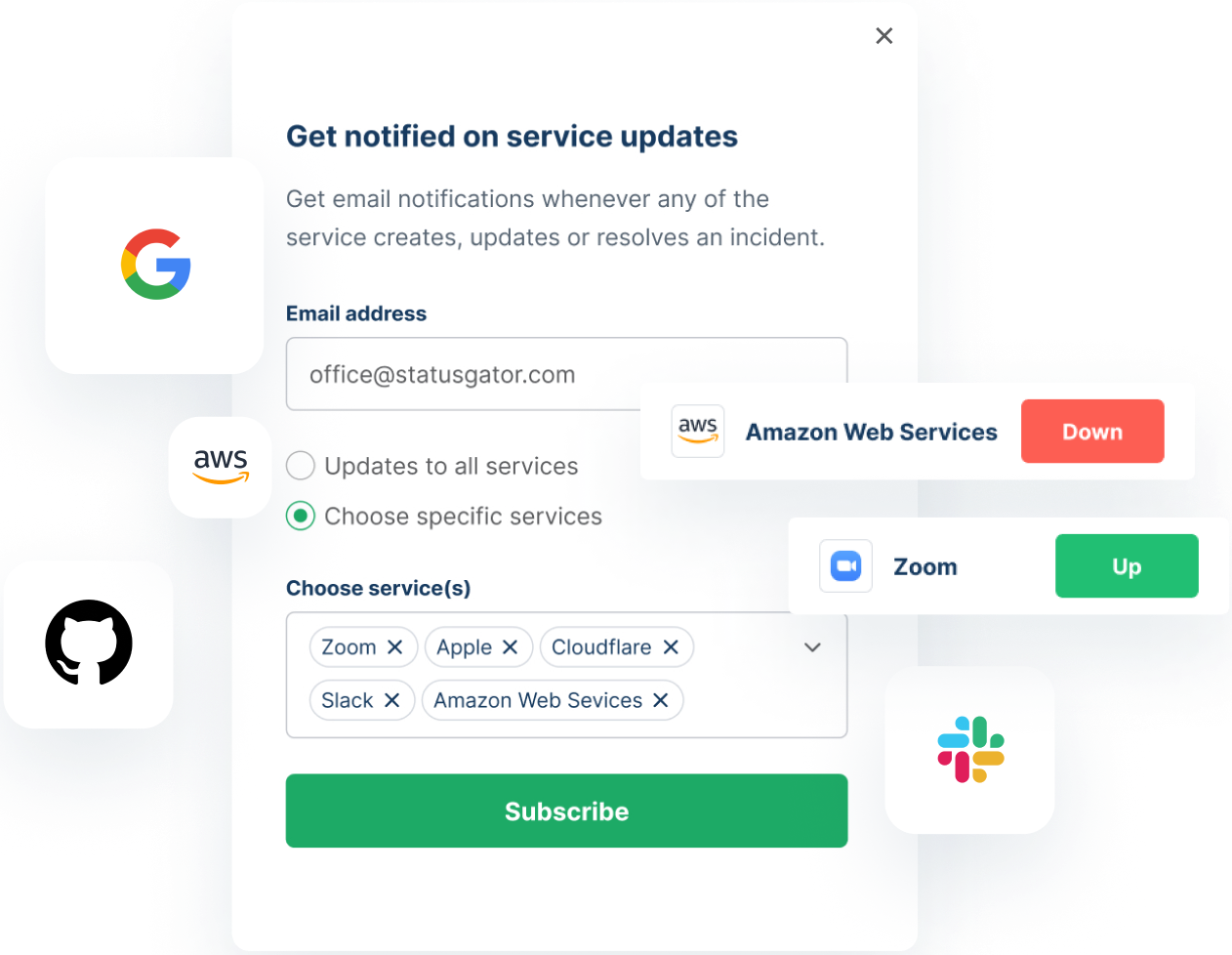
In the event of downtime, the cloud outage tracker can notify you immediately through whichever communication method you prefer. It includes notifications directly to your phone via SMS and email, as well as integrations with popular chat apps such as Slack, Teams, and Google Chat.
Our Slack integration even allows you to query the status of any service in your incident chat room, allowing you to keep tabs on the issues that are affecting you.
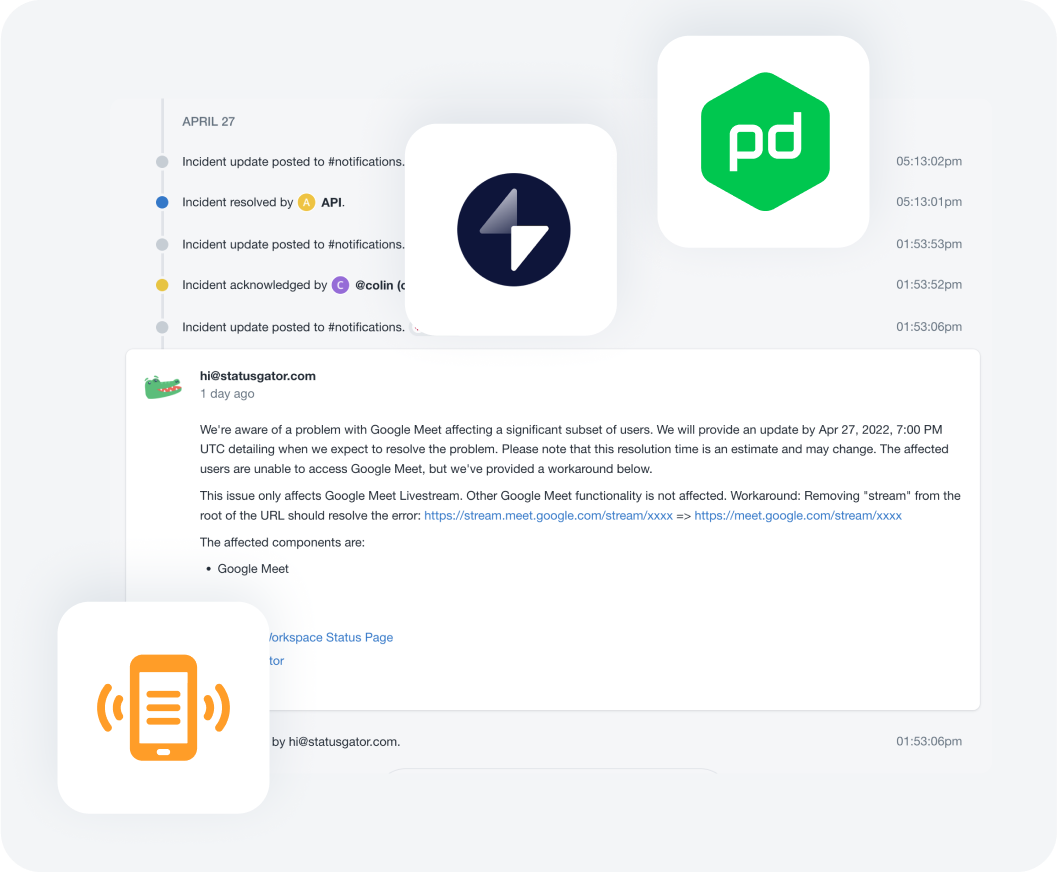
Integrate Cloud Outage Tracker with Incident Management Tools
Integrate your incident management tools with the cloud outage tracker using our integration options or API.
Create incidents automatically so your team can investigate the impact of high-value services.
StatusGator helps your team be more proactive and stay ahead of cloud outages that affect the uptime of your services.
Branded Status Pages for Your Cloud Outage Tracker
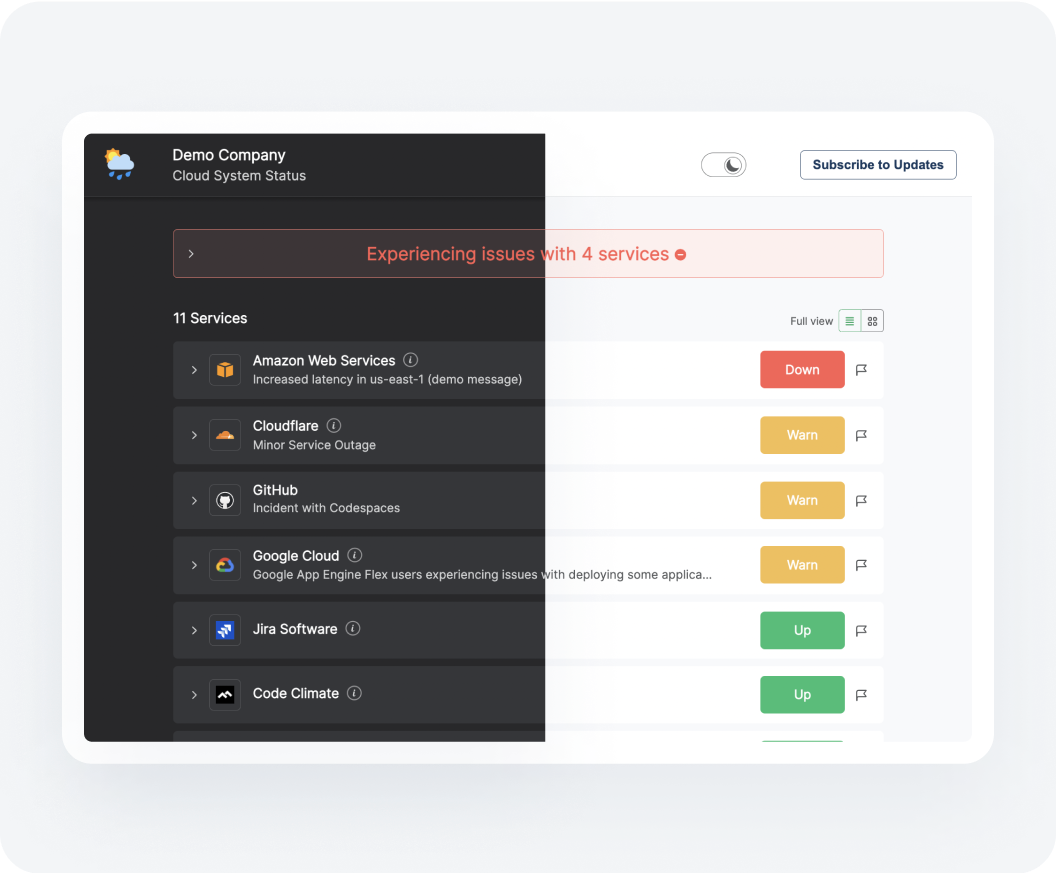
Cloud outage tracker by StatusGator comes with customization tools that allow you to personalize your status page with the company’s name and logo.
Additionally, hosting it on your domain not only elevates brand consistency – but also reinforces trust among your customers and stakeholders. The white-label solution is also available.

Tailored and Secure Cloud Outage Tracking for Every Team
StatusGator goes the extra mile with security, offering password protection, enterprise-level single sign-on (SSO), and 2FA.
With unique tools, StatusGator lets you customize your cloud outage tracker to cater to the unique needs of different teams with their specific tech stack of cloud vendors.
This targeted approach, as well as enhanced security, means each of your teams can easily navigate and stay informed of cloud outages – streamlining their workflow and ultimately reducing the frequency of IT support requests.
Demo Status Page

Trusted by thousands








Why Choose StatusGator’s Cloud Outage Tracker
| StatusGator | Other status page providers | |
|---|---|---|
| 4,000+ cloud services monitored | Yes | No |
| Free status page | Yes | No |
| Monitor specific components and regions | Yes | No |
| Unlimited subscribers | Yes | No |
| Content change detection | Yes | No |
| API health monitoring | Yes | No |
| Early warnings | Yes | No |
| SSL certificate monitoring | Yes (with TrackSSL) | No |
What Our Customers Say
Zach Huntley
Eden Prairie School
Will Feener
CTO, Whale Rock Capital
Joshua Kersey
Systems Engineer, Armanino LPP
657m+
Status checks performed
2.6k+
Services monitored
8.5m+
Notifications sent
20k+
Users served
Stay aware of status changes
with the cloud outage tracker
Schedule a demo
StatusGator monitors all your cloud vendors
Search for a service from our complete list of more than 4,120. Can’t find the service you need? Contact us and we can add it!


and 4,111 more services. See all…
StatusGator is beloved for its simplicity and usefulness

Frequently Asked Questions
Where does StatusGator collect status data for its cloud outage tracker?
StatusGator collects status data for the cloud outage tracker from the official status pages. Our status aggregator tool scans thousands of official status pages published by vendors, collecting and scraping the data along the way. Status pages are published by cloud vendors as a way to communicate the status of each service they have. Once collected, StatusGator relays and translates this status page data into a readable, easy to understand cloud outage monitoring status page with official and precise cloud monitoring status data.
How does StatusGator aggregate status pages for cloud outage tracking?
StatusGator uses three main methods to collect status data from official status pages for cloud outage tracker. These methods are web scraping, documented APIs, and undocumented APIs. We use proprietary technology to collect and normalize the data from over 3,000 vendors. Our platform constantly monitors and automatically detects outages, ensuring accurate, up-to-date information – no matter how often a status page changes.
What do the different statuses on the status page for cloud outage tracking mean?
- [ warn ] – A minor incident as indicated by the status page. Usually, these incidents are listed in yellow or orange on a vendor’s status page.
- [ down ] – A major incident as indicated by the status page. Typically these incidents are listed in red on a service’s status page.
- [ maintenance ] – Scheduled, proactive maintenance as published on the status page. Sometimes these have no impact but are published for informational purposes.
Can any cloud service be added to the status page by StatusGator?
StatusGator can aggregate the status of any cloud vendor using their public, official status page. If the service does not publish a status page, then we cannot aggregate their official status data. If their status page is only available behind a login, we cannot aggregate status data due to security reasons. However, we are happy to add any vendor you need if we don’t already monitor them – just reach out to us!
How often does StatusGator tracks cloud outages?
StatusGator monitors and collects the status of cloud vendors from their official status page every 5 minutes. This ensures changes are implemented into the status immediately and displayed in real-time.
Can I filter status data to show specific regions of a cloud service?
Absolutely! StatusGator supports a critical feature that many status pages do not – the ability to filter specific components of a given service. For many services, a component can be a region or a product. If you only use certain products, regions, or features of a given service, you can use component filters to limit your notifications to only those that affect the components your team uses.
Can’t find your question? Email us to arrange a time to discuss. We’d love to chat!


