
| Features | Benefit |
|---|---|
| Unified dashboard | Monitor all third-party services from one pane of glass |
| Early Warning Signals | Detect issues before official notices - gain precious minutes |
| Real-time & custom alerts | Filter by severity, component, tool, and destination |
| Historical uptime data | Track provider reliability over time |
| Private status page & API | Securely communicate health to stakeholders |
| Deep integrations | Native support for Slack, Teams, PagerDuty, webhooks, and more |
| Scalable for teams | Multi-dashboard support for departments, clients, or MSPs |
Status page aggregator
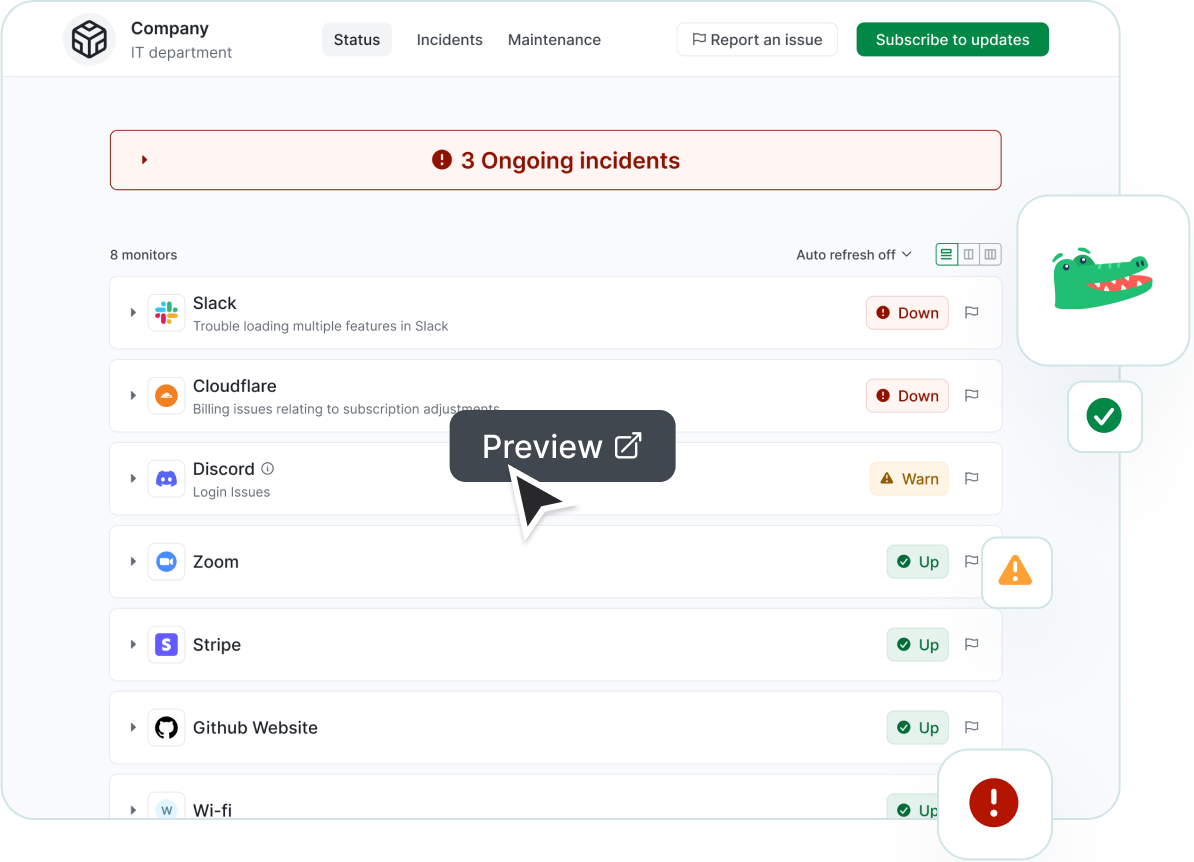
A status page aggregator consolidates the statuses of your critical cloud services, SaaS tools, APIs, and third-party providers into a single, real-time dashboard. No more hopping between scattered status pages. Get a unified view of all your dependencies' health and performance.
Schedule a demo
Why you need a status page aggregator
Stay ahead of outages by monitoring all your services in one place.
Early outage detection
StatusGator's unique Early Warning Signals alert you to issues before official status pages – unlike other aggregators.
Real-time alerts outage alerts
Get instant status updates via Slack, Teams, email, or webhooks – stay ahead of disruptions.
Unified view of every service you rely on
Monitor AWS, GitHub, Shopify, and more in one dashboard – no more checking multiple status pages.
Customizable status dashboards
Tailor your view and notifications by service, component, region, or severity – focus only on what matters to you.
Public and private status pages
Keep your team and clients informed with secure, shareable status pages – public or private.
How a status page aggregator works
StatusGator is more than just a status page provider
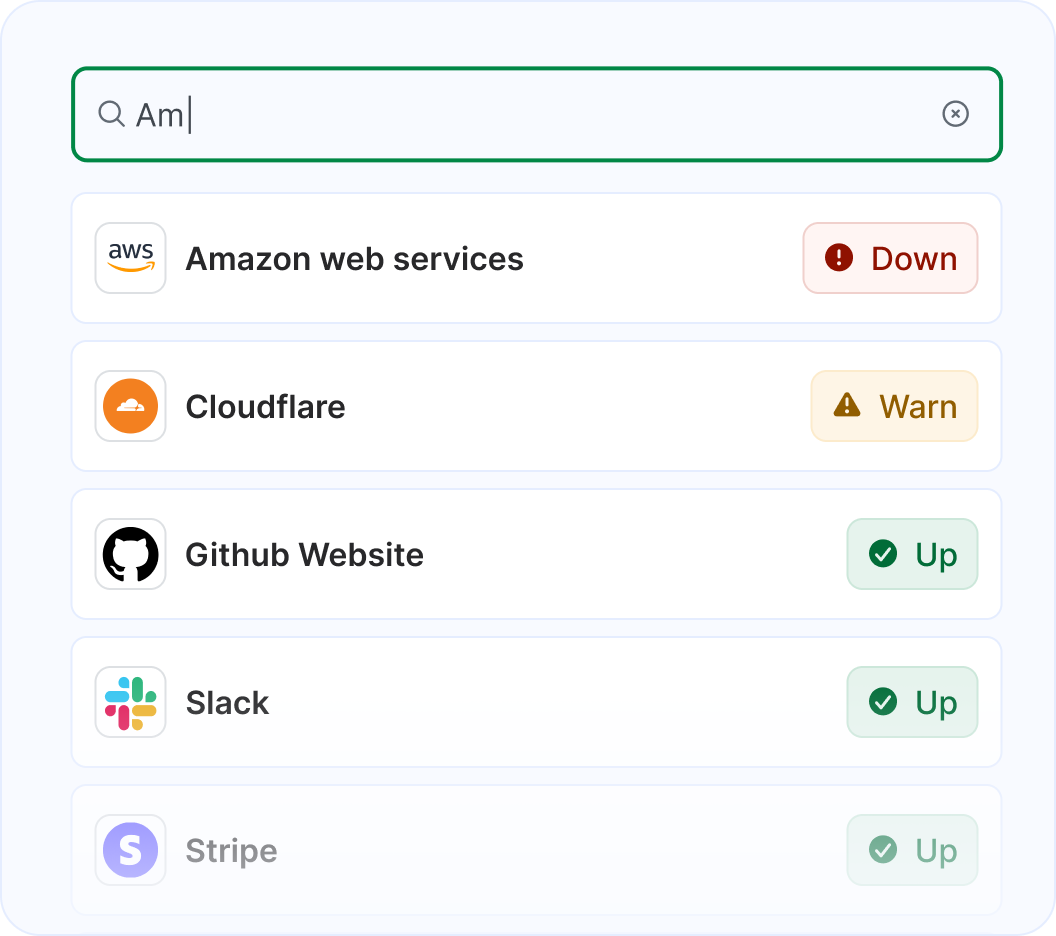
Aggregate status data
Collect status information from public, private, and even unofficial sources across hundreds of cloud platforms, SaaS tools, APIs, and third-party vendors.
Consistent service statuses
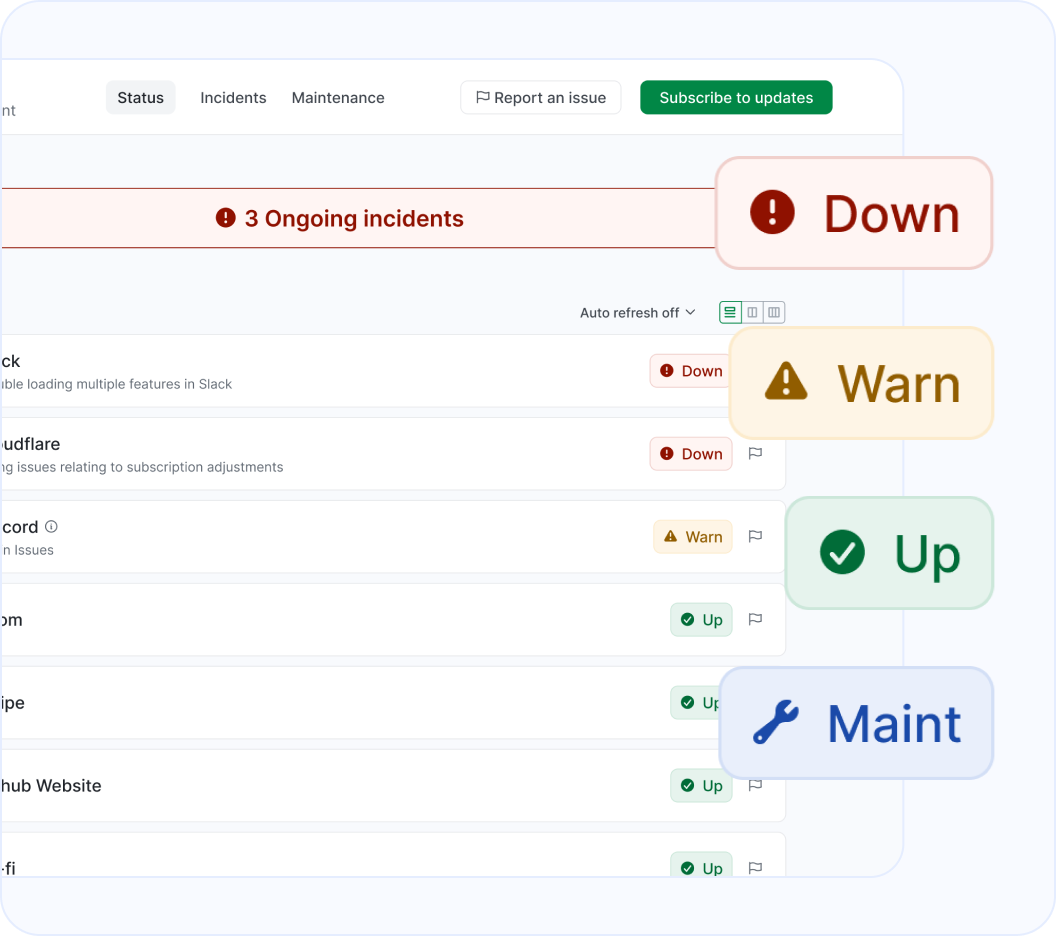
Convert raw, inconsistent status updates into clean, unified statuses – Up, Down, Warn, or Maintenance, for a clear, actionable view. StatusGator does that hard work of normalizing data for you.
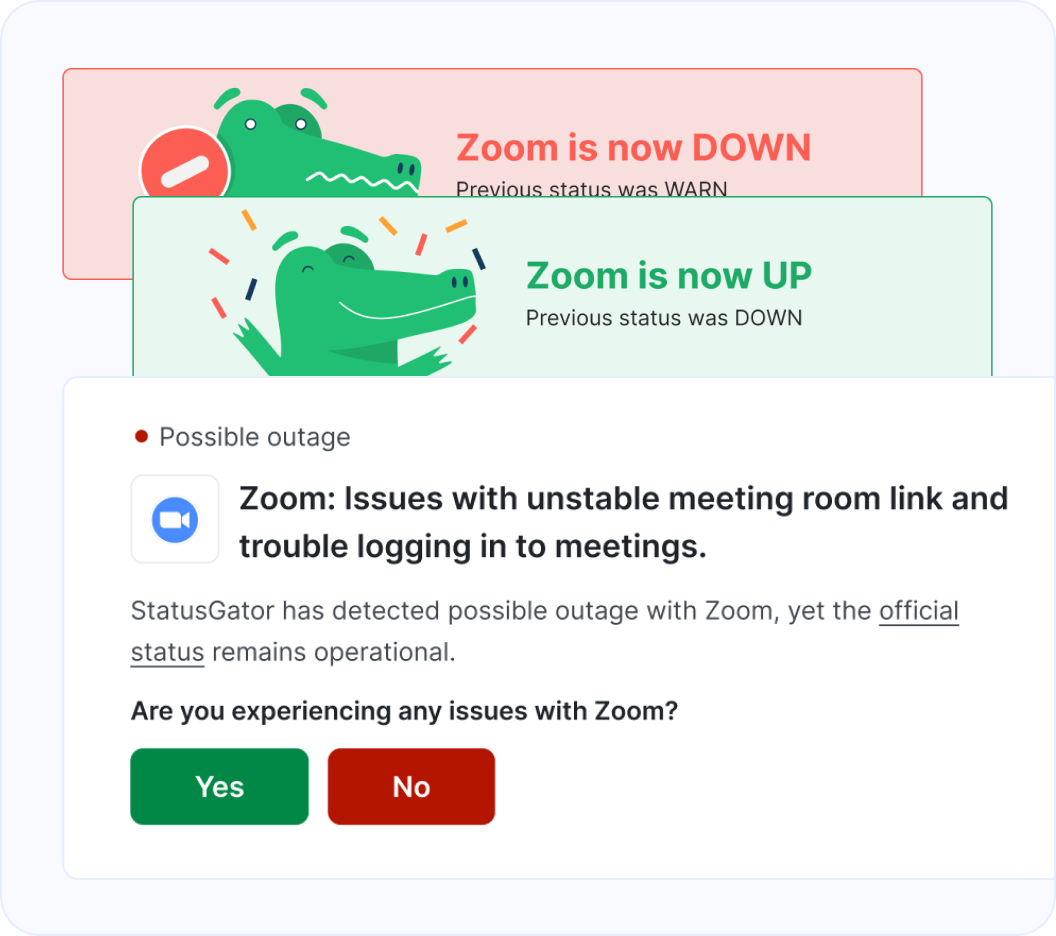
Get real-time alerts & early warnings
Receive instant, customizable notifications when disruptions occur, often before official status pages are updated.
Build custom dashboards
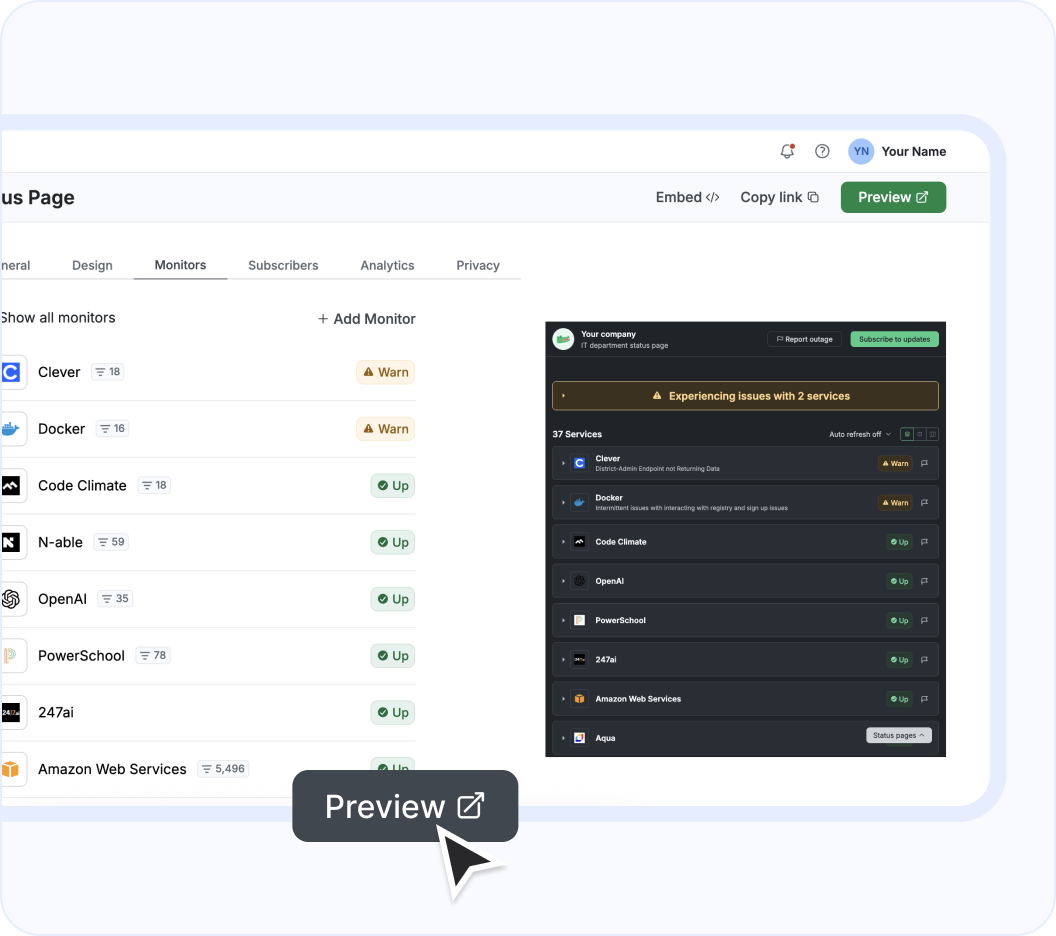
Monitor the exact services, components, and regions that matter to you. Control visibility for different teams or stakeholders.
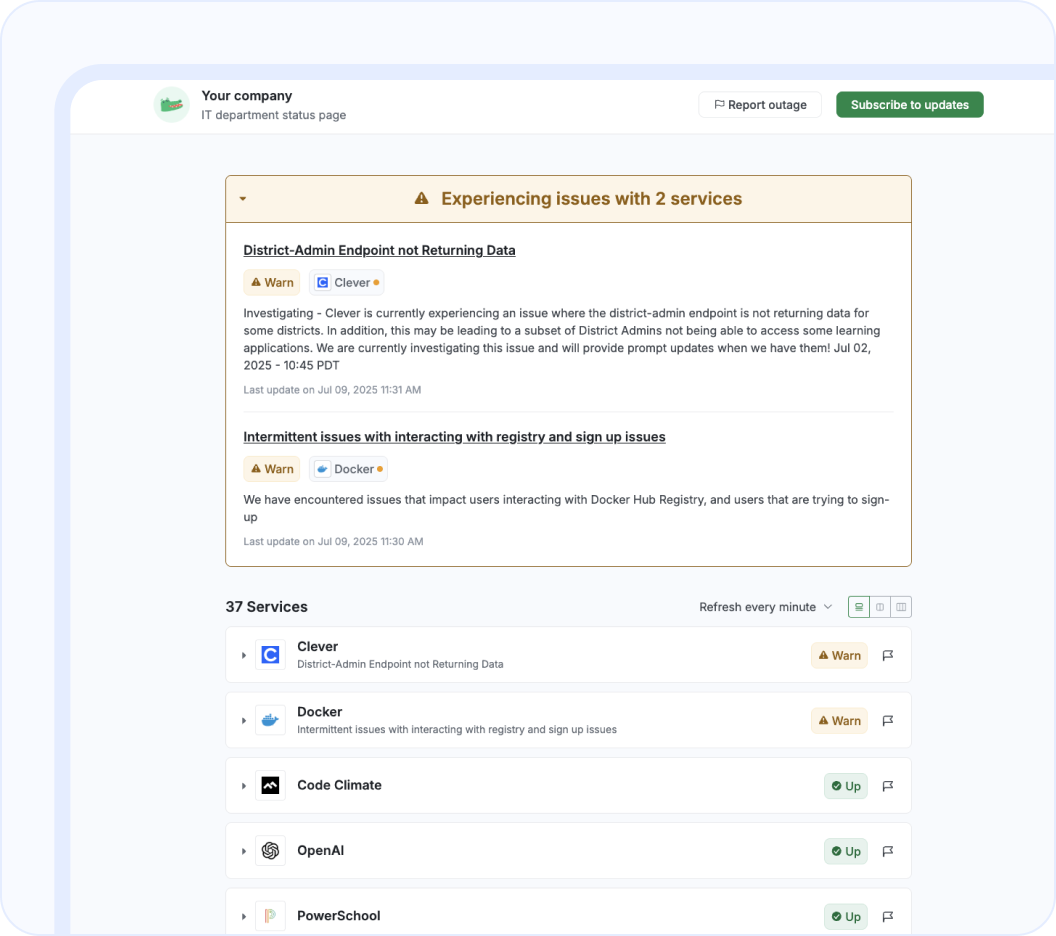
Reduce support ticket burden
Create and share public or protected status pages with your team, clients, or users. Keep everyone informed and reduce the ticket burden on your customer support and IT teams.
Schedule a free 30-min demo
We'll show how StatusGator can benefit your team. No strings attached.
Aggregator features at a glance
Status page aggregator:
Built for every team
Monitor the cloud services, SaaS tools, and APIs your business depends on — all from one unified dashboard. StatusGator's Status Page Aggregator powers smarter monitoring and faster communication for teams of all types.
DevOps & infrastructure teams
Detect third-party outages early to reduce mean time to awareness (MTTA) and organize faster responses.
Customer support teams
Receive proactive alerts and heads-up before users experience issues – reduce friction and ticket volume.
Managed service providers
Reduce tickets to your MSP and deliver comprehensive vendor monitoring and SLA reporting to clients.
E-commerce & SaaS businesses
Stay on top of cloud dependencies and prevent revenue loss or user disruptions.
Educational institutions
Ensure uptime for critical resources across K12 schools, colleges, universities and non-profit organizations.
Why StatusGator beats the competition
Faster detection -
Our Early Warning Signals catch issues before they hit vendor pages; most competitors only report after official notices.
Deeper coverage -
Monitor 5,000+ SaaS and cloud status pages.
Private page support -
Seamlessly ingest private/internal status pages.
Polished UX & easy setup -
Get live in under 5 minutes, no code.
Enterprise-ready -
SSO, fine-grained dashboards, API-first architecture.
Frequently asked questions
-
What is a Status Page Aggregator?
A Status Page Aggregator collects and displays the statuses of all your cloud services, APIs, SaaS tools, and third-party vendors in one unified dashboard. Instead of checking dozens of separate status pages, you can monitor and receive real-time alerts from all your critical providers in one place. StatusGator also provides status updates on services that do not have official status pages. -
Does the Status Page Aggregator track maintenance?
Absolutely. A status page aggregator tracks ongoing maintenance of services. StatusGator aggregates maintenance events alongside incident updates, helping you understand the impact on your operations. -
Where does StatusGator get its status data?
StatusGator aggregates data from official public status pages and, uniquely, from private status pages through direct API integrations. Combined with our proprietary Early Warning Signals, we can often detect outages before they are officially posted. -
How is StatusGator different from other aggregators?
StatusGator goes beyond just the usual status aggregation. While most tools only monitor official status page updates, StatusGator takes it a step further with the Early Warning Signals feature. We monitor unofficial signs of potential outages, giving you a vital edge in spotting disruptions before they hit. StatusGator also provides both public and private status pages, allowing users to tailor custom views for their internal teams, like IT, support, or engineering. With our integration options, component filtering, and support for thousands of services, StatusGator provides unparalleled visibility across your entire SaaS and cloud dependency landscape. -
How often is status data updated?
The status data is updated every 1-5 minutes. Early Warning Signals may trigger even faster. StatusGator continuously monitors service statuses, refreshing data every few minutes to provide the most up-to-date, reliable information. Our algorithm can often surface disruptions before providers post updates to their own status pages. -
Can I customize alerts with StatusGator?
StatusGator's Status Page Aggregator lets you fully customize alerts. Filter by service, component, severity, region, or specific types of issues. You can choose to receive alerts only for the incidents that matter most to your business. Also, StatusGator provides Early Warning Signals even before the disruptions are officially acknowledged. -
Can I filter alerts by provider, severity, or region?
Absolutely. With StatusGator, you can set custom rules so only relevant incidents reach your inbox or chat channels. Our status aggregator offers precise filtering, allowing you to control which alerts you receive based on detailed conditions like region, component, and severity. This reduces alert fatigue and ensures your team focuses only on critical issues. -
How can a Status Page Aggregator help our business?
A Status Page Aggregator simplifies monitoring by providing a single view into the services you rely on. It eliminates the need to track each status page individually, speeds up incident detection, and helps your team respond faster to outages, minimizing downtime and reducing operational risk. -
Can I integrate StatusGator with other tools?
Yes. StatusGator's Status Page Aggregator integrates seamlessly with your existing workflows, including Slack, Microsoft Teams, PagerDuty, Opsgenie, Freshdesk, and more. You can instantly route outage alerts to the tools your team already uses. -
Can I access historical status data?
Yes. With StatusGator's Status Page Aggregation, access historical data and incident logs for thousands of services. Get valuable insights into reliability trends, recurring issues, and provider performance over time. -
What if a service I need isn't on the aggregator?
If you can't find a service you rely on, contact us at hi@statusgator.com. We have thousands of services and new ones every day.
Can't find your question? Email us to arrange a time to discuss. We'd love to chat!