Ensuring that your website or application is always up and running is crucial for maintaining user trust and satisfaction. Uptime monitoring tools play a vital role in this, alerting you to any downtime and helping you resolve issues quickly.
While Uptime.com is a popular choice, there are several alternatives that may better suit your needs. So before we cover the top Uptime alternatives, let’s learn more about Uptime.com.
What is Uptime?

Uptime.com is a website monitoring service designed to ensure that your online presence remains reliable and accessible. It offers real-time monitoring of websites, APIs, performance, and response times. Thus businesses can quickly identify and address issues before they impact users.
With features like multi-location checks, SSL certificate monitoring, and detailed reporting, Uptime.com provides valuable insights into website health and performance trends.
The platform is user-friendly, making it easy for both technical and non-technical users to navigate and utilize its features effectively.
Additionally, Uptime.com integrates seamlessly with various third-party applications, enhancing its functionality and allowing for streamlined workflows.
Overall, Uptime.com offers a reliable uptime monitoring for businesses looking to maintain optimal website performance and user experience.
Key Features
- Website Monitoring: Uptime.com continuously checks your website’s availability and performance from multiple locations around the world, alerting you instantly if any issues arise.
- Synthetic and Real User Monitoring (RUM): This feature tracks the actual user experience on your site, providing insights into load times and performance metrics based on real visitor interactions.
- Incident Management: Uptime.com offers a streamlined incident management system that allows teams to respond quickly to outages, track issues, and communicate effectively during incidents.
- SSL Certificate Monitoring: The tool monitors the status of your SSL certificates, alerting you before they expire to ensure your website remains secure and compliant.
- Custom Alerts and Notifications: Users can set up personalized alerts via email, SMS, or integrations with other tools, ensuring that the right team members are informed of any downtime or performance issues.
- Detailed Reporting and Analytics: Uptime.com provides comprehensive reports and analytics on uptime history, response times, and performance trends, helping businesses make informed decisions to improve their online presence.
Top Uptime.com Competitors
- StatusGator
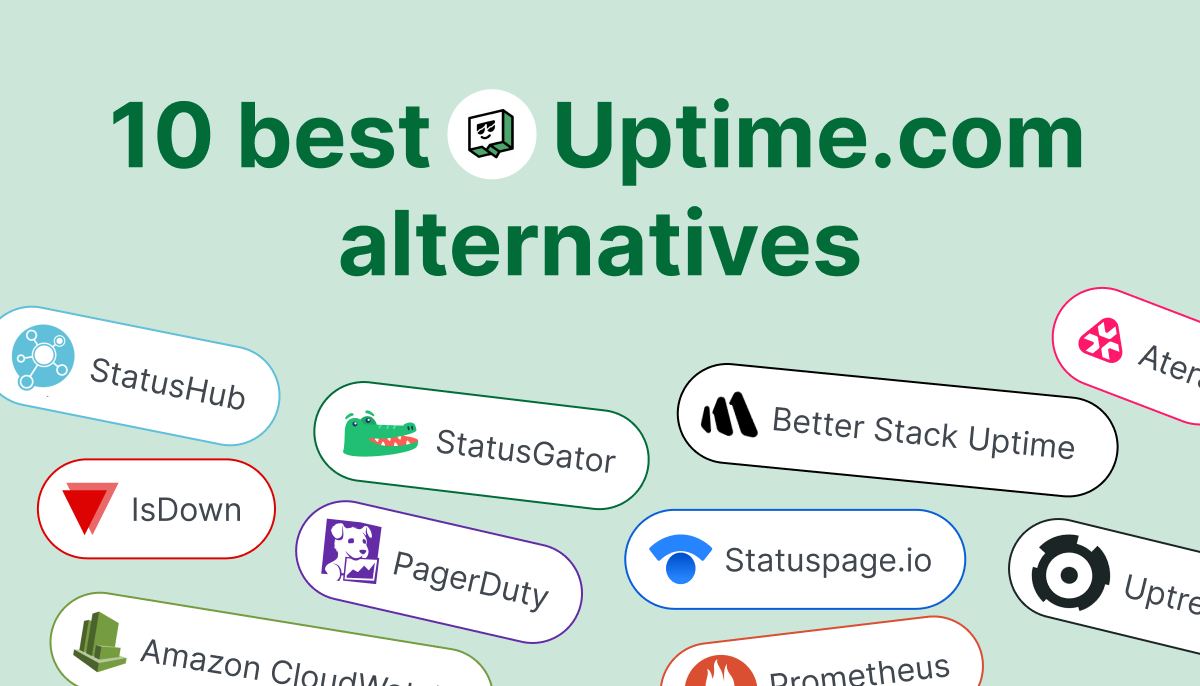
- UptimeRobot
- Datadog
- Pingdom
- Sematext
- Better Stack Uptime
- Oh Dear
- Site24x7
- StatusCake
- Uptrends
1. StatusGator

StatusGator combines website monitoring with third-party service tracking, covering over 4,000 SaaS vendors, unlike Uptime.com and its competitors who don’t offer third-party cloud monitoring on a status page.
With the ability to manually add incidents, you can publish instant status updates to both your team and customers. Experience a new level of reliability and transparency with StatusGator’s all-in-one monitoring solution.
Features
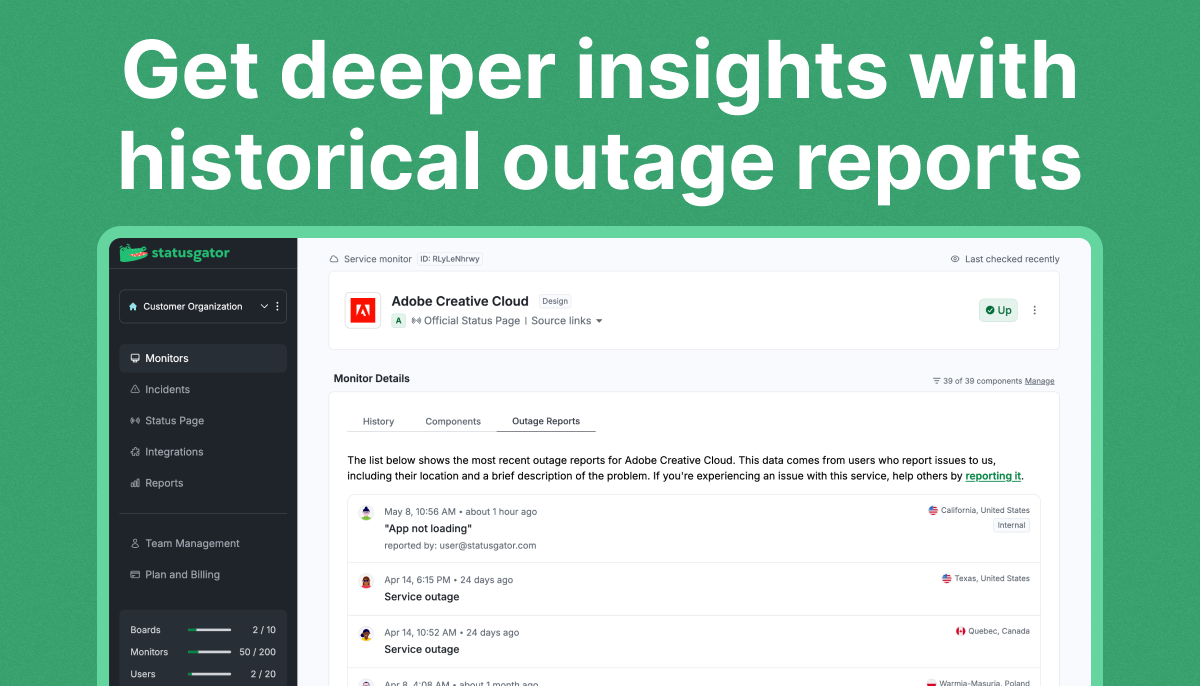
- Service Monitor (Third-Party Monitoring): With StatusGator, you get visibility where you currently have none by aggregating the status of over 4,000 cloud services and SaaS providers such as AWS, Zoom, GitHub, and Stripe. This feature ensures you are always aware of the operational status of the services you depend on.
- Website Monitor: Get notified of outages affecting your website’s uptime with built-in website monitoring. StatusGator continuously checks your website’s availability and performance with 1 to 5-minute monitoring intervals.
- Custom Monitor: StatusGator lets you manually publish incidents on your status page. This flexibility ensures that the exact messaging you require is published to your end users.
Other features enhance IT systems and website monitoring:
- Public and Private Status Pages: Public pages inform your users and customers about the status of your services, while private pages keep your internal team updated on all your cloud providers and systems
- Instant Notifications: Users receive real-time updates via Slack, MS Teams, email, SMS, webhooks, and APIs. This ensures your team is always informed and can respond swiftly to any incidents.
By choosing StatusGator, you gain a powerful, managed monitoring solution that offers extensive capabilities without the overhead of self-hosting. This ensures your IT and tech teams can operate more effectively, responding to incidents faster and maintaining higher uptime and service reliability.
Advantages
- Enhanced Transparency and Trust: StatusGator helps build trust with customers and employees by providing clear and consistent communication during incidents, enhancing your organization’s credibility.
- Improved Response Times: With real-time notifications and centralized status information, your team can respond to incidents more quickly and effectively, minimizing downtime and disruptions.
- Reduced Support Tickets: Proactively communicating incidents and updates reduces the volume of support tickets, freeing up your support team to focus on resolving issues.
- Comprehensive Monitoring: StatusGator’s ability to monitor thousands of third-party services ensures that you are aware of any external factors that might affect your operations, allowing for proactive incident management.
- Seamless Integration: With multiple integration options, StatusGator fits smoothly into your existing workflow, making it easier to manage incident communication without disrupting your processes.
Using StatusGator as your incident communication tool means you can handle incidents with greater efficiency and clarity, ensuring that all stakeholders remain informed and confident in your response capabilities.
Pricing
Free Plan: Ideal for small teams or individual users, the plan includes basic monitoring for up to 3 services. You can track the status of your essential cloud providers and receive email notifications when issues arise.
Startup Plan: At $72 per month, the Startup Plan supports up to 15 services. This plan includes access to both public and private status pages, service monitoring, and customizable notifications via Slack, MS Teams, and more.
Team Plan: Priced at $137 per month, this plan supports up to 50 services and includes advanced features like custom domains, branding, and real-time notifications via multiple channels. Ideal for growing teams that rely on numerous cloud services.
Enterprise Plan: For larger organizations, the Enterprise Plan offers custom pricing. It includes unlimited services, advanced security features, dedicated support, and tailored integrations for incident communication and monitoring.
2. UptimeRobot
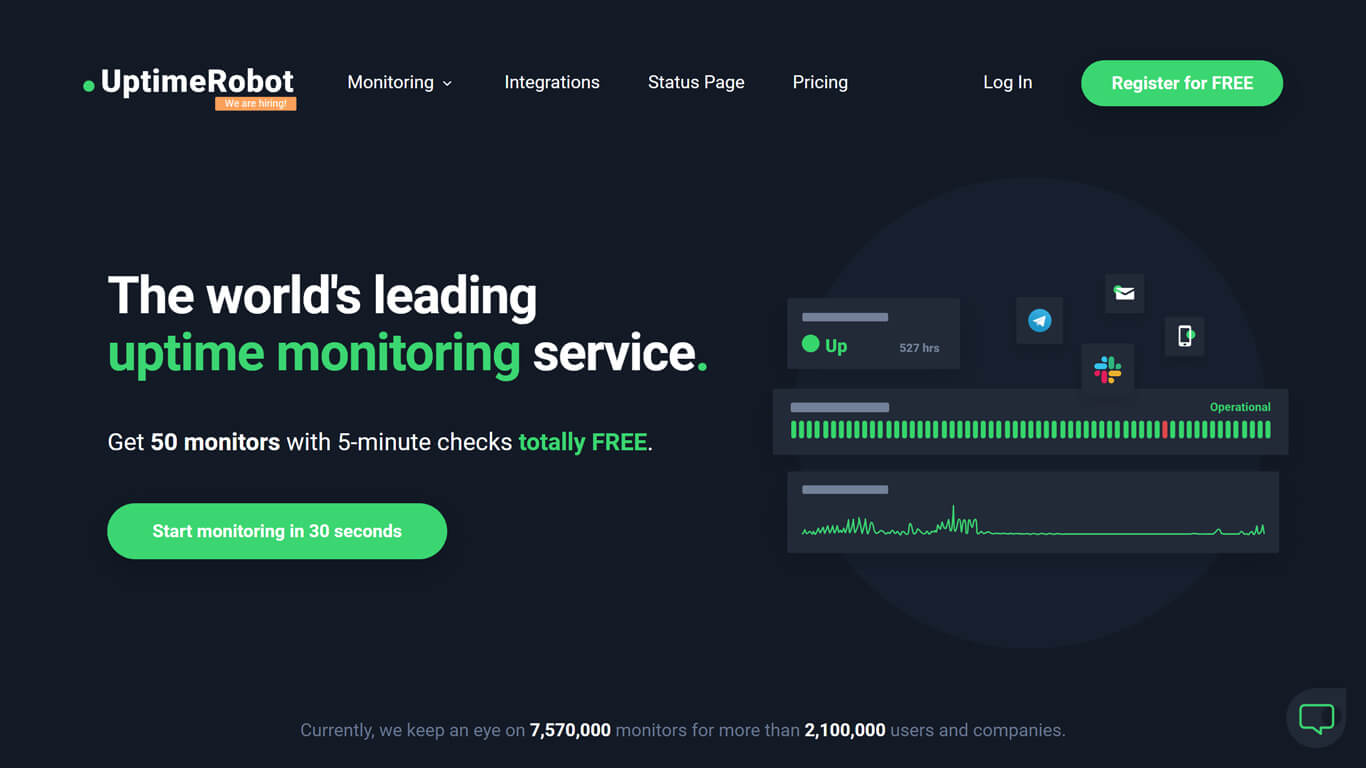
UptimeRobot allows businesses to display the uptime of their websites and services. It offers real-time monitoring for up to 50 websites, checking their status every five minutes and alerting users via email, SMS, or push notifications in case of downtime.
Uptime Robot is classified as a cloud-based service, making it easy to set up and use without any complex installations. With its simple uptime tracking and reliable performance, this competitor is an excellent choice for those looking to keep their online presence running smoothly.
Features
- Multi-Protocol Monitoring: Supports HTTP(s), ping, and port monitoring to ensure comprehensive uptime checks.
- Alerts and Notifications: Users receive instant alerts via email, SMS, or integrations with popular tools like Slack, ensuring timely incident response.
- Status Pages: Allows users to create a public status page to communicate uptime and incidents and allow users to see the performance of your website.
- Detailed Reporting: Provides historical uptime reports and performance metrics for informed decision-making.
Advantages
- User-Friendly Dashboard: making it easy for users to set up and perform service and application monitor their services without a steep learning curve.
- Free Tier Available: With a generous free plan, Uptime Robot allows users to monitor up to 50 URLs at 5-minute intervals, making it accessible for startups and small businesses.
- Historical Data: Uptime Robot provides detailed uptime reports and historical data, helping users analyze performance trends over time.
- API Access: The platform offers a robust API, allowing developers to integrate uptime monitoring into their own applications seamlessly.
Pricing
Free Plan: Ideal for hobby projects with 50 monitors, 5-minute intervals, HTTP/port/ping monitors, and basic status pages. Limited to 5 integrations.
Solo Plan for $7 per month with 10 monitors or $15 per month for 50 monitors: Suitable for solopreneurs, offering 1-minute intervals, 9 integrations, and SSL/domain expiration monitoring. Includes basic status pages but no login seats.
Team Plan for $29 per month and 100 monitors: Designed for small teams with 100 monitors, 1-minute intervals, full-featured status pages, 12 integrations, and 3 login/notify seats.
Enterprise Plan for $54 per month and 200 monitors: For larger teams, featuring 30-second intervals, 12 integrations, full status pages, and 5 login/notify seats for better collaboration.
3. Datadog
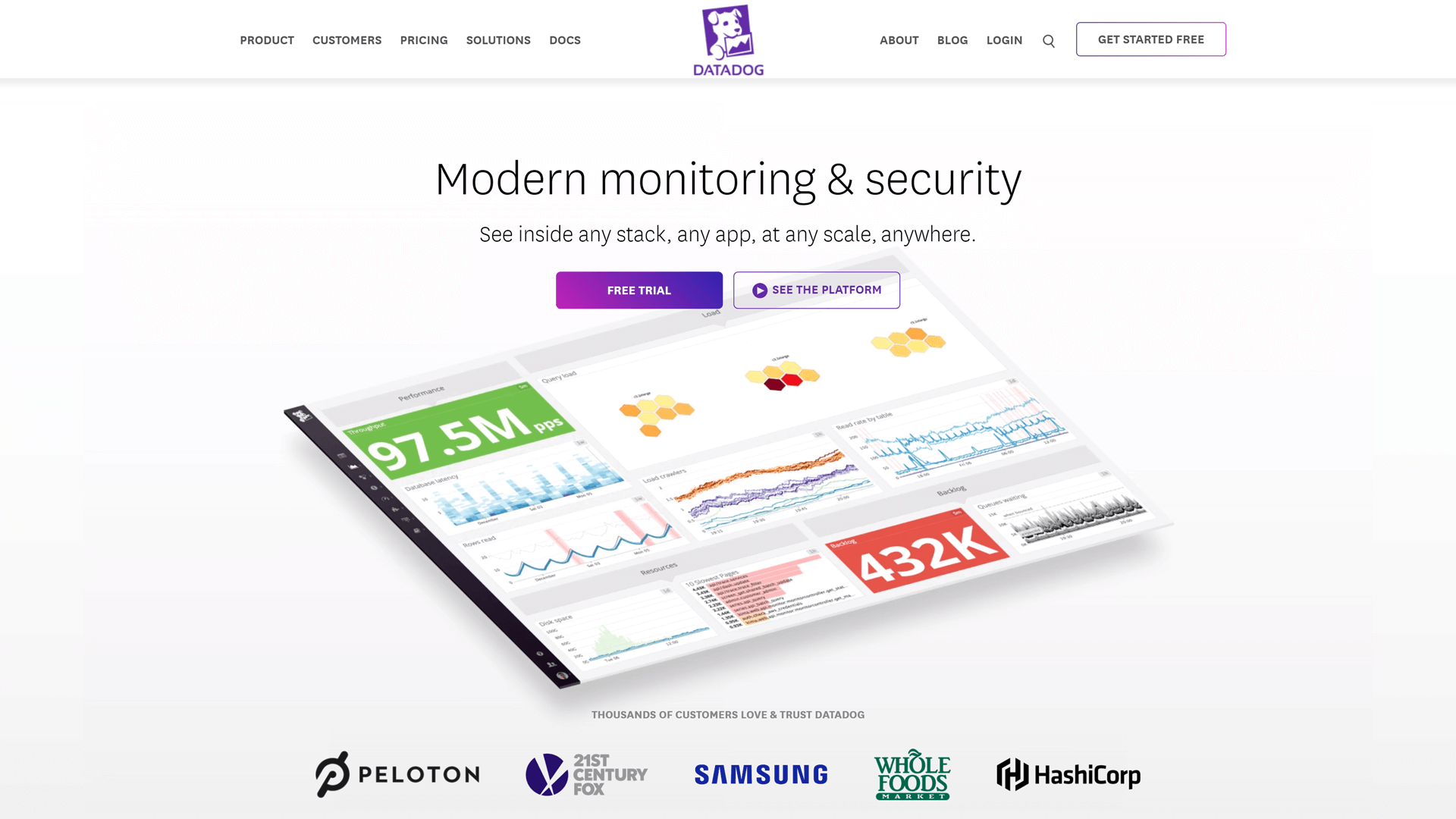
Datadog is a full-stack monitoring and analytics platform designed for cloud-scale applications. It provides real-time observability across various services, enabling users to track performance metrics, logs, and traces in one unified interface.
As an uptime monitoring tool, Datadog helps teams identify and resolve issues quickly, ensuring optimal service availability. With its robust integrations and customizable dashboards, Datadog empowers organizations to maintain high uptime and enhance their overall operational efficiency.
Features
- Comprehensive Monitoring: Datadog offers a wide range of monitoring capabilities, including infrastructure monitoring, application performance monitoring (APM), and log management. This holistic approach allows users to gain insights into their entire tech stack, not just uptime.
- Performance Monitoring: Datadog offers real-time monitoring of applications, infrastructure, and logs, allowing users to gain immediate insights into system performance and health.
- Integrated Dashboards: Users can create customizable dashboards that aggregate metrics from various sources, providing a holistic view of their entire tech stack in one place.
- Alerting and Incident Management: Datadog includes advanced alerting capabilities that notify users of performance issues or outages, enabling quick response and resolution to incidents.
- Distributed Tracing: This feature allows users to trace requests across microservices, helping to identify bottlenecks and optimize application performance.
- Log Management: Datadog provides robust log management tools that allow users to collect, analyze, and visualize logs from their applications, making it easier to troubleshoot issues.
- Integrations with Cloud Services: Datadog supports integrations with a wide range of cloud service providers and tools, enabling users to monitor their entire ecosystem seamlessly.
These features make Datadog a compelling choice for businesses looking for comprehensive uptime monitoring that goes beyond basic status checks.
Advantages
When it comes to uptime monitoring, Datadog stands out as a robust alternative to Uptime.com. Here are some of the key advantages of using Datadog for your uptime monitoring needs:
- Customizable Dashboards: Datadog allows users to create highly customizable dashboards tailored to their specific needs. This flexibility helps teams visualize the metrics that matter most to them, enhancing their ability to monitor uptime effectively.
- Integration Capabilities: Datadog integrates seamlessly with over 600 different services, including cloud providers, databases, and collaboration tools. This extensive integration ecosystem allows users to centralize their monitoring efforts and streamline incident response.
- Collaboration Features: Datadog includes collaboration tools that facilitate communication among team members during incidents. This ensures that everyone is on the same page and can respond quickly to resolve issues.
- User-Friendly Interface: The platform is designed with user experience in mind, making it easy for teams to navigate and utilize its features. This reduces the learning curve and allows teams to focus on monitoring rather than figuring out how to use the tool.
- Historical Data Analysis: Datadog stores historical performance data, enabling users to analyze trends over time. This feature is invaluable for identifying recurring issues and making informed decisions about infrastructure improvements.
- Scalability: As businesses grow, their monitoring needs evolve. Datadog is highly scalable, making it suitable for startups and large enterprises alike. Users can easily adjust their monitoring setup as their infrastructure expands.
- Security Monitoring: In addition to uptime monitoring, Datadog offers security monitoring features that help teams detect and respond to security threats in real time. This added layer of protection
Pricing
Datadog offers a flexible pricing structure designed to cater to various business needs. Their pricing is based on a pay-as-you-go model, allowing users to select from different tiers depending on the features required. The key plans include:
Free Tier: Ideal for small teams or those just starting out, this plan includes basic monitoring features with limited data retention.
Pro Plan: Starting at $15 per host per month, this plan provides advanced monitoring capabilities, including real-time performance metrics, log management, and integrations with over 450 services.
Enterprise Plan: For larger organizations, this plan starts at $23 per host per month and offers machine learning-based alerts and live processes.
Datadog also provides a 14-day free trial for users to explore its full range of features before committing to a paid plan. This flexibility makes Datadog a strong alternative for businesses looking for robust uptime monitoring and performance management solutions.
4. Pingdom
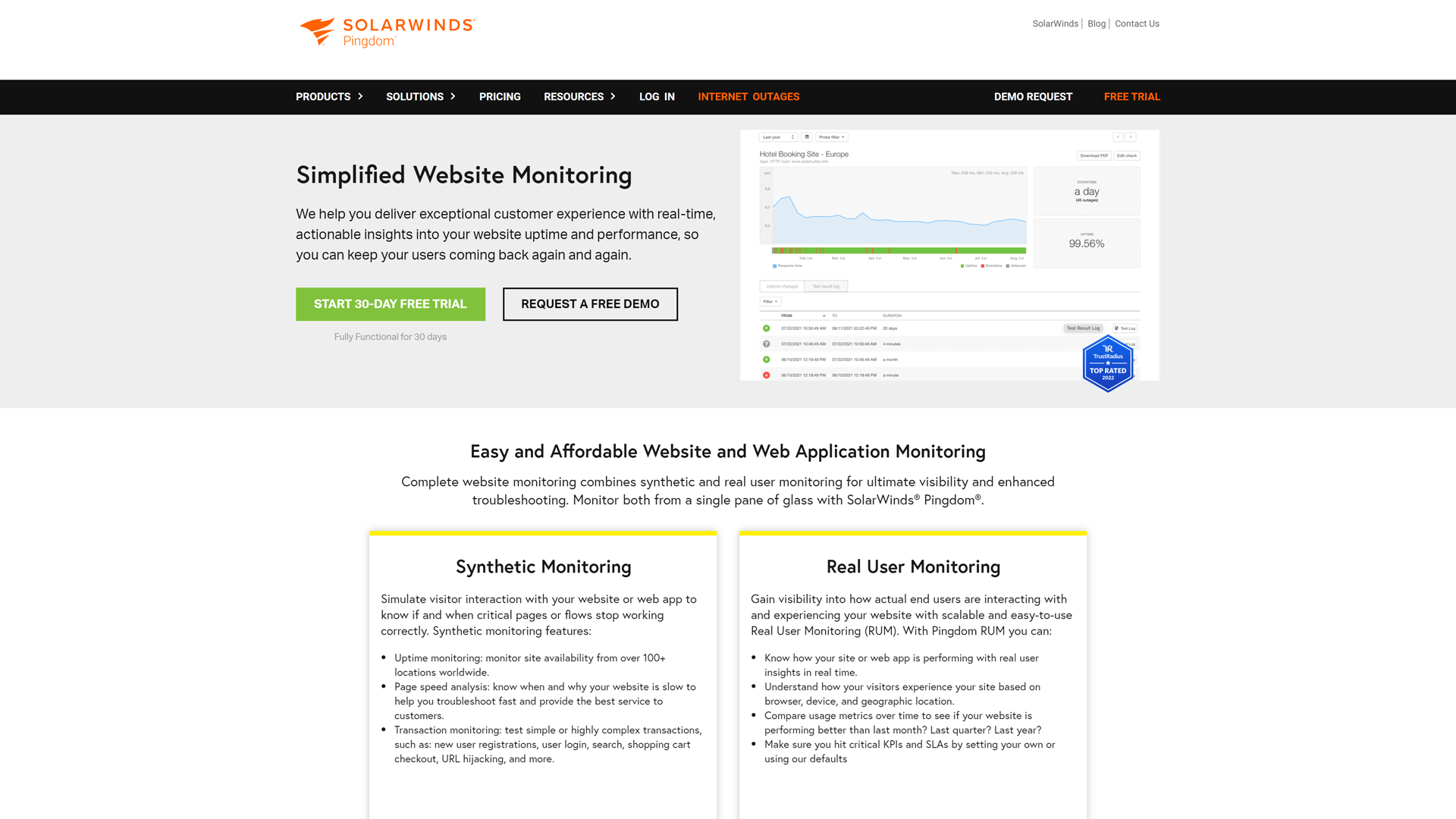
Pingdom is a platform that specializes in tracking the performance and availability of websites and web applications. It provides real-time alerts and detailed reports, allowing users to quickly identify and resolve issues that may affect their online presence.
Pingdom offers insights into website speed, uptime, and user experience, making it a valuable resource for businesses of all sizes. Additionally, it integrates seamlessly with various third-party applications, enhancing its functionality and ease of use.
Features
- Real-Time Monitoring: Pingdom offers instant alerts for downtime, ensuring users are promptly informed of service interruptions.
- Global Server Monitoring: With multiple monitoring locations worldwide, Pingdom provides a comprehensive view of website performance from various regions.
- Transaction Monitoring: Pingdom can simulate user transactions, allowing businesses to monitor critical workflows and ensure seamless user experiences.
- Integration Capabilities: The tool integrates with various third-party applications, enhancing workflow and incident management.
Advantages
- Detailed Reports: Users receive comprehensive reports and analytics, helping them understand downtime causes and performance trends.
- Website Speed Testing: Pingdom includes tools for analyzing website speed, helping users optimize performance alongside uptime monitoring.
- User-Friendly Dashboard: Pingdom features an intuitive interface that simplifies monitoring and reporting, making it accessible for all team members.
Pricing
Pingdom offers customizable plans to suit your monitoring needs.
Synthetic Monitoring starts at $10 per month for 10 uptime checks, 1 advanced check, and 50 SMS alerts. This plan includes transaction monitoring, page speed monitoring, and uptime monitoring to proactively monitor web application availability and performance.
Real User Monitoring also starts at $10 per month for 100,000 pageviews, allowing you to understand and troubleshoot web application performance from your users’ perspective. It includes unlimited sites, unlimited users, and shareable reports.
Both plans can be combined, starting at $240 per year.
5. Sematext
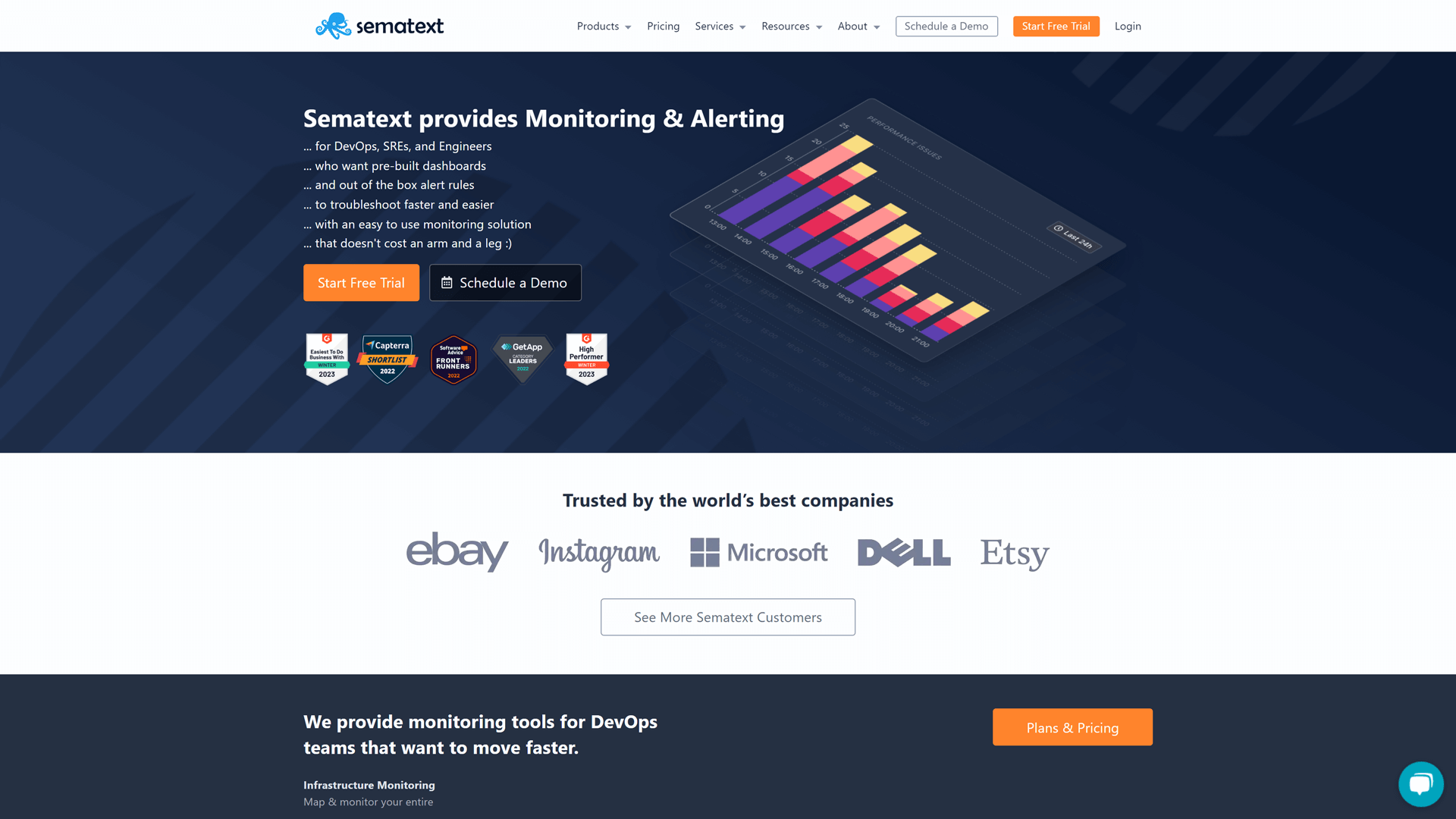
Sematext is a comprehensive uptime monitoring tool that offers real-time performance tracking for websites and applications.
It provides users with detailed insights into their services’ availability, response times, and overall health, helping teams quickly identify and resolve issues.
Sematext also features powerful log management and monitoring capabilities, making it a versatile choice for businesses looking to enhance their operational efficiency.
With its robust alerting system, Sematext ensures that you stay informed about your services’ performance at all times.
Features
- Comprehensive Monitoring: Sematext offers extensive monitoring capabilities, including uptime, performance, and log management, providing a holistic view of your services.
- Log Management: Centralizes logs for easy analysis and troubleshooting, enhancing operational efficiency.
- Performance Metrics: Provides detailed insights into application performance, user experience, and server health.
- Custom Dashboards: Allows users to create personalized dashboards for monitoring key metrics at a glance.
- Integrations: Seamlessly connects with various tools and services for enhanced functionality and workflow automation.
Advantages
- Real-Time Alerts: Users receive instant notifications for downtime or performance issues, enabling quick responses to incidents.
- Integration Flexibility: Sematext integrates seamlessly with various tools and services, enhancing workflow efficiency.
- Intuitive Design: Ensures that users can navigate and utilize the platform effectively without a steep learning curve.
Pricing
Sematext offers flexible, metered pricing based on the number of monitoring agents, your plan, and data retention needs. You only pay for what you use, avoiding fixed data buckets and overage fees.
Basic Plan: Free with 30 minutes of data retention.
Standard Plan: $10.08 per agent per month, including 7 days of data retention.
Pro Plan: $15.12 per agent per month with 7 days of data retention.
There are no limits on sources or users. A 14-day free trial is available without a credit card. For custom plans, contact Sematext for more details.
6. Better Stack Uptime
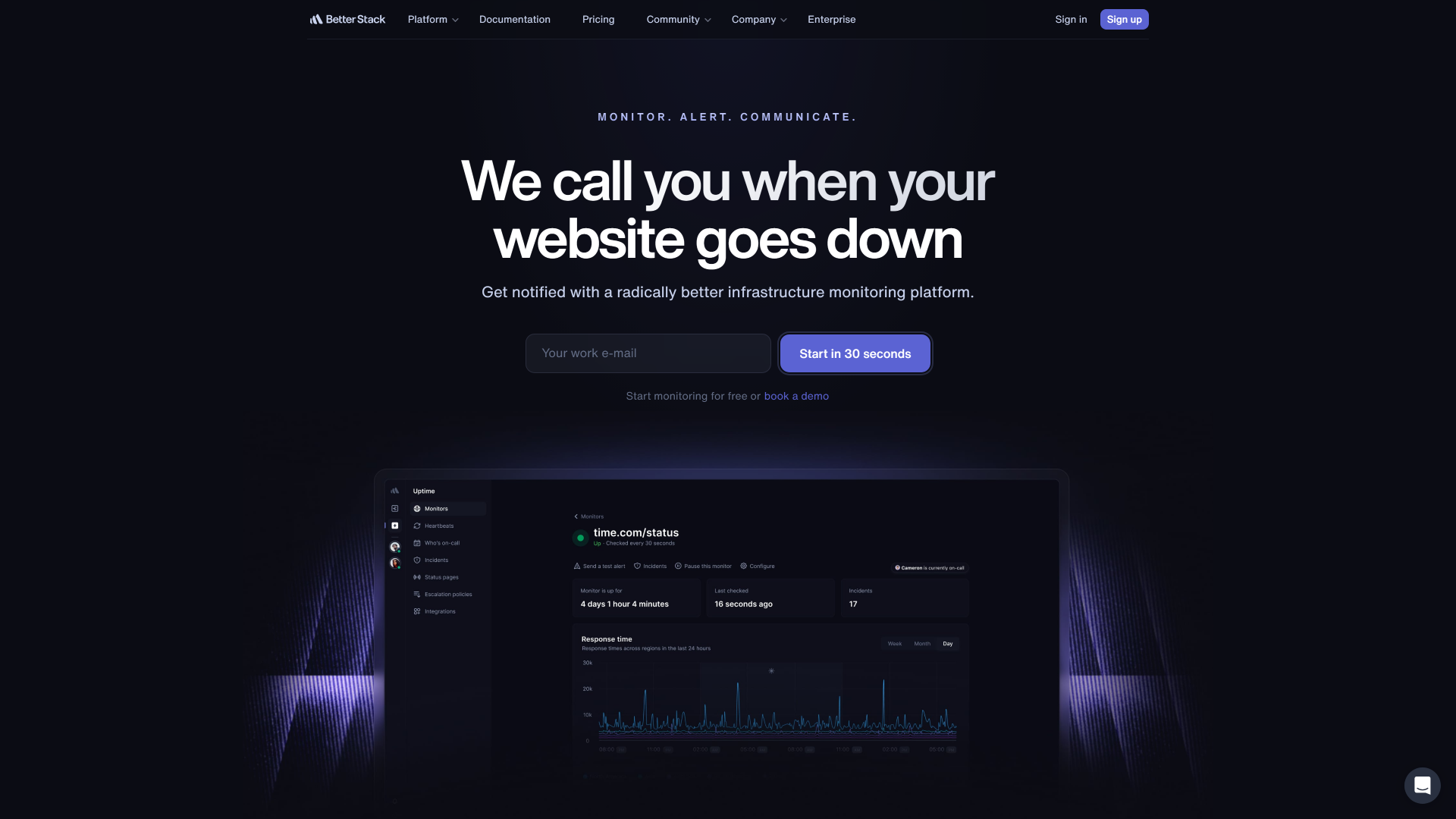
Better Stack Uptime is a robust uptime monitoring software designed to help businesses ensure their websites and applications are always accessible. It offers real-time monitoring and alerts, allowing users to quickly identify and resolve issues before they impact customers.
Better Stack Uptime makes it easy to stay informed about the health of your services. Additionally, it provides detailed performance reports, empowering teams to make data-driven decisions for improved reliability.
Features
- Monitoring: Provides instant alerts for downtime and performance issues across websites and applications.
- Incident Management: Streamlines incident response with integrated communication tools for team collaboration.
- Customization: Offers personalized dashboards to visualize uptime metrics and performance data.
- Multi-Channel Notifications: Sends alerts via email, messages, and integrations with popular messaging platforms.
- Reports and Analytics: Generates comprehensive reports on uptime history and performance trends for analysis.
Advantages
- User-Friendly Interface: Better Stack Uptime offers an intuitive dashboard, making it easy for users to monitor their services without a steep learning curve.
- Custom Alerts: Users can set personalized alerts for downtime, ensuring they are immediately notified of issues that matter most to their operations.
- Comprehensive Reporting: The software provides detailed reports and analytics, helping teams understand uptime trends and improve service reliability.
- Integration Capabilities: Better Stack Uptime seamlessly integrates with various tools, enhancing workflow efficiency and incident management.
Pricing
Better Stack Uptime offers uptime monitoring and incident management with plans based on check frequency and team size.
Free Plan: For personal projects, includes up to 3 monitors and 20 SMS alerts.
Startup Plan: $24 per month, supports 50 monitors and up to 5,000 checks per month.
Business Plan: $79 per month for larger teams, includes 500 monitors and 100,000 checks per month.
Enterprise Plan: Custom pricing, includes unlimited monitors, advanced support, and SLA guarantees.
7. Oh Dear
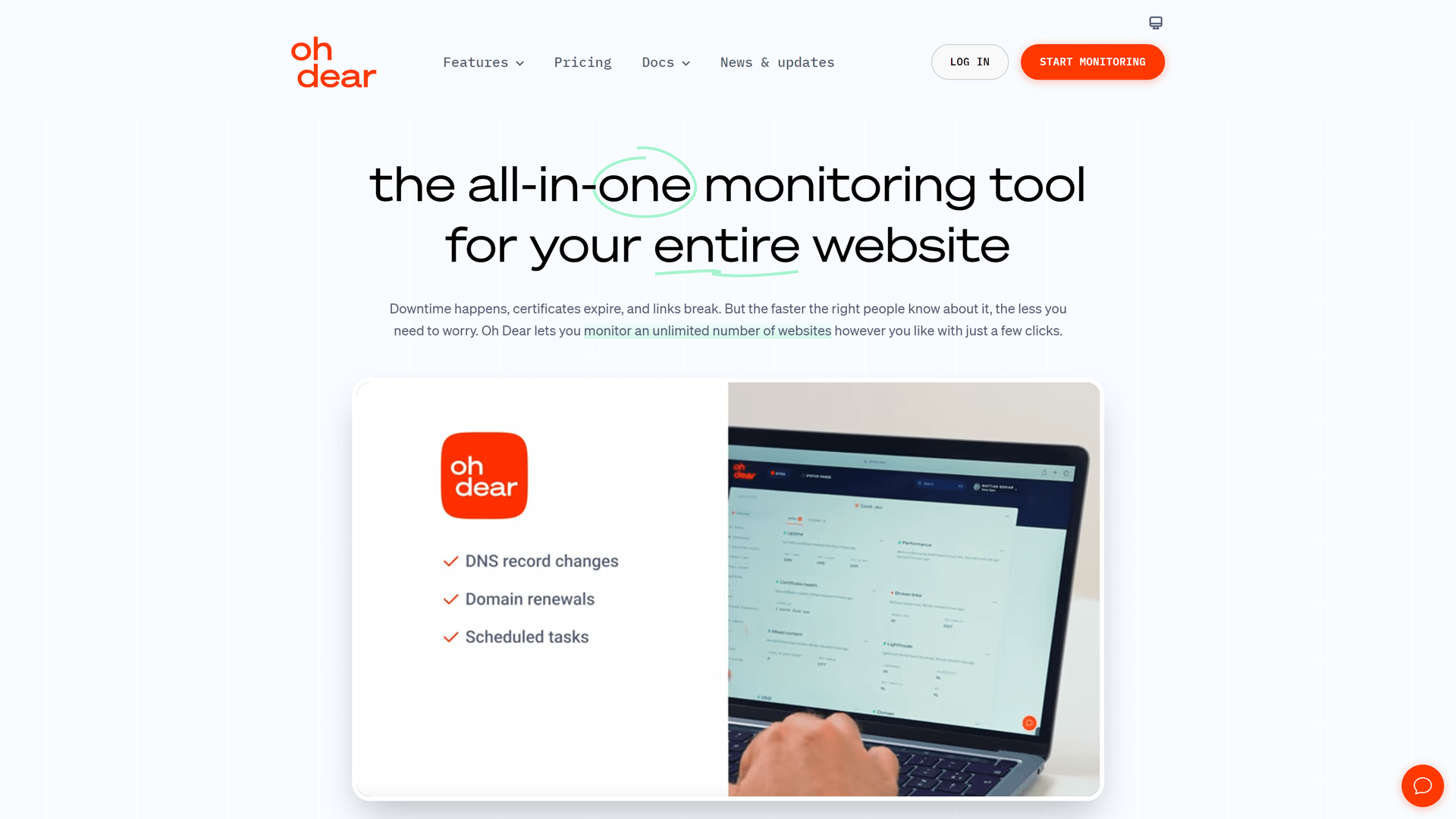
Oh Dear is a website monitoring tool. It offers real-time monitoring for downtime, SSL certificate expiration, and broken links, ensuring that your online presence remains reliable.
Oh Dear allows you to receive instant notifications via email or Slack, so you can address issues promptly. This tool is particularly well-suited for developers and teams looking for a straightforward solution to maintain their web applications’ health.
Features
- Website Monitoring: Oh Dear offers real-time monitoring for website uptime, ensuring you’re alerted immediately to any downtime.
- SSL Certificate Monitoring: Automatically checks SSL certificate validity and expiration, helping you maintain secure connections.
- Broken Link Detection: Identifies broken links on your site, enhancing user experience and SEO performance.
- Performance Monitoring: Tracks website performance metrics, providing insights to optimize speed and reliability.
- Incident Alerts: Sends instant notifications via email or Slack for any detected issues, keeping your team informed.
- Integration Capabilities: Seamlessly integrates with various software and apps, streamlining your workflow and incident management.
Advantages
- Intuitive Dashboard: it simplifies monitoring and reporting, making it accessible for users of all technical levels.
- Instant Notifications: Oh Dear provides real-time alerts via email or Slack, allowing teams to respond quickly to any issues that arise.
- Performance Insights: Users receive detailed performance reports, helping to identify trends and optimize website speed and reliability.
- Affordable Pricing: With competitive pricing plans, Oh Dear offers great value for small to medium-sized businesses looking for effective uptime monitoring solutions.
Pricing
The plans are based on the number of websites and include all core features such as website uptime monitoring, performance monitoring, broken page checking, certificate monitoring, and more.
1. So for $17 per month, you monitor up to 5 sites.
2. Monitoring 10 websites costs $30 per month
All plans come with:
– Unlimited users
– Two-factor authentication
– Status pages
– DNS monitoring
– Lighthouse SEO monitoring
– Application health monitoring
– Monthly email reports
– Full API access
– Powerful notifications
Every plan starts with a 30-day free trial, and you can cancel anytime. No setup or hidden fees, and support is available across all plans.
8. Site24x7

This platform is designed for businesses seeking to ensure their websites and applications are always accessible. It offers real-time monitoring of websites, servers, and cloud services, providing users with instant alerts for any downtime or performance issues.
With its robust analytics and reporting features, Site24x7 helps teams identify trends and optimize their digital infrastructure. Additionally, it supports integrations with various third-party applications, making it a versatile choice for organizations looking to enhance their monitoring capabilities.
Features
- Comprehensive Monitoring: Monitors websites, servers, and applications with real-time alerts for downtime and performance issues.
- Multi-Location Testing: Tests website uptime from multiple global locations to ensure consistent performance.
- Synthetic Monitoring: Simulates user interactions to assess application performance and availability.
- Real User Monitoring (RUM): Analyzes actual user experiences to identify performance bottlenecks.
- Detailed Reporting: Provides in-depth reports and analytics to track uptime trends and performance metrics.
- Integration Capabilities: Seamlessly integrates with various third-party tools for enhanced functionality and workflow automation.
Advantages
- Comprehensive Monitoring: Site24x7 offers extensive monitoring for websites, servers, and applications, ensuring a holistic view of your digital ecosystem.
- Real-Time Alerts: Users receive instant notifications via multiple channels, allowing for quick response to downtime or performance issues.
- User-Friendly Interface: The platform features an intuitive dashboard, making it easy for teams to navigate and access critical data.
- Global Reach: With monitoring locations worldwide, Site24x7 provides accurate insights into performance from various geographical perspectives.
- Integrated APM: The tool includes Application Performance Monitoring (APM) capabilities, helping users optimize their applications alongside uptime monitoring.
- Customizable Reports: Users can generate tailored reports to analyze performance trends and share insights with stakeholders effectively.
Pricing
Free Plan: Ideal for small projects or startups, this plan includes basic monitoring for up to 5 websites and essential features to get started.
Starter Plan: Priced at approximately $9 per month, this plan allows monitoring for up to 10 websites and includes additional features such as uptime monitoring and basic incident alerts.
Pro Plan: At around $29 per month, the Pro Plan expands monitoring capabilities to 25 websites and introduces advanced features like real-time performance monitoring, detailed reporting, and integration options.
Enterprise Plan: For larger organizations, the Enterprise Plan is customizable and offers extensive monitoring for more than 25 websites, along with premium features such as advanced analytics, dedicated support, and SLA management.
Site24x7 also provides a 30-day free trial for users to explore the platform’s capabilities before committing to a paid plan, ensuring that businesses can find the right fit for their status monitoring needs.
9. StatusCake
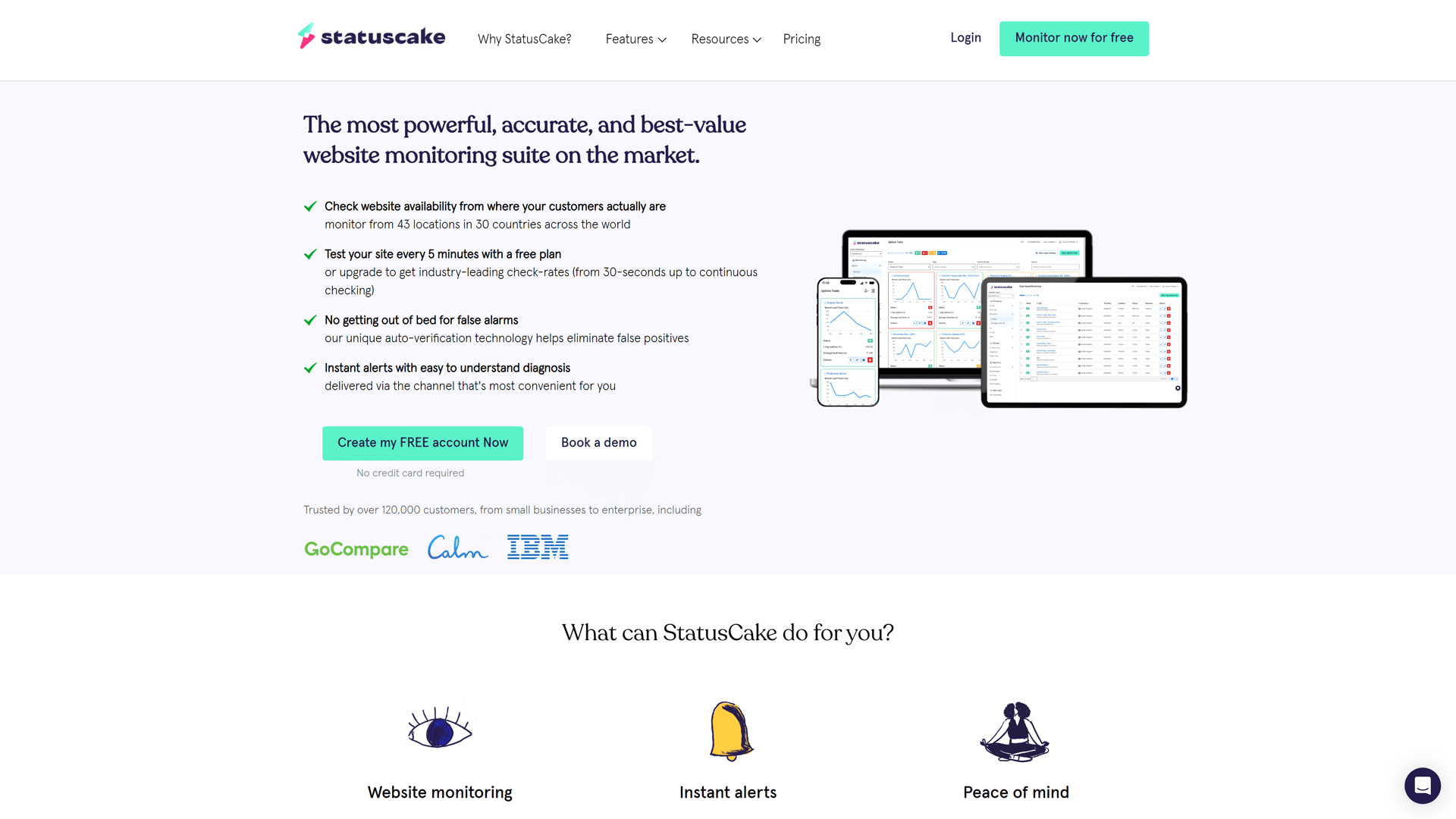
StatusCake is designed to help businesses ensure their websites and applications are always accessible. It offers real-time monitoring of website performance, alerting users to any downtime or issues that may arise.
With features like SSL monitoring, page speed testing, and a user-friendly dashboard, StatusCake provides comprehensive insights into your site’s health. This tool is particularly beneficial for teams looking to enhance their incident response and maintain optimal service availability.
Features
- Website Monitoring: Offers real-time monitoring of website uptime and performance, ensuring quick detection of issues.
- Multiple Test Locations: Tests from various global locations to provide a comprehensive view of site
performance. - SSL Monitoring: Alerts users before SSL certificates expire, preventing potential security issues.
- Page Speed Monitoring: Analyzes page load times and provides insights for optimization.
- Incident Alerts: Sends instant notifications via email, SMS, or integrations when downtime occurs.
- Customizable Reports: Generates detailed reports to track performance trends and uptime statistics.
Advantages
- User-Friendly Interface: StatusCake offers an intuitive dashboard that simplifies monitoring and reporting, making it easy for users to track uptime and performance.
- Global Monitoring Locations: With multiple monitoring locations worldwide, StatusCake ensures accurate performance assessments from various geographical points.
- Flexible Pricing Plans: StatusCake provides a range of pricing options, catering to businesses of all sizes, from startups to large enterprises.
- Real-Time Alerts: Users receive instant notifications via email, SMS, or integrations, ensuring they are promptly informed of any downtime or issues.
- Comprehensive Reporting: StatusCake delivers detailed reports and analytics, helping users understand their uptime history and performance trends.
Pricing
Free Plan: Monitor a limited number of services with basic uptime checks and alerts.
Basic Plan: Starting at $9 per month, supports monitoring for up to 10 services with real-time email alerts and essential reporting features.
Pro Plan: $29 per month, monitors 50 services, includes advanced alerting options (like SMS notifications) and enhanced reporting tools.
Business Plan: $99 per month, monitors up to 200 services, offering custom integrations, dedicated support, and advanced analytics.
10. Uptrends

Uptrends is a robust uptime monitoring tool designed to help businesses ensure their websites and services are always available. It offers website uptime checks, performance monitoring, and multi-browser testing.
Uptrends provides real-time alerts and detailed reports, allowing teams to quickly address any issues that arise. Ideal for businesses of all sizes, the platform empowers users to maintain optimal service levels and enhance customer satisfaction.
Features
- Multi-Location Monitoring: Uptrends offers global monitoring from 200 multiple locations, ensuring comprehensive uptime checks for your services.
- Real User Monitoring (RUM): Analyze real user experiences to identify performance issues and optimize user satisfaction.
- Customizable Dashboards: Create personalized dashboards to visualize uptime, response times, and performance metrics.
- Alerts and Notifications: Receive instant alerts via email, SMS, or integrations when downtime or performance issues occur.
- API Access: Utilize Uptrends’ API for seamless integration with your existing tools and workflows.
- Detailed and Analytics: Generate in-depth reports to analyze uptime trends and performance over time, aiding in strategic decision-making.
Advantages
- Comprehensive Monitoring: Uptrends offers extensive monitoring for websites, servers, and APIs, ensuring all critical components are tracked.
- Detailed Reporting: Uptrends generates in-depth reports, helping teams analyze performance trends and identify issues quickly.
- Multi-Channel Alerts: Users receive alerts via email, SMS, or integrations, ensuring timely notifications for any downtime.
- Synthetic Monitoring: Uptrends simulates user interactions to monitor website performance, providing a real-world perspective on user experience.
Pricing
Free Plan: Monitor a limited number of services with basic uptime checks and alerts.
Basic Plan: Starting at $9 per month, supports monitoring for up to 10 services with real-time email alerts and essential reporting features.
Pro Plan: $29 per month, monitors 50 services, includes advanced alerting options like SMS notifications, and offers enhanced reporting tools.
Business Plan: $99 per month, monitors up to 200 services, includes custom integrations, dedicated support, and advanced analytics.
Conclusion
In today’s digital landscape, ensuring that your website or application is always up and running is crucial for maintaining user trust and satisfaction. Uptime monitoring tools play a vital role in this process, alerting you to any downtime or performance issues. While Uptime.com is a popular choice, several alternatives may better suit your needs. So if you’re looking for alternatives to Uptime make sure to check the StatusGator blog and monitoring services.

FAQ
Can you use Uptime.com for free?
Yes, Uptime.com offers a 21-day free trial that allows users to explore its features, but it does not have a permanent free plan. After the trial, users must select a paid plan to continue using the service.
Is there a free version of Uptime.com?
Uptime.com does not offer a permanent free version, but it provides a 21-day free trial. After the trial, you’ll need to upgrade to one of their paid plans to keep using the service.
What does Uptime.com monitor?
Uptime.com monitors website uptime, server performance, and other critical aspects of web infrastructure to ensure that services remain online and perform optimally.
Does Uptime.com offer multi-location monitoring?
Yes, Uptime.com allows you to check the status of your website from multiple global locations, ensuring accurate performance data from different regions.
Does Uptime.com provide third-party service monitoring?
No, Uptime.com is focused on monitoring your own websites and infrastructure. It does not natively monitor third-party cloud services or SaaS providers.