
IncidentHub.cloud Overview
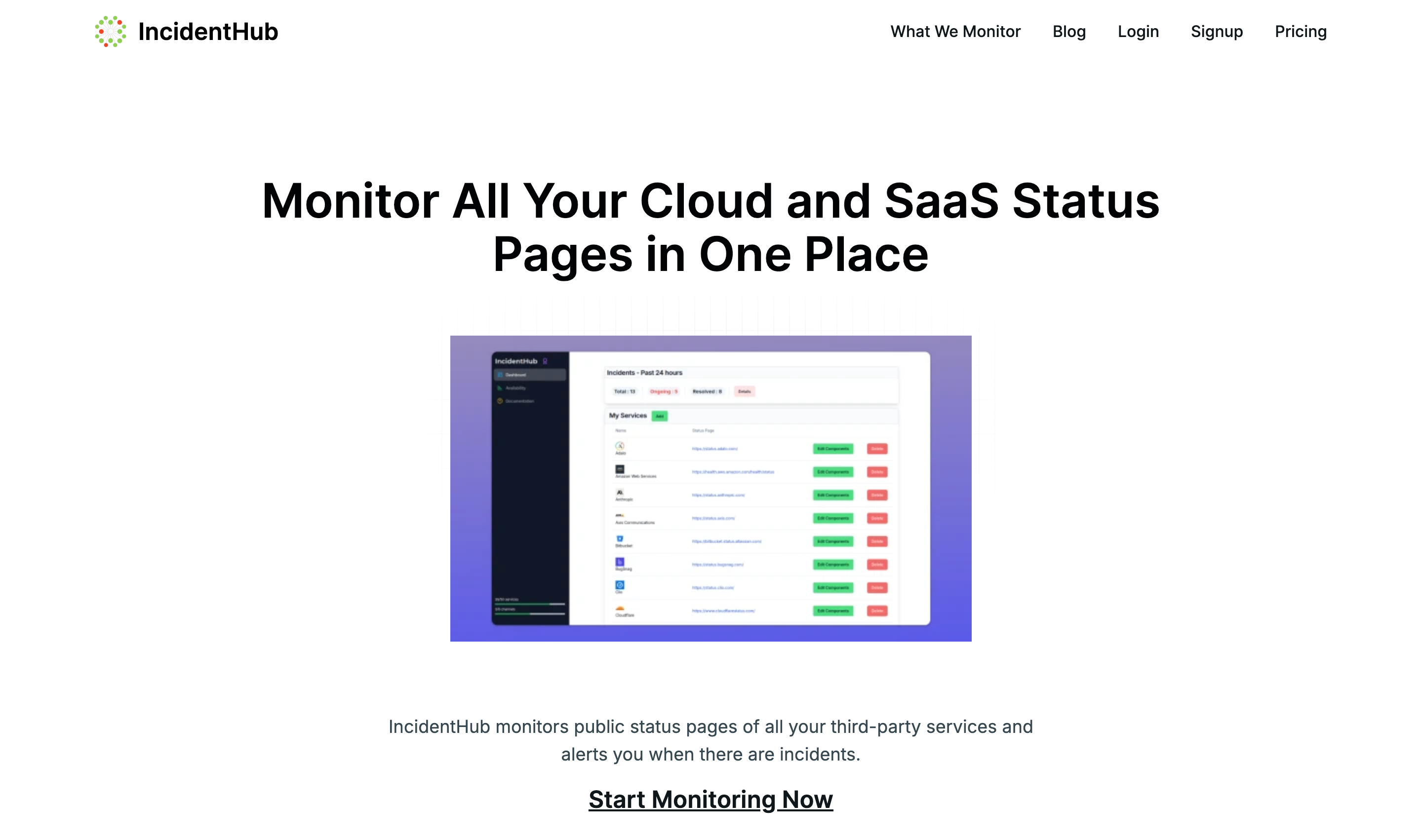
IncidentHub.cloud is a monitoring tool that tracks official status pages of third-party Cloud and SaaS services.
It notifies users of incidents across hundreds of providers. These include:
- Cloud platforms like AWS, Google Cloud, and DigitalOcean.
- Collaboration tools like Slack and Zoom.
- Payment platforms such as PayPal and Stripe.
- Developer tools such as GitHub, GitLab, and CircleCI.
Notifications are delivered in real-time through channels like Slack, Discord, PagerDuty, email, and webhooks, seamlessly integrating with existing workflows.
IncidentHub also offers component filtering, allowing users to receive alerts only for the services or components on which they depend the most.
Features
- Real-Time Notifications: Get instant alerts for outages or incidents directly from public status pages.
- Multi-Vendor Monitoring: Monitor all your cloud, SaaS, and third-party service providers in one centralized dashboard.
- Component Filtering: Customize your alerts by selecting specific components or regions.
- Historical Insights: Review historical availability and incident data for better decision-making.
- Easy Setup: Quick onboarding with no need for additional software installations.
Use Cases
IncidentHub benefits developers, SRE/Ops teams, and IT teams who rely on multiple external services. It helps them stay informed about vendor outages, improving their ability to respond to incidents quickly and maintain service reliability.
Price
- Free plan
IncidentHub offers a free tier supporting:
- Up to 20 services
- 2 notification channels
- Component filtering
- Slack and Discord integrations
- Availability dashboard
- Paid plan – $35 per month
Includes everything in the free plan, and the following:
- 50 services to monitor
- 6 notification channels
- Unlimited notifications
- Webhook integration

Ultimately, it’s a simple tool for checking the current status of services. While IncidentHub has some monitoring features, it focuses solely on public status page data. It may limit its utility for organizations needing private or custom monitoring solutions.
Now, let’s take a look at the IncidentHub alternatives and what they offer.
Alternatives to IncidentHub
1. StatusGator

StatusGator offers more features on the free plan than IncidentHub, and much more if you’re paying for status monitoring and communication.
If you rely on Cloudflare, AWS, Google Workspace, or even less well-known services, StatusGator will inform you of the official status changes in real-time.
Unlike IncidentHub, StatusGator goes beyond tracking official status page updates. It incorporates user-reported issues among other data known as Early Warning Signals.
So you will be among the first to learn about service downtime even before providers officially announce them. This proactive approach ensures you’re prepared to respond swiftly, minimizing the impact of external service disruptions.
Key Features
- Public and Private Status Pages. StatusGator enables you to create both public status pages for customers and private status pages for internal teams. This dual functionality ensures transparency for external stakeholders while equipping internal teams with the information needed to respond quickly to incidents.
- Third-Party Monitoring (4,700+ Services). StatusGator aggregates status updates from over 4,000 cloud services and SaaS providers, offering the industry’s most extensive third-party monitoring capabilities. Whether it’s AWS, Zoom, or GitHub, you’ll have a unified view of external service statuses, helping you manage dependencies proactively.
- Early Warning Signals. This feature keeps users abreast of performance issues even before the services acknowledge disruptions to their status on the official status pages.
- Custom and Website Monitoring. While IncidentHub focuses solely on public status pages, StatusGator allows you to monitor your own websites and create custom monitors for unique or internal systems. This flexibility ensures all your critical systems are covered.
- Real-Time Notifications Across Multiple Channels. Keep all stakeholders informed with real-time updates via Slack, MS Teams, email, SMS, webhooks, or API integrations. These instant notifications reduce uncertainty and empower your team to take immediate action.
- Tracking Outages for Services Without Status Pages. Not all SaaS providers maintain a public status page, making it difficult to stay informed during outages. StatusGator solves this by offering real-time monitoring for services like Workday status and ServiceNow status—ensuring you always have the insights you need.
- Customizable and Brandable Status Pages. StatusGator offers robust customization options, including custom logos, favicons, and domains, allowing you to align your status page with your brand identity. This builds trust and reinforces your professionalism during incidents.
- Integration-Ready. With seamless integrations for tools like PagerDuty and StatusHub, StatusGator fits effortlessly into your existing workflows, unlike IncidentHub, which requires relying on specific channels.
- Status Widgets and TV Integration. Display live status updates via embeddable widgets on your website or intranet, or use TV integration to share real-time updates with your team. This ensures your entire organization stays informed at a glance.

Benefits
- Proactive Incident Management: StatusGator alerts you to potential issues before they escalate, giving your team the edge in responding effectively.
- Fewer Support Tickets: By keeping customers informed through public status pages, you can reduce support ticket volume, letting your team focus on resolving the problem rather than answering queries.
- All-in-One Monitoring Solution: With both public and private monitoring, plus support for websites, third-party services, and custom incidents, StatusGator is the most comprehensive solution available.
- Enhanced Trust and Transparency: Keep users and stakeholders confident in your incident response capabilities through consistent, branded, and reliable updates.
Pricing
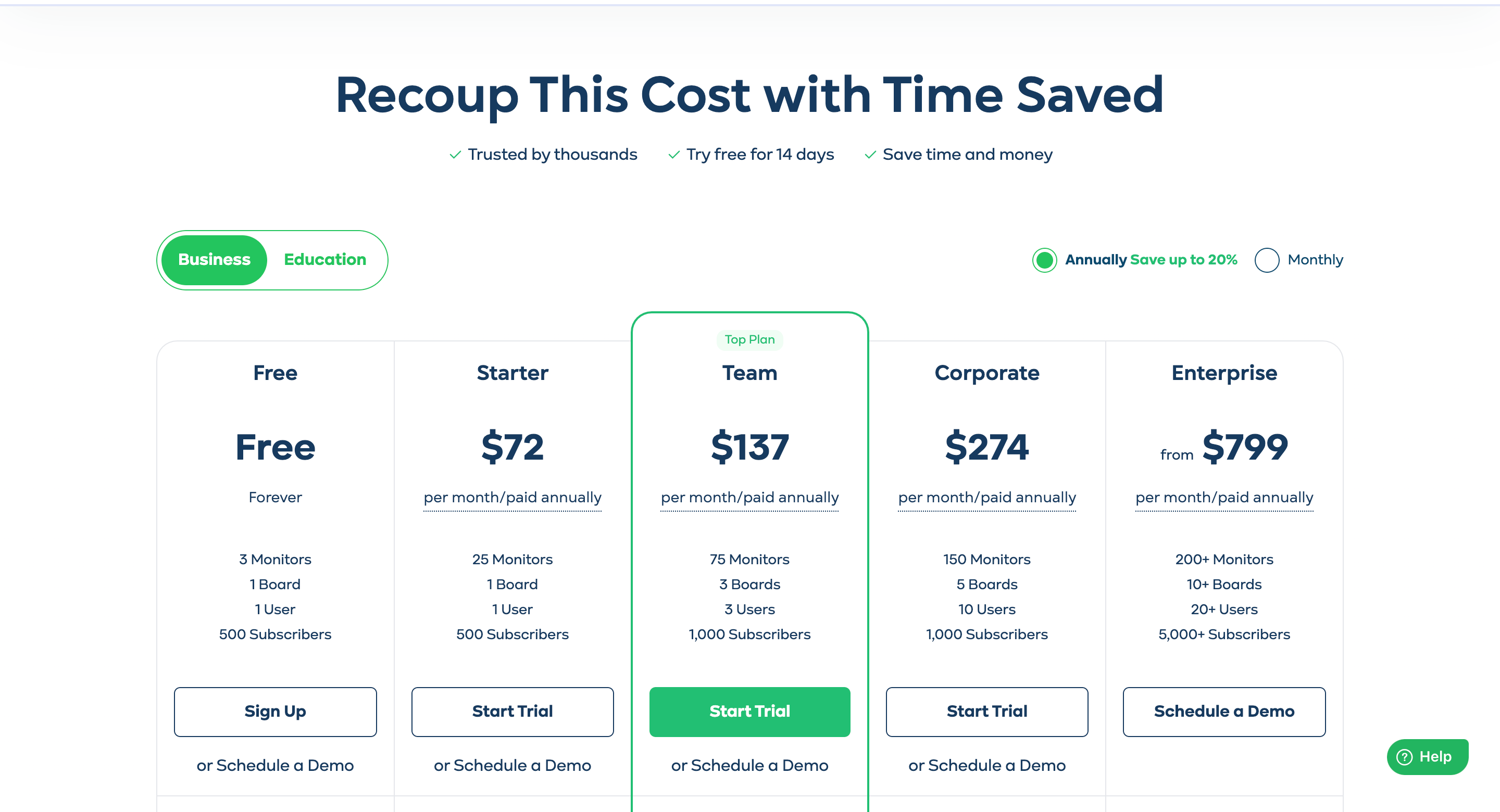
StatusGator offers a free plan. Paid plans start from $72 per month.
StatusGator vs. IncidentHub
While IncidentHub is a great entry-level tool for monitoring public status pages, StatusGator takes it further by combining advanced monitoring with complete status page customization, private page functionality, and powerful integrations.
If you’re looking for a solution that not only informs but also builds trust and reduces incident response time, StatusGator is the clear winner.
Ready to elevate your incident communication and monitoring game?
Try StatusGator today and see why it’s the ultimate alternative to IncidentHub.cloud.
2. EagleStatus

EagleStatus is an easy-to-use status monitoring tool that allows you to track the services your business depends on, all from a single, aggregated dashboard. With support for over 1,700 services (including major providers like AWS, Google Cloud, GitHub, and Zoom), EagleStatus delivers real-time outage notifications directly to your preferred communication channels.
Key Features
- Aggregated Status Pages. Monitor all your SaaS and cloud providers in one centralized page. Quickly spot issues that might impact your business and share updates with your team or display them on an office TV.
- Customizable Notifications. Stay informed without being overwhelmed. EagleStatus reduces notification noise by focusing only on the services, components, and regions that matter to you, delivering alerts via Slack, Discord, MS Teams, or webhooks.
- Real-Time Updates. Receive status updates as soon as they are detected, ensuring you’re always ahead of potential downtime. The platform notifies you when outages begin and end, providing full incident lifecycle tracking.
- Quick and Easy Setup. Get started in less than a minute with a free account that includes 5 monitors.
- Shareable Dashboards. Create dashboards for internal use or to share with your team via simple links. This feature is perfect for keeping colleagues informed or displaying real-time statuses on a TV in your office.
Pricing

- Free Plan: 5 monitors, 1 dashboard, 1 user.
- Basic Plan: $7/month for 12 monitors.
- Pro Plan: $29/month for 40 monitors.
- Premium Plan: $69/month for 90 monitors.
EagleStatus is an affordable, straightforward tool for small and medium-sized teams needing effective service monitoring without unnecessary complexity.
3. StatusTicker
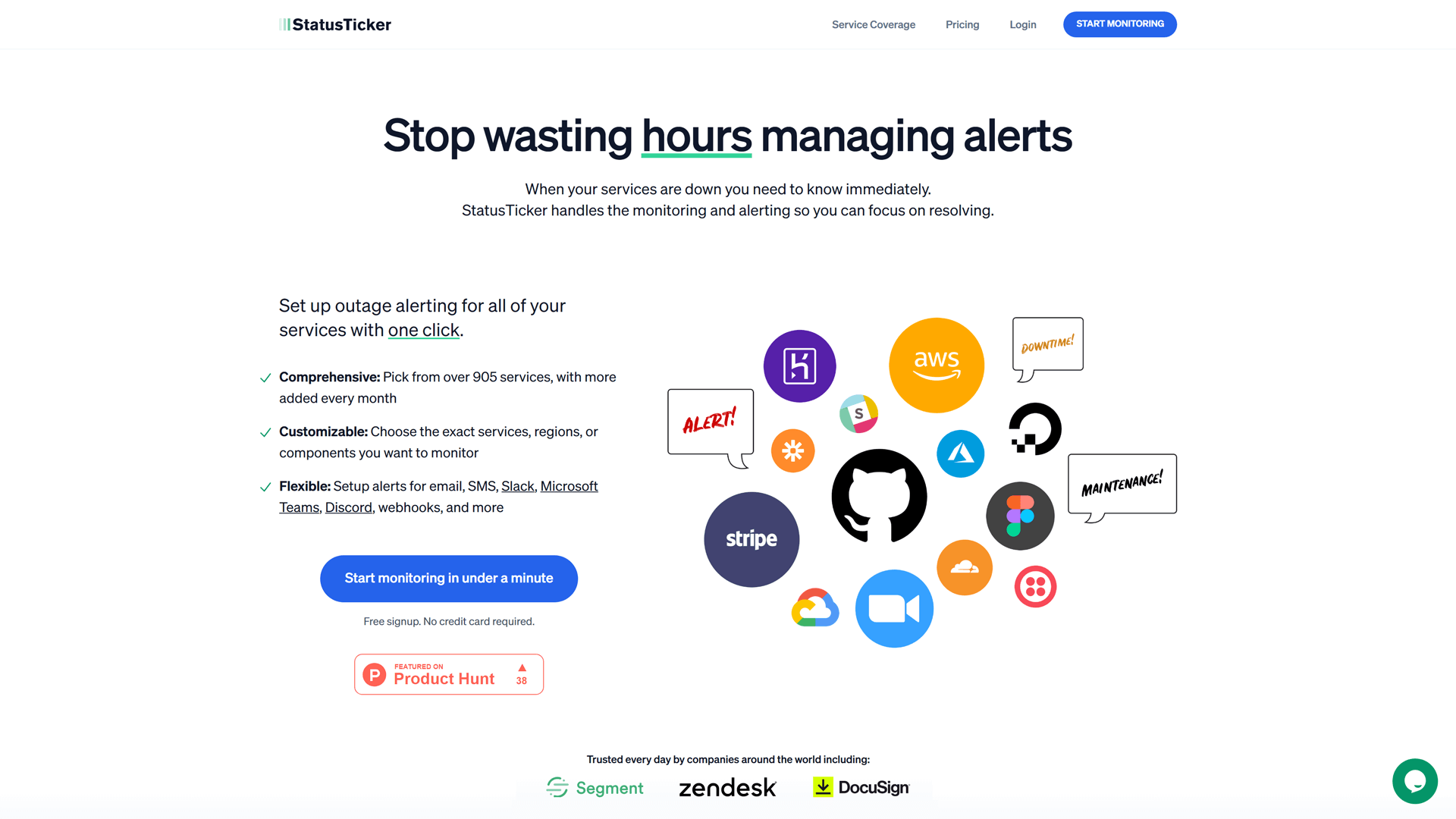
StatusHub is for businesses that require proactive communication about incidents and status monitoring. By integrating status page creation with customizable monitoring features, StatusHub is ideal for keeping both customers and internal stakeholders updated during service interruptions.
Key Features
- Comprehensive Service Coverage. Monitor 905+ services and thousands of individual components across major cloud providers, SaaS platforms, and more. New services and updates are added regularly to ensure continued relevance.
- Customizable Monitoring. Choose specific services, components, or regions to monitor. This fine-tuned control ensures you only receive updates for the elements that matter to your operations.
- Proactive Alerts Across Channels. Get notified via email, SMS, Slack, MS Teams, Discord, Telegram, webhooks, or PagerDuty. StatusHub supports granular alert categories such as “alerts,” “warnings,” or “maintenance.”
- Public and Private Status Pages. Create branded, shareable status pages (or “tickers”) for public or internal use, ensuring transparent communication with customers and teams. White-labeling options allow full customization.
- Easy Integration. Integrates seamlessly with tools like Slack, MS Teams, and PagerDuty, making it easy to incorporate into existing workflows. Use webhooks for more advanced incident management automation.
- Real-Time Updates and TV Display. Stay informed about outages, maintenance, or warnings in real-time. Display live statuses on office TVs or wallboards for team-wide visibility.
Pricing

StatusHub offers flexible pricing plans. Both plans include a 14-day free trial, no credit card required, and annual subscriptions offer a 20% discount.
- Pro Plan: $9/month for unlimited monitors, one ticker, and one user.
- Team Plan: $20/month for unlimited monitors, tickers, and team members, along with advanced features like white-labeling and public tickers.
StatusHub’s advanced customization options, public/private status pages, and integrations with popular tools make it a more versatile and business-friendly solution.
While IncidentHub is great for basic status monitoring, StatusHub excels at providing tailored incident communication and full team visibility.
4. Downdetector

Downdetector is a well-known online tool for tracking outages of websites, games, communications, and other platforms and services.
This service is primarily designed for consumers. But it can be useful to businesses to monitor general outages affecting SaaS providers and cloud services. Though, its reliance on user reports and limited customization options make it less suited for comprehensive business needs.
Key Features
- User-Reported Outages: Tracks incidents reported by users and verifies them with official status pages.
- Real-Time Outage Maps: Provides visual overviews of incidents.
- Basic Notifications: Offers limited notifications for specific services.
Pricing
Checking status updates on DownDetector is free. However, for business-specific features, pricing is available only upon request, making it less transparent for organizations evaluating solutions.
5. OutLogger
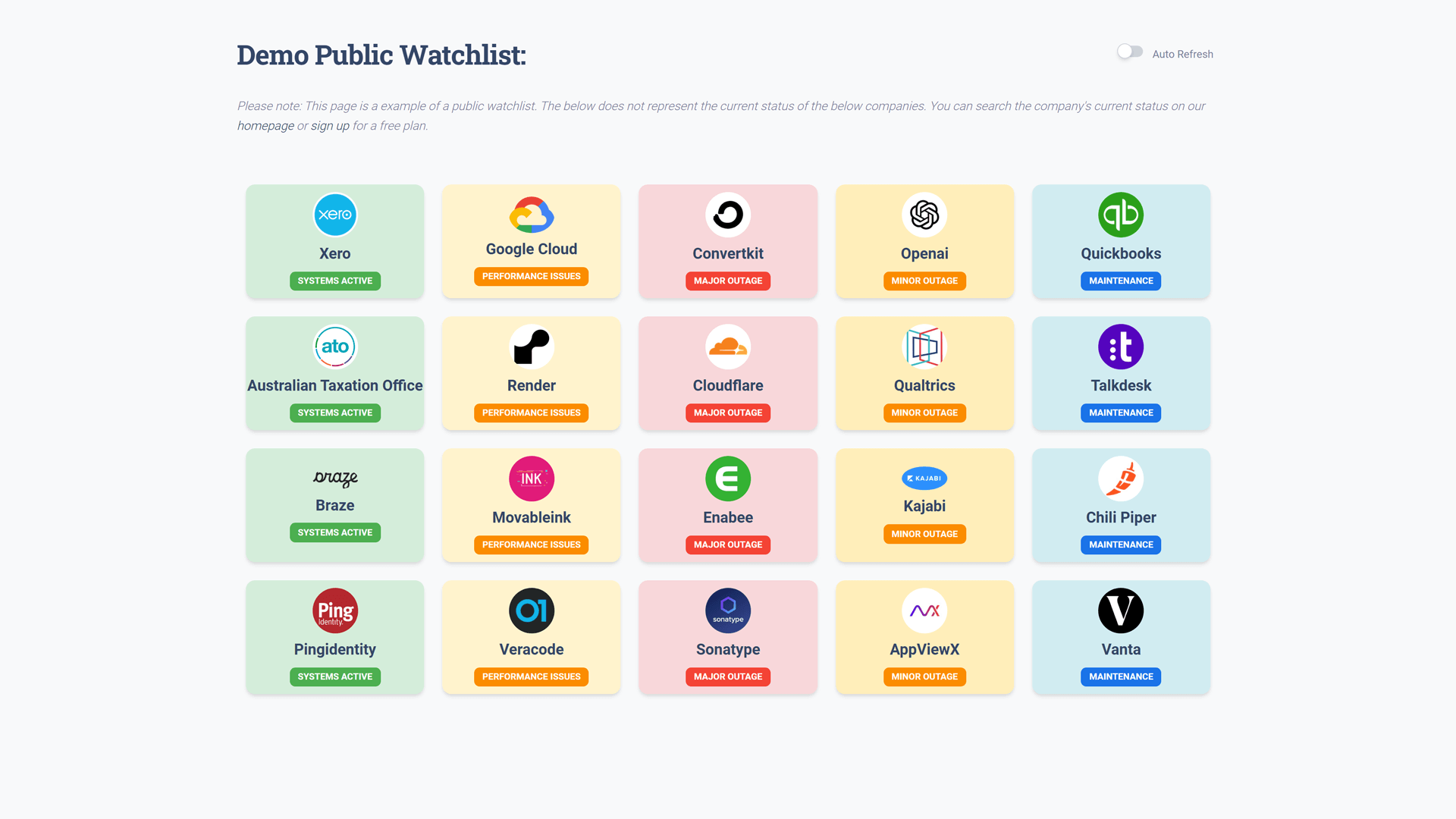
OutLogger logs outages and incidents. It is designed for small teams with minimal monitoring requirements. While it provides basic functionality, its limited features, and smaller service library may not be sufficient for larger or more complex needs.
This tool does not support custom notifications, status pages, or incident communication. It has a limited service library compared to more robust alternatives like StatusGator.
Key Features
- Tracks outages for popular cloud services.
- Offers basic notification options.
Pricing
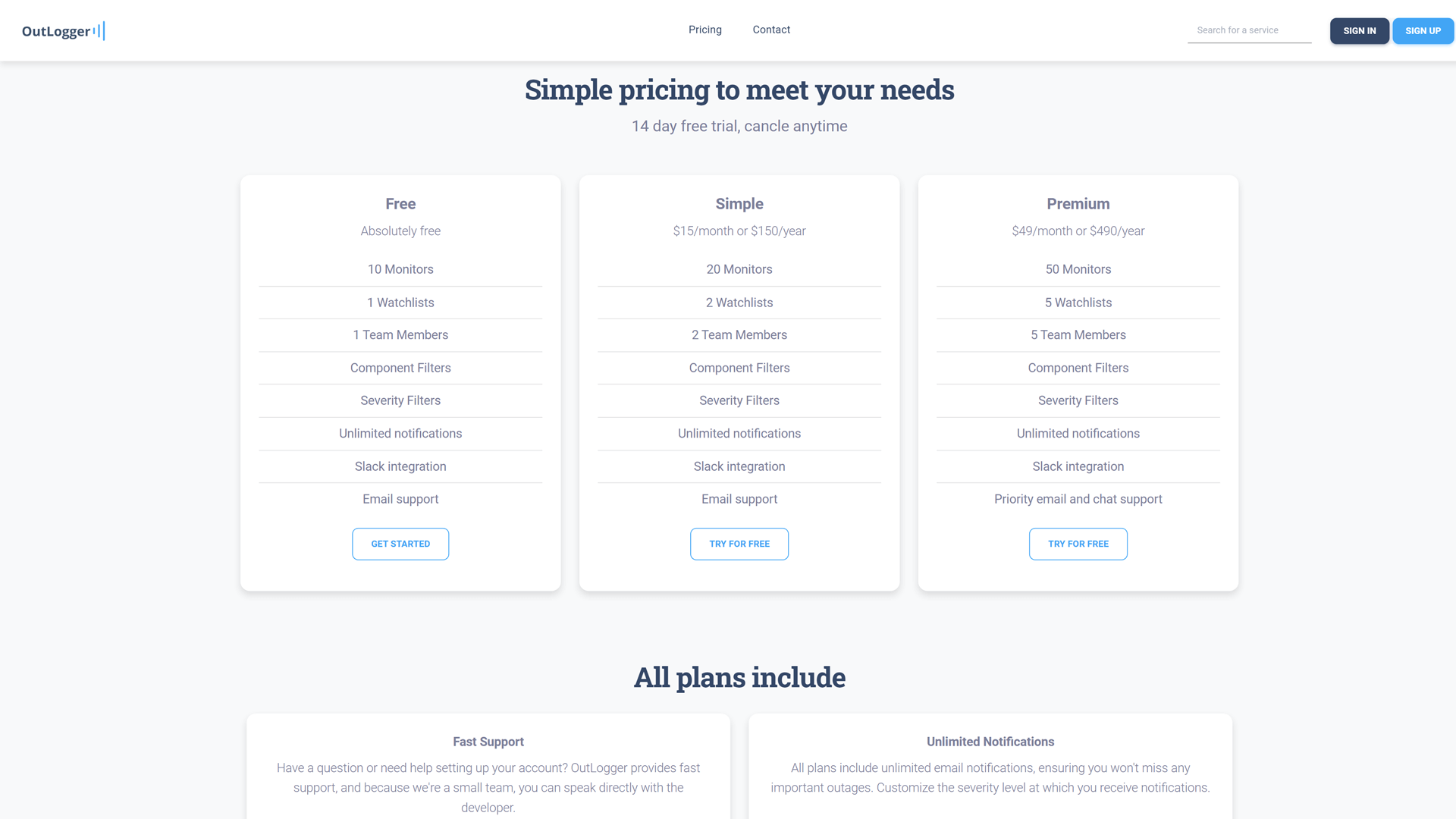
OutLogger pricing starts at $15 per month with an annual plan. While affordable, its lack of advanced features may not justify the cost for teams needing comprehensive monitoring.
6. DownForEveryoneOrJustMe

DownForEveryoneOrJustMe is a simple and accessible website that instantly checks whether a website or service is down. However, its lack of monitoring and notification capabilities makes it unsuitable for businesses or teams requiring proactive status tracking.
Since the main idea behind this service is to display the status data online on a single page to visitors, it lacks capabilities for SaaS or cloud service outage tracking. Also, this service does not support automated monitoring or real-time notifications.
Key Features
- Provides instant checks for website availability.
- No account setup is required for basic functionality.
Pricing
This tool is free to use, making it a handy option for casual checks, but it’s not designed for professional monitoring or business use.
7. StatusSight
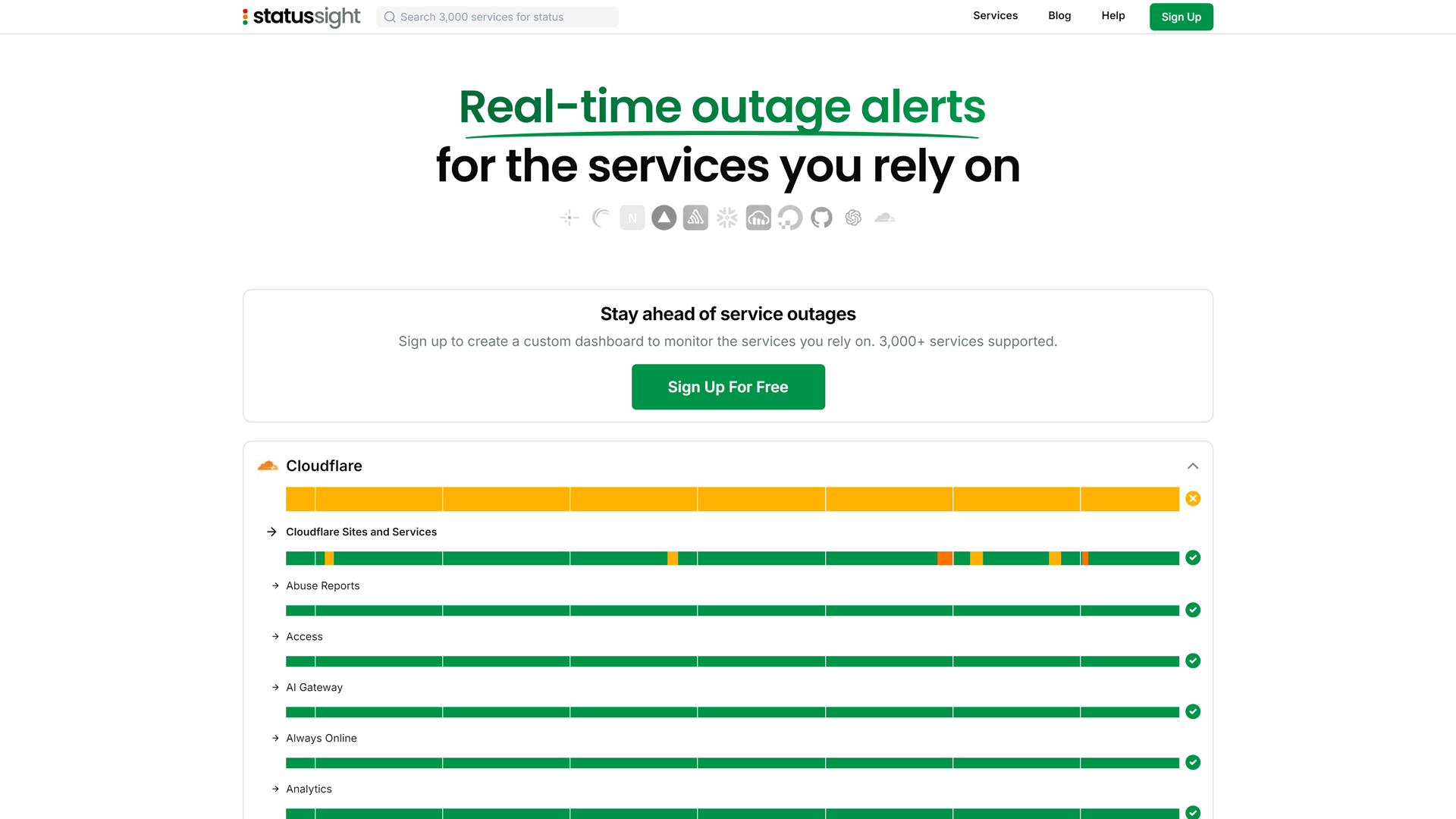
StatusSight is a relatively new tool in the cloud monitoring space, offering simple status aggregation for businesses. While it provides basic status updates via a centralized dashboard, its limited service library and lack of advanced features may restrict its usability for larger teams or organizations.
This platform offers a smaller service library compared to more established tools. There is not much flexibility for custom notifications, incidents, or creating status pages.
Key Features
- Aggregates statuses for popular SaaS providers.
- Displays updates on a simple dashboard.
Pricing
StatusSight is free for basic use, but pricing for additional dashboards or features is available only upon request, making it less transparent than other alternatives.
Conclusion
When it comes to monitoring third-party services and managing incidents, choosing the right tool is crucial for minimizing downtime and keeping stakeholders informed.
IncidentHub is a solid starting point for basic status monitoring, but its limited feature set may not meet the needs of larger organizations or teams requiring private status pages and advanced notifications.
Alternatives like StatusGator and StatusHub offer robust solutions for comprehensive monitoring and incident communication. And tools like EagleStatus and StatusSight provide budget-friendly options for smaller teams.
The best choice ultimately depends on your organization’s specific requirements, such as service coverage, notification channels, and budget.
FAQ
What is IncidentHub?
IncidentHub is a status monitoring tool that tracks the public status pages of third-party cloud and SaaS providers. It notifies users of outages or incidents and supports features like component filtering and multi-vendor dashboards.
What are the best alternatives to IncidentHub?
The best alternatives to IncidentHub include the following options:
- StatusGator: Best for comprehensive monitoring and private/public status pages.
- EagleStatus: Ideal for small teams needing affordable monitoring.
- StatusHub: Perfect for teams requiring customized status pages and proactive alerts.
DownDetector: Suitable for casual outage tracking.
How does StatusGator compare to IncidentHub?
StatusGator offers more advanced features, such as private status pages, website monitoring, and Early Warning Signals. It also supports over 4,000 services compared to IncidentHub’s limited service library.
Are there free alternatives to IncidentHub?
Yes, free alternatives to IncidentHub are StatusGator and EagleStatus. They offer free plans with basic monitoring capabilities. StatusSight also provides free access for basic usage.
Which alternative is best for businesses?
StatusGator is the best alternative for businesses offering the most versatile options for status monitoring and communicating. StatusGator offers extensive service coverage, private status pages, and real-time notifications across multiple channels.