
StatusGator vs. other website monitoring tools

StatusGator is made for teams that depend on third-party services. We include website monitoring too – but if you're after deep site performance tools only, we might not be the best fit. Need both? We've got you covered.
Schedule a demo
How StatusGator is different
Different from site-only tools like Pingdom, Site24×7, and UptimeRobot, StatusGator combines website monitoring with thousands of third-party service checks in one platform.


 Other tools
Third-party service monitoring
Extensive third-party coverage
Monitors 11,430+ third-party services (cloud platforms, APIs, SaaS tools) alongside your own website.
Website-only monitoring
Focus solely on your website's uptime with no built-in third-party visibility.
Website monitoring coverage
Robust but balanced monitoring
Provides robust website uptime monitoring with configurable intervals, multiple check locations, custom response codes, HTTP methods, headers, and alert sensitivity.
Narrow focus on performance testing
Often specialize in deep performance testing (synthetic transactions, speed benchmarking, broader global probes) but lack the built-in third-party monitoring and unified visibility that StatusGator provides.
Unified status page
All your services on one page
Combines your site's health, vendor statuses, and manual updates into one easy-to-read page.
Fragmented views
Can only show your website's status without visibility into the third-party services your stack depends on.
Incident management
Custom monitoring tied to incidents
Custom monitors automatically trigger incidents, alerts, and status updates – helping teams respond faster and keep customers informed.
Focused on detection only
Most tools stop at alerting when a monitor fails, leaving incident management and communication to separate platforms.
All-in-one platform
One platform, one price
Includes status pages, third-party monitoring, and website uptime checks under a single subscription.
Multiple tools required
Often need separate subscriptions for monitoring, status pages, and alerts.
Is StatusGator right for you?
Situations where StatusGator may not be the perfect match.
You only need basic uptime pings
If a single low-cost ping on one or two URLs is genuinely all you'll ever need, a lightweight checker like UptimeRobot covers that narrow case.
Deep performance & synthetic testing
If your priority is page-speed benchmarking, synthetic user journeys, and Core Web Vitals from dozens of global probes, specialists like Catchpoint or Pingdom go deeper on that layer.
Code-level observability is the goal
If what you need is APM, distributed tracing, and log analytics down to the function level, that's a different layer than service status – platforms like Datadog target it.
No external dependencies
If you run a fully self-contained, air-gapped stack with no cloud platforms, APIs, or SaaS vendors in the path, third-party status coverage adds little.
Schedule a free 30-min demo
We'll show how StatusGator can benefit your team. No strings attached.
Frequently asked questions
Can't find your question? Email us to arrange a time to discuss. We'd love to chat!
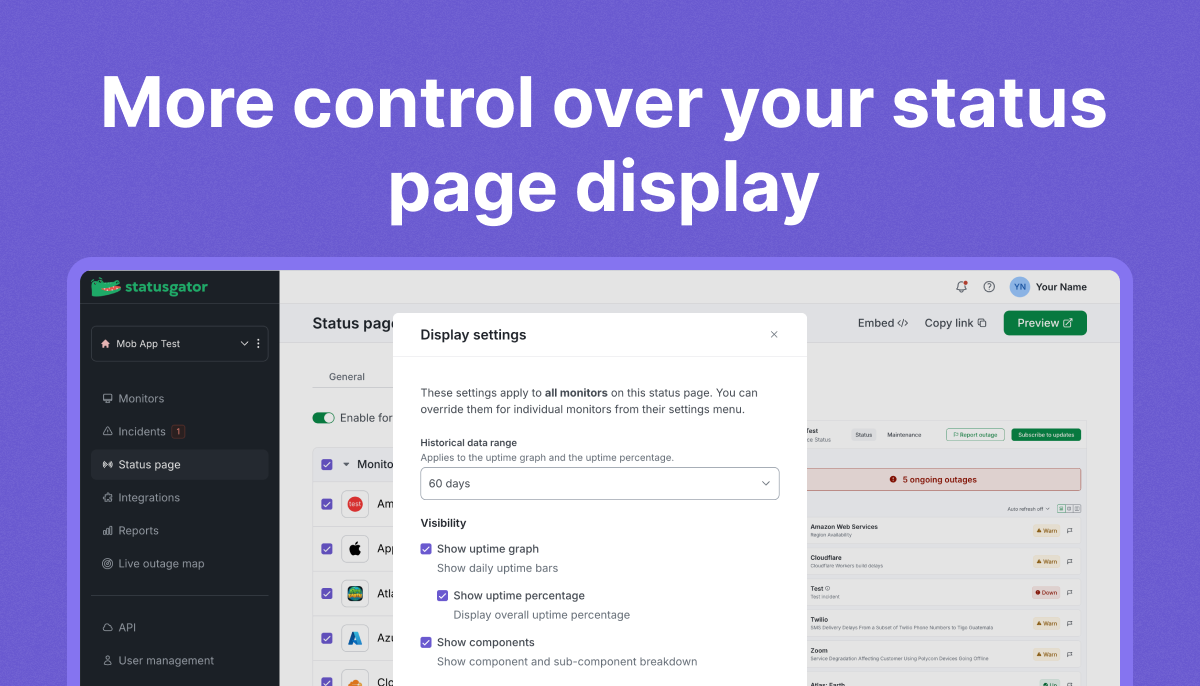 More control over your status page display
 More flexible color customization for status pages
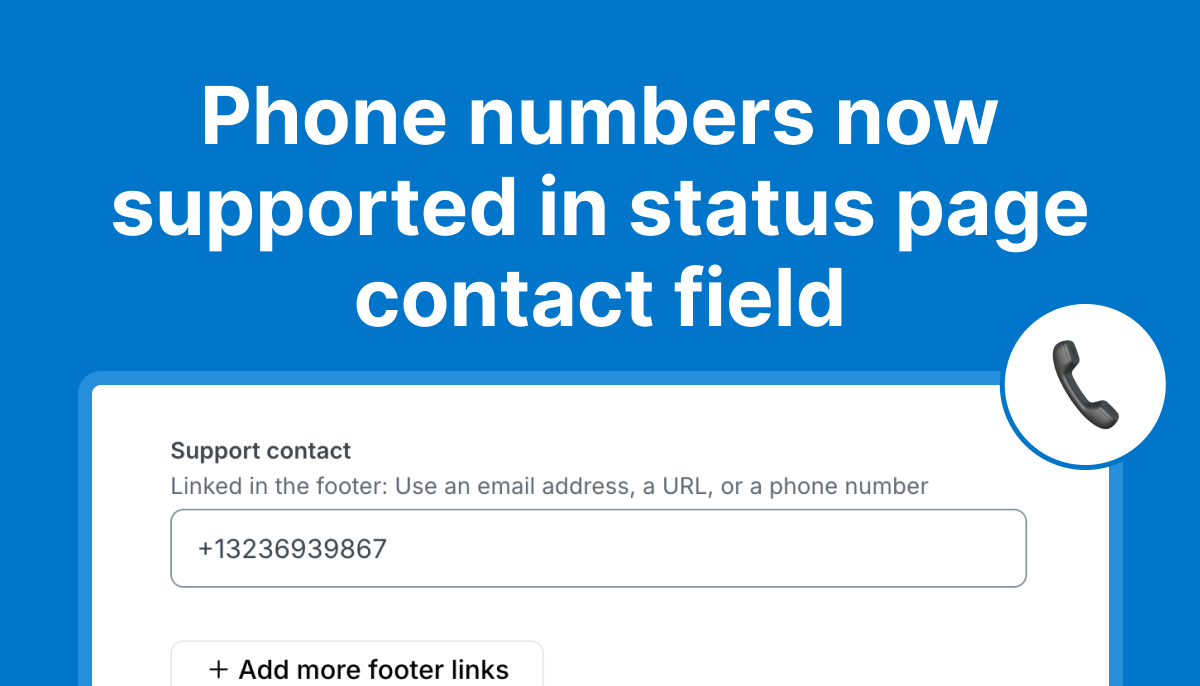 Phone numbers now supported in status page contact field